
Reviewed · CITY TOURS
Two hour city tour through the new Odense
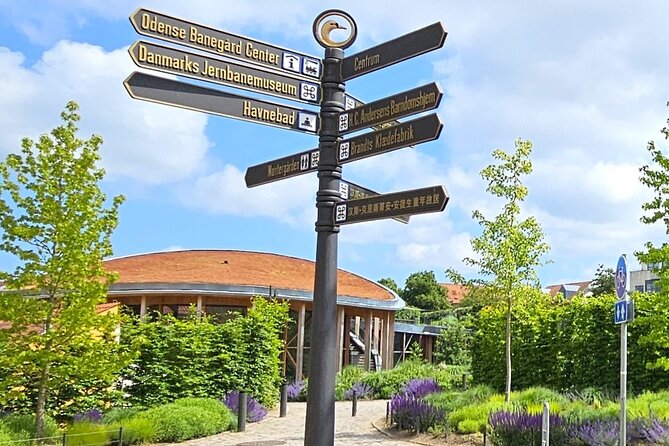
Odense is not just a Hans Christian Andersen stop. This two-hour walk shows how the city is changing from an old industrial center with traffic-heavy streets into a more bike-friendly, greener city. You’ll cover about 4 kilometers and 15 stops, with the harbor and new development at the heart of the story.
I like the small maximum of 12 people, which gives you a better chance to ask questions. I also like the focus on practical city issues, including affordable housing and the way old shipyard jobs have shifted into newer work. The main consideration is that this is a walking and discussion tour, not a classic monument-by-monument introduction to Odense.
Key points at a glance
- A 15-stop walk through changing Odense: The route looks at the city’s past, present projects, and plans for the future.
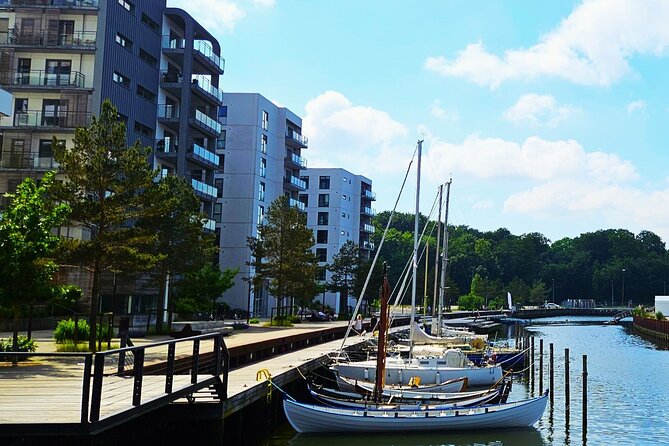
- The harbor is the main classroom: See the harbor pool and North Atlantic House while learning how former industrial space is being reused.
- Small groups keep the conversation personal: The tour has a maximum of 12 people.
- Useful social context: Housing, work, city planning, and the former shipyard are given as much attention as sights.
- A walking tour with a clear physical requirement: Plan on 4 kilometers, or about 5,500 steps, over two hours.
- A few guide names are provided: Jan and Jørn are identified as guides, though the guide assigned to a particular date may vary.
Seeing Odense beyond the Andersen postcard
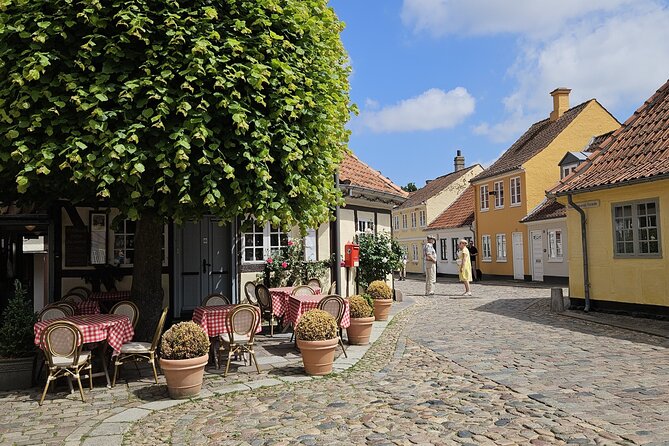
Odense is best known as the birthplace of Hans Christian Andersen, and you will still encounter his influence on this walk. But the purpose here is to show you a city in motion, not simply point out old buildings and famous names.
The central idea is the change from an industrial city to a greener urban center. That change affects the streets you use, the harbor you see, the work people do, and the homes being planned for younger residents. I find that a useful way to understand a city because it connects architecture and public space with everyday life.
You begin at Ruinen, a medieval two-story Gothic house at Overgade 3 in central Odense. The tour returns to this same meeting point at the end, giving you a clear start and finish rather than leaving you in an unfamiliar part of town.
The exact walk includes 15 stops. Some are physical places, such as the harbor pool and North Atlantic House. Others appear to be points where your guide explains projects and policies. That means the quality of your experience depends partly on your interest in urban change and your willingness to listen, not only on the appearance of each stop.
A few more Denmark trips to weigh up
- Copenhagen: Group Walking Tour – City Highlights – 2 Hours
★ 4.7 · 1,088 reviews - Copenhagen: 2-hour City Highlights Bike Tour
★ 4.7 · 632 reviews - Segway Tours Copenhagen w. Guide & Concierge Service. 2 Hours+
★ 5.0 · 550 reviews
From heavy traffic to a city built for bicycles
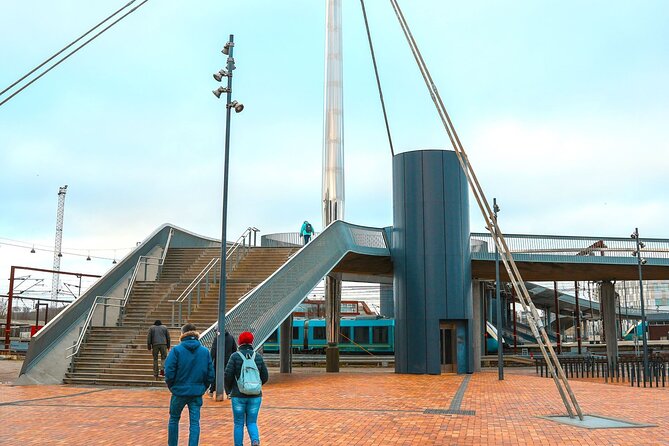
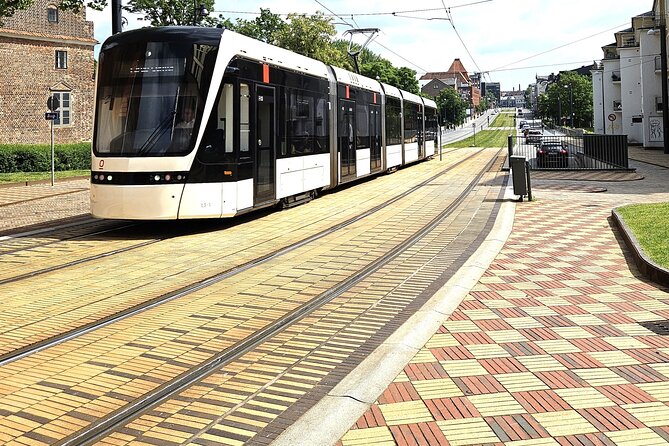
One of the most useful themes is Odense’s shift away from loud, traffic-filled streets in the center. The walk presents the city as it moved from an industrial model toward a greener and more bicycle-friendly future.
You may already know that Denmark is closely associated with cycling, but this tour gives that idea a local setting. Instead of treating bicycle use as a postcard image, it connects cycling with street design and the way people move through the center.
I like this approach because it asks you to notice the city between the headline attractions. A new street layout, a quieter central road, or a change in how public space is used can tell you as much about modern Odense as a museum can.
The tour is also useful if you are curious about how fast a city can change. The available information describes Odense as having created major changes in a relatively short period. You will hear about ongoing work, so not every project should be understood as finished or permanent.
That point matters. A walking tour about current development can feel more immediate than a standard sightseeing route, but it can also be less tidy. You may see construction, incomplete plans, or places whose future use is still evolving.
The harbor pool and Odense’s changing waterfront
Several stops take place around the harbor. One is the harbor pool, which you view from outside rather than enter.
The pool is presented as a symbol of the waterfront’s transformation. An area once connected with industry and working activity now includes a public swimming facility and new ways for people to spend time near the water. You are not booking a swim, so bring the right expectation: this is an architectural and urban-planning stop, not a recreational visit.
That outside view may sound brief, but the guide’s explanation is the important part. You will learn why the pool matters to the city’s new identity and how public facilities can help reconnect people with the harbor.
I would pay attention here to the contrast between the old industrial role of the waterfront and its newer public use. This kind of stop is especially helpful if you want to understand why cities invest in promenades, pools, cultural buildings, and housing near former work zones.
The harbor section is likely one of the strongest parts of the route for anyone interested in city design. If you mainly want interiors and formal exhibits, it may feel less satisfying, since the tour stays outside at the pool and focuses on explanation.
North Atlantic House and a wider Nordic connection
North Atlantic House is another harbor-area stop. It represents the growing cultural activity in the waterfront district and promotes cooperation between the Nordic countries, Greenland, and the Faroe Islands.
This adds a broader cultural angle to the tour. Odense’s redevelopment is not only about roads, housing, and former factories. The harbor is also being used for cultural exchange and public programming tied to the wider North Atlantic region.
You may find this stop especially useful if you want to see how a city gives new purpose to an old industrial area. A cultural center can change how a district is used without erasing its working past. It gives people a reason to visit the waterfront for more than transport or employment.
The information provided does not promise entry into North Atlantic House, so plan to hear about the building and its role from outside unless your guide tells you otherwise. This is another reason to choose the tour for context rather than admission-based sightseeing.
Same city, a completely different kind of day:
- Copenhagen Card-Discover: 80+ Attractions & Public Transport
★ 4.6 · 5,351 reviews - Copenhagen: Hop-On Hop-Off Bus Tour with Boat Tour Option
★ 3.9 · 4,122 reviews - Private Walking Grand Tour of Copenhagen
★ 5.0 · 3,953 reviews - From Copenhagen: Lund and Malmö 2-Country Tour
★ 4.7 · 3,807 reviews
H.C. Andersen’s House in a modern setting
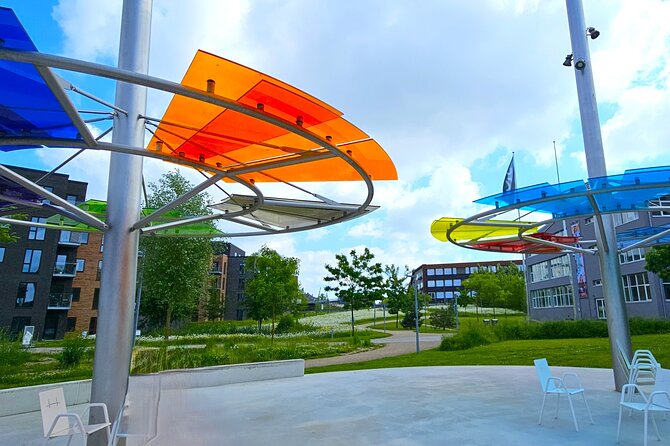
The route also includes H.C. Andersen’s House, which opened in summer 2021. The museum was designed by Japanese architect Kengo Kuma and combines Danish half-timbered traditions with Andersen’s fairy-tale world.
This stop brings together old and new Odense in one place. The half-timbered tradition points back to the city’s historic character, while Kuma’s design gives the museum a modern architectural voice. It is a good example of how Odense presents its most famous cultural figure within a city that is still changing.
The tour does not state that admission to the museum is included, and the stop information describes the building rather than a museum visit. Treat it as an exterior or contextual stop unless your booking details specify entry.
If you are planning a separate visit to H.C. Andersen’s House, this walk can help you see it with more context. If your main goal is a full museum visit, set aside separate time and budget for that rather than expecting two hours of indoor exhibits.
Affordable housing and the future of young Odense
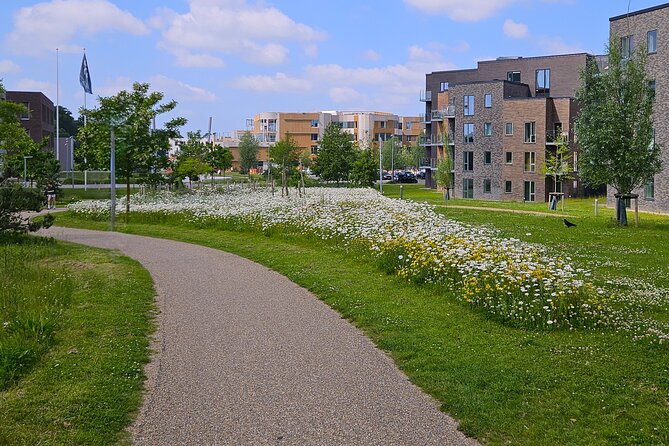
A less familiar subject on the route is affordable housing for young people. The tour explains how the city is working to make it possible for younger residents to live in Odense.
This is one of the reasons I find the experience more useful than a standard city walk. Housing policy can seem abstract when you read about it, but it becomes easier to understand when you see the districts and projects connected with it.
You will not just hear that Odense is becoming greener. You will also hear how city leaders are trying to keep the city livable for people at different stages of life. A city can build attractive public spaces and still lose its younger population if homes become too expensive. This tour puts that problem into the local story.
The available details do not identify a specific housing project or promise access to a model apartment. Expect a discussion of the city’s approach, supported by what you see along the route.
From the closed shipyard to new kinds of work
The former shipyard is another key part of the story. Odense’s old industrial jobs did not simply vanish from the city’s identity. The tour explains how the labor market helped turn many of those jobs into new, future-oriented work, often with the same employees.
That is a valuable detail because it makes economic change feel personal. Industrial decline is often described in terms of buildings closing and industries disappearing. Here, the focus is also on workers and transferable skills.
You will hear about how people connected with the closed shipyard could move into new types of employment. The experience does not provide a detailed list of companies or job titles, so you should see this as a broad explanation of the transition rather than a business-history tour.
Still, it gives you a sharper way to look at former industrial areas. A closed shipyard does not mean a city has abandoned its workers or its past. It can also become part of a story about retraining, new industries, and a different economic future.
What the two hours feel like on foot
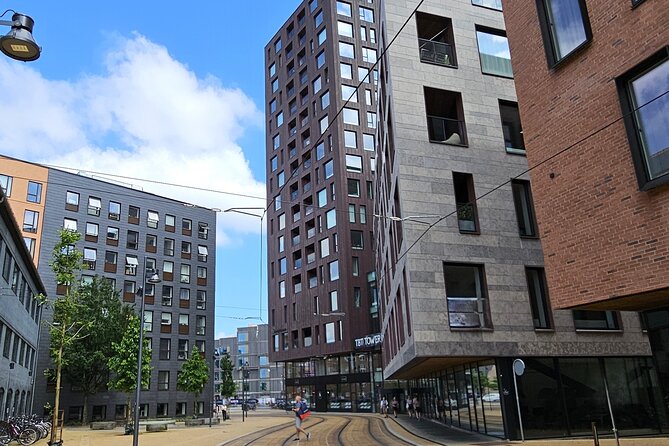
The walk covers approximately 4 kilometers and around 5,500 steps. Most people who enjoy an active stroll should manage it, but you should wear comfortable shoes and avoid treating this as a short, low-effort orientation walk.
Two hours is enough time to cover a good portion of central Odense without making the route exhausting. It also gives the guide room to explain the reasons behind the changes rather than rushing from one photo stop to the next.
The small group limit of 12 is a real advantage. A group this size is easier to keep together in city streets, and you can ask about subjects such as housing, cycling, jobs, or the harbor without trying to catch a guide’s attention from the back.
The tour is offered with a mobile ticket, and confirmation is received when you book. Service animals are allowed, and the meeting point is near public transportation. Most people can participate, but the 4-kilometer distance remains the main practical issue.
One detail needs checking before you pay: the booking information identifies the location as Aeroskobing, while the stated meeting point is in Odense at Overgade 3. Since the route itself is clearly described as an Odense city tour, verify the location and meeting instructions for your chosen date.
Is $32.28 a fair price?
At $32.28 per person, the tour costs more than a self-guided walk through Odense, but you are paying for interpretation rather than simply covering distance.
The value comes from the connections. You get the harbor pool, North Atlantic House, H.C. Andersen’s House, bicycle planning, housing, and the former shipyard in one organized route. A guide can explain why those places matter and how they fit into the city’s wider plans.
The price is strongest for you if you enjoy urban planning, local culture, social policy, or recent history. It is less compelling if you only want a quick list of famous sights or a low-cost walk with little commentary.
Group discounts may be available, which could improve the price for families or larger parties. The group itself is capped at 12 people, so you are not trading the lower price for a crowded coach-style experience.
The tour has an average booking lead time of nine days, so I would not leave it until the final morning of your stay. Free cancellation is available if you cancel at least 24 hours before the start time. Changes or cancellations made inside that window are not accepted for a refund.
Who will get the most from this walk?
I would choose this experience if you have already seen the basic historic center or want a second look at Odense beyond Andersen. It suits curious visitors who like to understand how a place works, especially those interested in sustainability, public space, employment, and housing.
It also works well for a short stay because the route is only two hours. You can fit it into a day without giving up an entire afternoon, then use what you learn to decide which parts of Odense deserve a longer visit.
Families with older children may appreciate the practical subjects, though the tour is discussion-led rather than built around games or hands-on activities. People who do not enjoy walking 4 kilometers should choose something shorter.
The guides named in the available information are Jan and Jørn. Jan is described as explaining the city’s recent transition and its culture of cooperation, while Jørn is associated with an enthusiastic presentation of the city’s development and Danish culture. Your assigned guide may depend on the date.
Should you book the new Odense city tour?
Book it if you want to understand the city’s present and future, not just its medieval buildings and famous author. The harbor pool, North Atlantic House, housing plans, bicycle changes, and shipyard story give you a useful picture of how Odense is being remade.
Skip it if you want a traditional sightseeing tour with many interiors, long stops at major monuments, or guaranteed museum entry. This walk is about ideas, streets, and current projects.
For the best fit, confirm the Odense meeting location, allow two hours for a steady 4-kilometer walk, and book at least several days ahead. At $32.28, it is a sensible purchase for an inquisitive visitor who wants the city explained rather than simply photographed.
FAQ
Where does the tour begin?
It begins at Ruinen, a medieval two-story Gothic house at Overgade 3, 5000 Odense, Denmark.
Where does the tour end?
The activity ends back at the meeting point.
How long is the city walk?
The tour lasts approximately two hours.
How far do you walk?
The route covers about 4 kilometers, or approximately 5,500 steps.
How large is the group?
The tour has a maximum of 12 participants.
Can I cancel for a full refund?
Yes. You can cancel at least 24 hours before the experience start time for a full refund. Cancellations or changes made less than 24 hours before the start time are not accepted for a refund.
Just added around Denmark
- Understanding Klaksvík: A Self-guided city tour in KlaksvÍk★ 5.0 · 3 reviews
- Waterfall Tour in Faroe Islands★ 5.0 · 16 reviews
- Urban Design and Livability E-bike Tour★ 4.8 · 21 reviews
- Súðuroy Island Day Tour, Faroe Islands★ 4.5 · 3 reviews
- Wonders of Vágar Island | Private Experience★ 5.0 · 4 reviews
- Half Day Exploration of Helsingør and Kronborg★ 3.5 · 3 reviews
- Faroe Islands: Highlights Tour★ 5.0 · 6 reviews
- Helsingør Castle and Historic City Self-Guided Walking Tour★ 4.0 · 4 reviews
City Tours, compared.
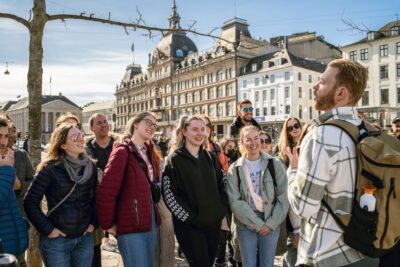
Group Walking Tour – City Highlights – 2 Hours
Read our review →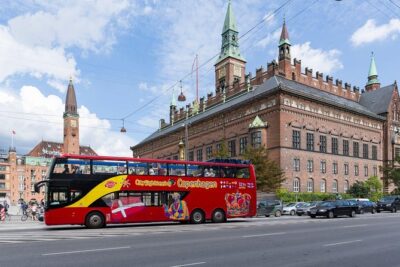
City Sightseeing Copenhagen Hop-On Hop-Off Bus Tour
Read our review →

Browse the lists this tour appears in