
Reviewed · GUIDED
Copenhagen Architecture and Sustainability Tour with local Guide
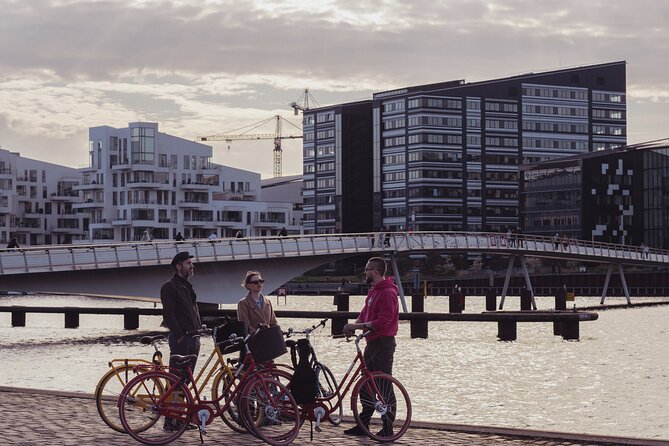
Copenhagen’s best architecture tour may be the one that keeps moving. Over about three hours, you cycle roughly 11 kilometers from the harbor to student housing, concert halls, reclaimed nature, rain-control parks, and the old meatpacking district. Sustainability is the thread, but the tour is really about how Copenhagen works as a city.
I like the small-group limit of 15, which gives you room to ride without feeling like part of a bicycle parade. I also like the chance to see practical projects such as Enghave Park’s stormwater system and the social design of Tietgen Residence Hall, rather than simply admiring old façades.
The main thing to consider is the physical side. This is a real bike ride, not a sightseeing trip with a few short rolls between stops. You need a moderate fitness level, and busy summer streets around the harbor can make the first part feel crowded.
Key points at a glance
- About 11 kilometers by bicycle: You cover much more ground than on foot, with around 65 minutes spent riding between the stops.
- A modern view of Copenhagen: The focus is on city planning, architecture, cycling, public space, and climate measures.
- Small group of up to 15: This is a manageable size for asking questions and keeping together on city streets.
- A strong mix of places: Expect bridges, a harbor bath, student housing, a concert hall, nature, parks, a community center, and industrial buildings.
- Bikes and helmets available: A bicycle is included, and children’s bikes come in different sizes. Helmets are free on request.
- Local guides with a personal touch: Jörn and Julia are named guides associated with especially clear explanations of recent city development.
Why this bicycle tour gives you a different Copenhagen
Many first visits to Copenhagen focus on palaces, canals, colorful houses, and the Little Mermaid. This ride takes another route. It asks a more useful question: how does a city make daily life cleaner, safer, more social, and more pleasant?
That makes the tour a good choice if you have already seen the postcard sights, or if you want to understand the city behind them. You will see how former military land became urban nature, how an old church became a community center, and how abandoned or utilitarian spaces gained new public uses.
The pace helps. You spend about 10 minutes at most stops, with longer time at Amager Fælled and on the bike itself. You get enough explanation to understand the idea behind each place, then move on before the architecture lecture becomes a classroom session.
The tour is offered in English and begins at Tropical Bikes on Vester Voldgade 2. The bicycle is included in the $72.57 price. That is not a budget bike rental, but it can be fair value if you want a guide, a planned route, and a concentrated look at Copenhagen’s urban projects in one morning or afternoon.
A few more Copenhagen trips to weigh up
- Copenhagen: Highlights 3 Hour Bike Tour with a Local Guide
★ 4.8 · 2,312 reviews - Copenhagen Sightseeing Classic Canal Tour With Live Guide
★ 4.5 · 1,906 reviews - Copenhagen Highlights 3 Hour Bike Tour with local Guide
★ 5.0 · 1,125 reviews
Starting at Blox and crossing Lille Langebro
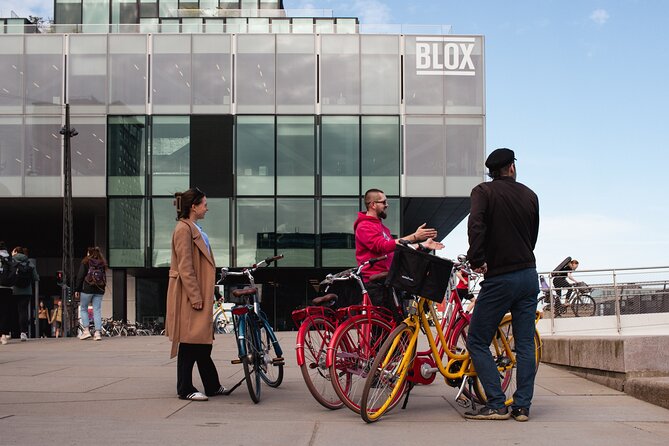
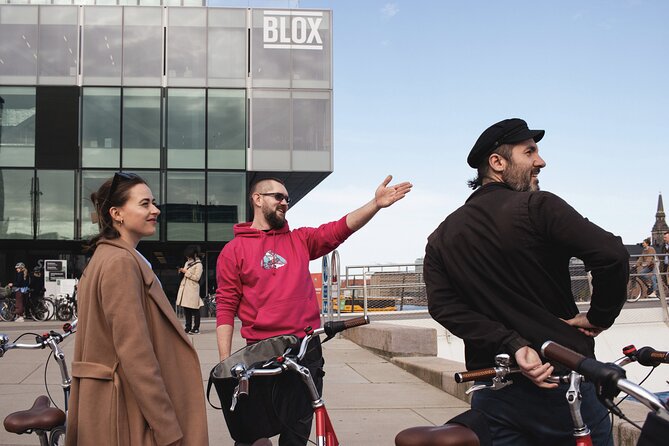
Blox is a fitting first stop. This mixed-use building was created with both technical and social sustainability in mind. The Danish Architecture Center, known as DAC, is its main renter, and current exhibitions can add another layer to the visit if you have time to return separately.
The stop itself is listed at about 10 minutes, so do not expect a full museum visit during the ride. Think of it as your first introduction to Copenhagen’s modern building culture and to the idea that sustainability includes how people use a building, not only how much energy it consumes.
From Blox, the group reaches Lille Langebro. This pedestrian and bicycle bridge is part of Copenhagen’s larger effort to turn the old merchant and naval harbor into a place for public life. It is a short five-minute stop, but it makes the city’s priorities easy to see: direct connections for people on foot and by bike, not only wider routes for cars.
The harbor can be very crowded during the summer season. If you dislike busy urban riding, pay attention here and follow the guide closely. The reward is a clear view of how new bridges have changed access across the water.
Harbor swimming at Islands Brygge
At Havnebadet Islands Brygge, you learn about a change that reaches beyond architecture. When the harbor bath opened in 2003, it marked a major shift in Copenhagen’s relationship with its waterfront.
The harbor had long been tied to work, shipping, and industry. The bath helped make it part of ordinary leisure and public life. You will spend around 10 minutes here, enough to grasp why a swimming facility can be a city-planning project, not just a pool.
This stop is also a useful reminder that sustainability can mean reclaiming existing urban space. Instead of pushing recreation farther out, Copenhagen made room for it at the water’s edge.
Tietgen Residence Hall and the social side of design
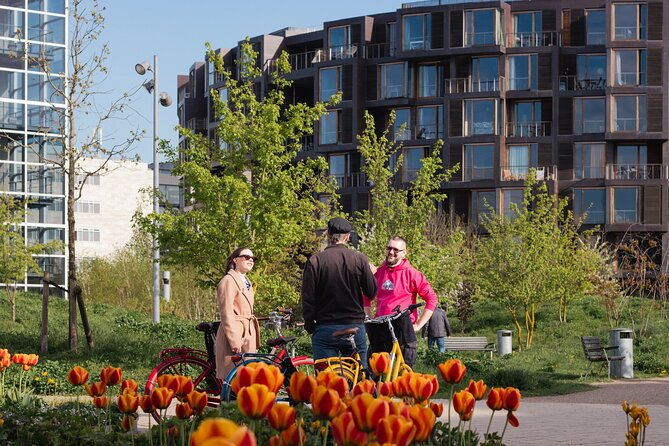
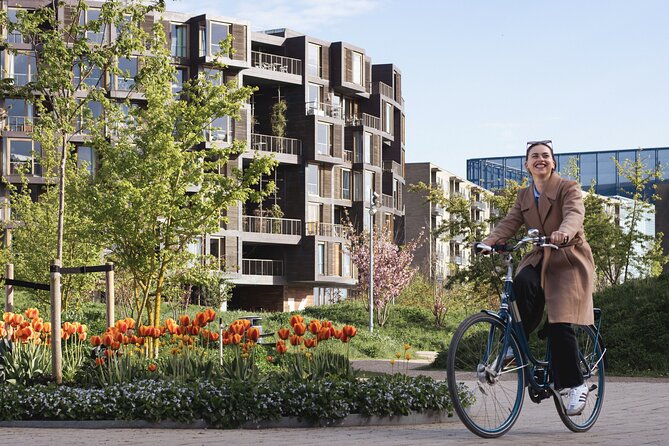
Tietgen Residence Hall is one of the tour’s most interesting stops because its sustainability idea is social. The residence houses about 400 people, with small private rooms and shared kitchens, living rooms, and other common facilities.
The design tries to balance privacy with community. You have your own room and washroom, but much of daily life happens in spaces shared with other residents. The building treats housing as more than a collection of private units. It also asks how architecture can encourage contact without removing personal space.
You will spend about 10 minutes here. That is enough to discuss the concept, though not enough for a detailed architectural inspection. Still, this may be one of the places that stays with you because it connects a striking building to a familiar housing problem: how to create affordable, functional homes that do not leave people isolated.
Same city, a completely different kind of day:
- Copenhagen Card-Discover: 80+ Attractions & Public Transport
★ 4.6 · 5,351 reviews - Copenhagen: Hop-On Hop-Off Bus Tour with Boat Tour Option
★ 3.9 · 4,122 reviews - Private Walking Grand Tour of Copenhagen
★ 5.0 · 3,953 reviews - From Copenhagen: Lund and Malmö 2-Country Tour
★ 4.7 · 3,807 reviews
DR Koncerthuset and Copenhagen’s cultural infrastructure
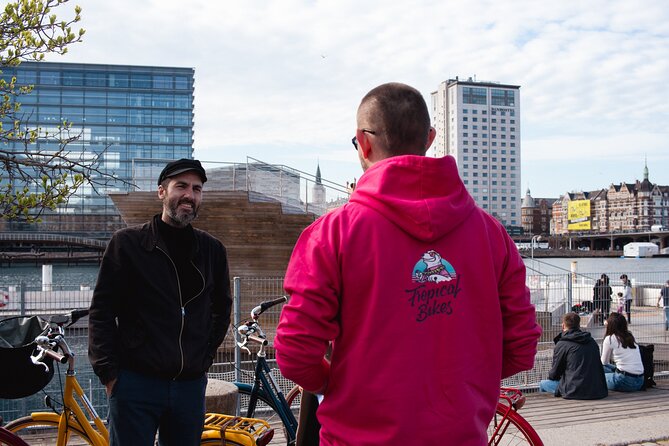
DR Koncerthuset brings a different scale and mood. Its main concert hall seats 1,800 people and serves as home to the Royal Symphony Orchestra. The complex also includes smaller stages and recording studios.
The tour is not a concert visit, so you will view the building from the outside and hear how it fits into Copenhagen’s cultural infrastructure. The stop takes about 10 minutes.
I like this inclusion because it keeps the route from becoming a string of housing and environmental case studies. A sustainable city also needs places for music, public gatherings, and shared culture. The building shows how a large modern institution can become part of a wider plan for the city.
Amager Fælled, from dumping ground to urban nature
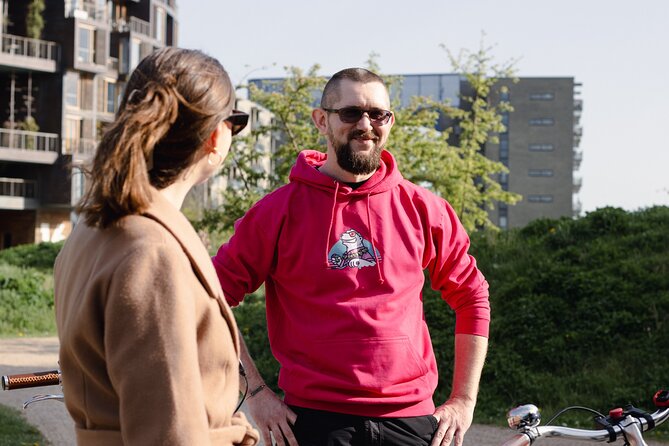
Amager Fælled offers one of the sharpest changes in scenery. The area served as military training ground and shooting range from the 1700s until the 1950s. It was later used as a garbage dump, and Amager’s old nickname, lorteøen, reflects that unflattering past.
Today, Amager Fælled is a rare pocket of relatively untouched nature within Copenhagen. The irony is that much of the area sits on land reclaimed by people. That contrast makes the stop worth your time: nature here is not simply untouched wilderness, but part of a long and complicated urban story.
The stop lasts about 15 minutes, the longest named stop on the route. You might appreciate the pause after the built-up sections, though you should not expect a long walk through the area. The emphasis remains on the site’s transformation and place in the city.
Cykelslangen and the logic of bike-first streets
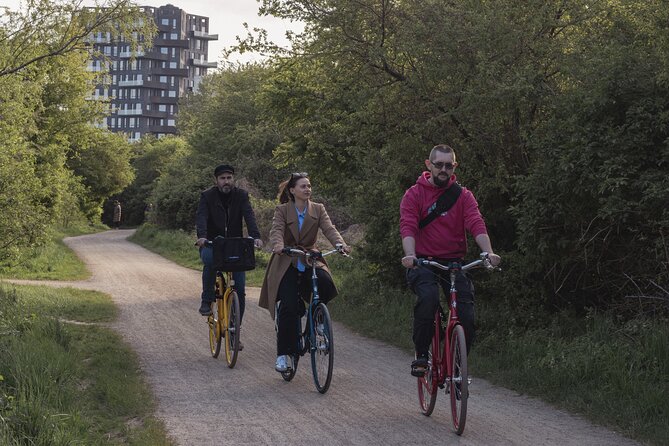
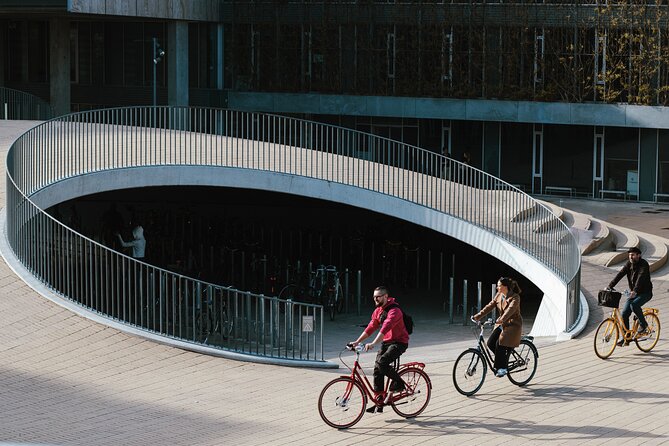
Cykelslangen is one of the clearest expressions of Copenhagen’s cycling culture. Along with Bryggebroen, it was among the first new harbor crossings built exclusively for cyclists.
The elevated route helps bicycles move across the harbor without forcing riders into awkward pedestrian areas or car traffic. It is a small piece of infrastructure, but it shows why Copenhagen cycling can feel practical rather than merely recreational.
You spend around 10 minutes here. The guide can help you understand how the bridge fits into the larger network, while the ride itself gives you a feel for the design. You are not just looking at a bicycle bridge. You are using one.
Enghave Park and the city’s answer to heavy rain
Enghave Park began in the late 1920s on former allotment gardens. Its original neoclassical layout included a bandstand, playground, sports fields, hills, and paths.
Between 2017 and 2019, the park received a complete redesign. Its new role is practical as well as attractive: it helps control torrential rain in Copenhagen. During extreme downpours, public spaces like this can hold and direct water, reducing pressure on the city’s drainage system.
This is one of the strongest stops for understanding climate planning. The park still serves ordinary daily needs, such as recreation and play, but it also performs a job that is easy to overlook until a storm arrives.
You will spend about 10 minutes here. The short visit gives you the basic concept, but the guide’s explanation is important because the water-management function is not always obvious at first glance.
Absalon and Kødbyen, two forms of reuse
Folkehuset Absalon occupies a former church that has been converted into a privately run community center. The stop lasts about five minutes, making it one of the briefest visits, but the idea is simple and useful: an old building can gain a new public purpose instead of being discarded.
The route then reaches Kødbyen, Copenhagen’s historic meatpacking district. The city planned the district to create more sanitary and healthier conditions for the meat trade as Copenhagen grew. It expanded in stages, leaving behind a record of industrial architecture from the 19th and 20th centuries.
Kødbyen shows that sustainability is not always about new construction. Reusing an existing district can preserve useful buildings, maintain a sense of place, and support new activity. The stop takes about 10 minutes, enough to explain the district’s origins and architectural development.
These two locations work well together. Absalon represents community reuse on a small scale. Kødbyen shows how an entire working district can change purpose while keeping much of its physical identity.
Israels Plads, Torvehallerne, and Ørstedsparken
Israels Plads is now linked with Torvehallerne as a meeting point for Copenhagen food lovers. Its earlier role was different. A farmers market operated here from the 1890s, after restrictions on building outside the old walled city ended, until the 1950s. The site later became a large parking lot.
That change tells you something about shifting urban priorities. A market, a car park, and a public gathering space each reflect a different idea of what city land should do. You will spend about 10 minutes here, and the nearby food halls may tempt you to return after the tour.
The final named stop is Ørstedsparken, an early example of urban reuse. It was once part of Copenhagen’s defensive system outside the city walls. After the walls came down, the area became a park, retaining parts of the old moat as a lake and adding dramatic hills and winding paths.
The park is a quiet finish to a route filled with bridges, traffic, and large buildings. It also brings the tour back to a central idea: Copenhagen often adapts what it already has.
What the three-hour ride feels like
The tour lasts about three hours, including roughly 65 minutes of cycling between stops. That is a substantial amount of time on a bicycle, even though the pace is described as relaxed.
You should be comfortable balancing, starting, stopping, and riding on city roads. The stated requirement is moderate physical fitness. The guide is there to help you ride confidently, but you remain responsible for managing a bicycle in an urban setting.
A group capped at 15 is a useful middle ground. It is large enough to create a social outing, but small enough for the guide to keep an eye on the group and explain details without shouting across a crowd.
Bicycles are included, and free helmets are available if you request one. Children’s bikes in different sizes may be available, but you should contact the operator about them before booking. Phone holders and baskets cost 49 DKK each. An e-bike costs 249 DKK extra, while cargo, tandem, e-cargo, and child-seat options cost more and need advance reservation.
Those extras can change the value calculation. At $72.57, the standard bicycle is likely enough for confident riders. If you want an e-bike or need a child seat, add the supplement before deciding if the total price works for you.
Guides, timing, and practical value
The named guides Jörn and Julia receive especially warm praise for friendly, clear explanations of Copenhagen’s recent development. The strongest part of their role is not reciting dates. It is helping you connect buildings, bridges, parks, and public policy.
The route is offered in English. The meeting point is Vester Voldgade 2, near public transportation, and the ride returns there at the end. Toilets are available at the bike shop, which is useful before setting off.
The tour is weather dependent. If poor weather causes cancellation, you are offered another date or a full refund. You can also cancel for a full refund up to 24 hours before the start time. The experience requires a minimum number of participants, so a cancellation for that reason also brings an alternative or refund.
The booking pattern suggests you should reserve early, with this experience often booked about 35 days ahead. That is especially sensible if your Copenhagen dates are fixed or if you need a particular bicycle setup.
Who should book this Copenhagen ride?
I would choose this tour if you want to see how Copenhagen handles cycling, public space, housing, water, and building reuse. It suits curious first-time visitors who want more than a standard old-town circuit, as well as repeat visitors looking for a modern side of the city.
It is also a good fit for architecture students, urban planners, design-minded visitors, and anyone who enjoys understanding why a place works. The route mixes serious topics with pleasant riding, so it does not feel like a technical lecture from start to finish.
I would think twice if your main goal is medieval Copenhagen, royal interiors, or famous landmarks. I would also avoid booking it if you dislike cycling in traffic, need a very gentle physical outing, or want long visits inside each building. Most stops are short, and the route’s value comes from seeing many places in one connected story.
Should you book it?
Book this Copenhagen Architecture and Sustainability Tour if you want a guided look at the city’s modern identity and you are happy to spend most of three hours on a bicycle. The best moments are the practical ones: swimming in a once-industrial harbor, crossing bridges built for bikes, seeing a park designed to manage cloudbursts, and learning how housing can support community life.
At $72.57, the price makes the most sense when you value the bicycle, route planning, and local interpretation together. The 4.8 rating from 39 ratings and 95 percent recommendation rate are encouraging signals, while the crowded harbor area and steady riding are fair cautions.
Choose it for insight, movement, and useful city ideas. Skip it for a slow indoor architecture tour or a classic sightseeing checklist.
FAQ
How long is the Copenhagen Architecture and Sustainability Tour?
The tour lasts approximately three hours. About 65 minutes are spent cycling between stops, and the route includes roughly 11 kilometers of biking.
Where does the tour start and finish?
It starts at Vester Voldgade 2, 1552 København, Denmark. The tour finishes back at the same meeting point.
Is a bicycle included in the price?
Yes. Use of a bicycle is included. Children’s bikes in different sizes may be available, but you should contact the operator about availability.
Are helmets and bike accessories included?
Free bike helmets are available upon request. Phone holders and baskets are extra, priced at 49 DKK per item.
What happens if the weather is bad?
The tour requires good weather. If it is canceled because of poor weather, you will be offered a different date or a full refund.
Can I cancel the booking?
You can cancel up to 24 hours before the experience start time for a full refund. Cancellations or changes made less than 24 hours before the start time are not accepted for a refund.
Just added around Copenhagen
- Urban Design and Livability E-bike Tour★ 4.8 · 21 reviews
- Full-Day Tour; Castle, Palace & Cathedral, Winter(JAN-MAR)★ 5.0 · 11 reviews
- a day at North Zealand Castle Tour★ 4.5 · 19 reviews
- The Philosopher’s Last Walk: An audio tour on the life of Søren Kierkegaard★ 4.5 · 5 reviews
- The Six Forgotten Giants Trolls Hunt with Minibus★ 4.5 · 27 reviews
- Copenhagen Walking Tour with Food Testing (smorrebrod dish & snap)★ 4.5 · 10 reviews
- The Forgotten Giants Private Tour★ 5.0 · 3 reviews
- Explore the Instaworthy Spots of Copenhagen with a Local★ 3.5 · 3 reviews
Guided, compared.
Highlights 3 Hour Bike Tour with a Local Guide
Read our review →
Copenhagen Sightseeing Classic Canal Tour With Live Guide
Read our review →
Copenhagen Highlights 3 Hour Bike Tour with local Guide
Read our review →

Guided Party Pub Crawl with 4 Shots and 1 Drink
Read our review →
Segway Tours Copenhagen w. Guide & Concierge Service. 2 Hours+
Read our review →
Bike Tour Copenhagen. Private Guide, Concierge Service, Small Grp
Read our review →Browse the lists this tour appears in