
Reviewed · WALKING TOURS
2-Hour Walking Introduction to Copenhagen and its Main Sights
Copenhagen’s story unfolds neatly on foot, from the open space of City Hall Square to the royal courtyards at Amalienborg. In two hours, you’ll connect the city’s medieval beginnings, Renaissance power, harbor trade, modern government, and royal life without spending a minute inside a museum.
I like the small maximum group of 10, which makes it easier to ask questions and hear the guide. I also like the practical finish: you get advice on what to see next, with Nyhavn, the Royal Palace, and the Little Mermaid all within reach. The main drawback is pace. You cover a lot of ground, and the tour does not include entry to castles, museums, or other paid sights.
Key points to know before you book
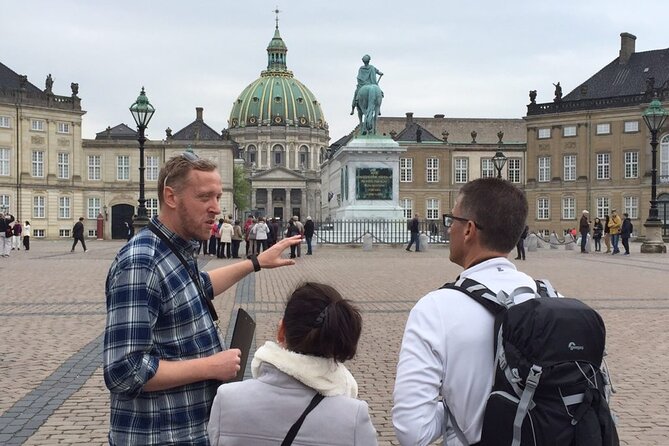
- A compact route through old Copenhagen: The walk links City Hall Square, Christiansborg, the old harbor, Holmens Kirke, King’s New Square, Nyhavn, and Amalienborg.
- Guides bring personality as well as facts: Jens, Rasmus, Nick, George, and Thomas are among the guides named in the feedback, though your guide will vary.
- A useful first-day orientation: You’ll learn the city layout and get suggestions for bakeries, restaurants, museums, and further walks.
- Headsets are available: They are not mandatory, but they can help you hear clearly in busy streets or with a larger small group.
- The route is history-heavy but not stiff: Stories about rulers, war, Parliament, local customs, and Copenhagen families keep the walk lively.
- Plan for outdoor walking: The experience depends on good weather, and most of the important sights are viewed from outside.
Why this is a smart first look at Copenhagen
I see this tour as an orientation rather than a sightseeing checklist. You won’t tour the interiors of Christiansborg or Amalienborg, and you won’t ride Tivoli’s attractions. Instead, you’ll learn how Copenhagen fits together, where the major sights sit, and which places deserve more of your own time.
That matters on a short visit. Copenhagen’s center is compact, but its sights belong to different eras and serve different purposes. A guide can explain why Parliament, the Supreme Court, the Prime Minister’s office, the old harbor, and royal residences all sit within the same walk.
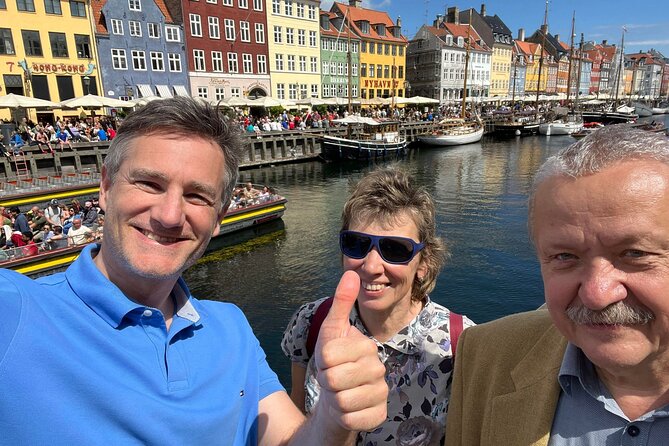
The tone appears to depend somewhat on the guide, but the strongest pattern is clear: expect an amusing, lively English-speaking local who welcomes questions. Jens is singled out for his clear explanations, personal stories, and command of Danish history. Rasmus is described as easy-going and especially helpful with planning the rest of a visit. Nick added personal perspective and helped one group adjust its plans when they had misunderstood what was within walking distance.
You should still arrive ready to walk and listen. Two hours is enough for a strong introduction, not enough for long stops at every monument. If you want a slow photo tour or detailed architectural study, this may feel brisk.
A few more Copenhagen trips to weigh up
- Private Walking Grand Tour of Copenhagen
★ 5.0 · 3,953 reviews - Copenhagen Highlights Walking Tour
★ 5.0 · 2,324 reviews - Politically Incorrect Private Highlights Walking Tour
★ 5.0 · 1,244 reviews
City Hall Square: Copenhagen’s public stage
The walk begins at the statue of Hans Christian Andersen on City Hall Square, or Rådhuspladsen. This is a sensible meeting point because it is central, open, and easy to connect with by public transport. Look for the guide clearly at the appointed time, since one person found the meeting arrangement harder to spot than expected.
The square is more than a traffic-heavy starting place. It is where Copenhagen gathers for major public celebrations, including large sporting victories and national events. Your guide sets the city’s public life against its past, showing how this central space still works as a place for Danes to come together.
The red-brick City Hall, completed in 1905, occupies one side of the square. You’ll hear how it functions as the administrative home of Copenhagen. This is an exterior introduction, so don’t expect a visit inside. Still, the building gives the opening section a clear civic focus before the walk moves toward royal and political Copenhagen.
Tivoli Gardens is also discussed nearby. Its location in the middle of the city is part of its charm, and the guide explains why this amusement park is so closely tied to Copenhagen’s identity. You may not enter the park, so treat this as useful planning advice. If Tivoli interests you, you can return later with a separate admission ticket.
The route also touches the city’s famous pedestrian shopping street and the equestrian statue of the bishop associated with Copenhagen’s founding in 1189. These short explanations help you see the center as more than a collection of pretty buildings. Copenhagen grew through religion, royal authority, commerce, and public life, and the walk introduces each strand quickly.
Christiansborg: where Copenhagen’s power began
At Christiansborg Slot, the tour turns toward the country’s present-day power. The huge palace complex houses Denmark’s Parliament, Supreme Court, and Prime Minister’s office. You’ll also have ministries, the central bank, and other important institutions pointed out from the surrounding area.
This is one of the most useful stops because it connects what you see with how Denmark works today. Instead of hearing only about royal rooms, you get a quick explanation of government, national institutions, and the political center of the country.
The guide also tells the story of Copenhagen’s beginnings here. That gives the palace more weight than a grand facade. You are standing at the place tied to the city’s foundation while looking at the machinery of modern Denmark.
The tour does not include entry to Christiansborg’s interiors. That keeps the price down and the route moving, but it also means you’ll need another visit if you want the reception rooms, royal spaces, or other indoor areas. I would mark the palace as a possible return stop rather than trying to squeeze an interior visit into this walk.
Christian IV’s harbor and the old stock exchange
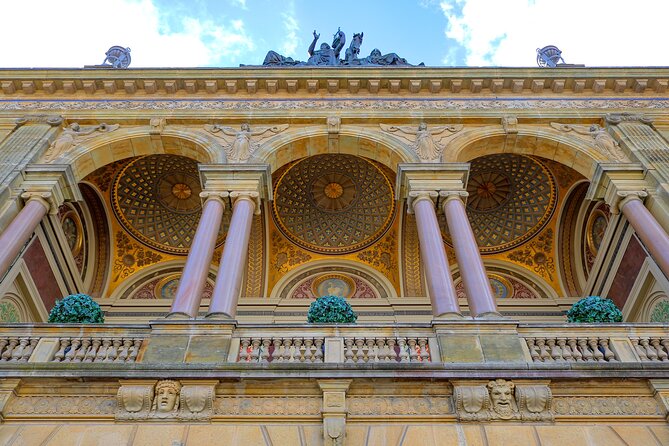
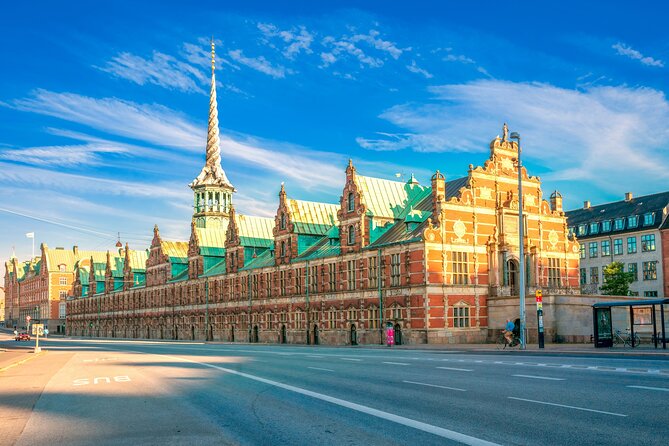
The next section brings you toward the water and Christian IV’s Brewhouse, an enormous brick building dating from 1618. The stop explains how Copenhagen’s harbor served as a naval base during the Renaissance. That historical shift is useful because it shows the harbor as a strategic military place, not simply today’s scenic waterfront.
The building is viewed as part of the walk, and admission is not included. You should think of it as an architectural and historical stop rather than a museum visit. The large brick structure gives you a sense of the scale of the city’s old defenses and naval ambitions.
Nearby, the old stock exchange adds a lighter visual moment. Its distinctive tower is formed by dragon tails twisted together. This is the sort of detail easy to miss if you simply follow a map from one major sight to another. A guide can point out the odd feature, then explain how commerce fit into Copenhagen’s growth alongside the navy and the court.
This part of the route is especially good for people who like buildings with a story. You’re not only photographing a waterfront facade. You’re hearing why the harbor mattered, who used it, and how trade and military power shaped the city.
Same city, a completely different kind of day:
- Copenhagen Card-Discover: 80+ Attractions & Public Transport
★ 4.6 · 5,351 reviews - Copenhagen: Hop-On Hop-Off Bus Tour with Boat Tour Option
★ 3.9 · 4,122 reviews - From Copenhagen: Lund and Malmö 2-Country Tour
★ 4.7 · 3,807 reviews - Copenhagen: Highlights 3 Hour Bike Tour with a Local Guide
★ 4.8 · 2,312 reviews
Holmens Kirke and the royal side of Copenhagen
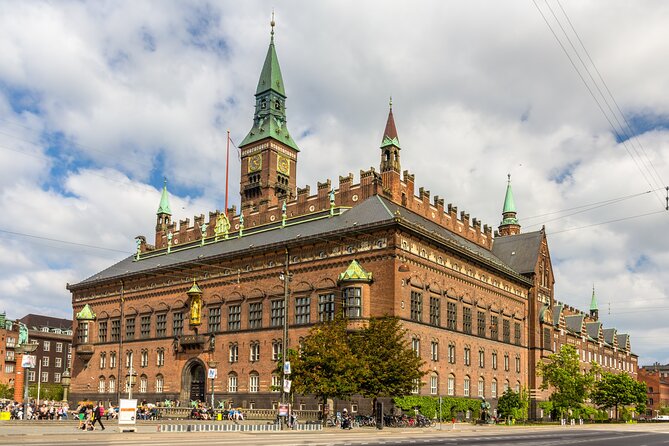
Holmens Kirke dates from the 1500s and has a close connection with Denmark’s political and royal life. Prime ministers are buried here, and royal weddings have taken place inside. If church activity allows, the group enters briefly. That qualification matters: an interior visit is possible, but it is not guaranteed.
The short stop lasts only a few minutes, so you won’t get an extended church tour. Even so, this is a welcome change from outdoor squares and palace exteriors. It adds a quiet religious and ceremonial layer to the route.
From here, the walk continues to King’s New Square, or Kongens Nytorv. This handsome Renaissance-era square is surrounded by impressive 1700s buildings and gives you a strong sense of Copenhagen’s more polished central district.
The square also works as a practical navigation point. From here, you can continue toward Nyhavn, Amalienborg, and eventually the Little Mermaid. The guide explains how to keep exploring on foot, which is valuable if this is your first day and you are still learning the city’s layout.
Nyhavn: colorful houses with a hard past
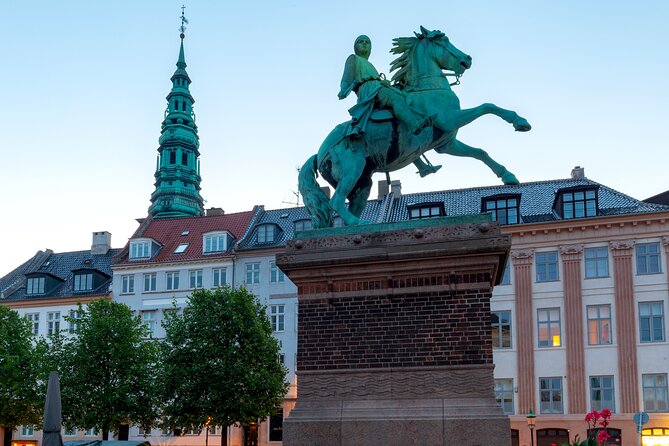
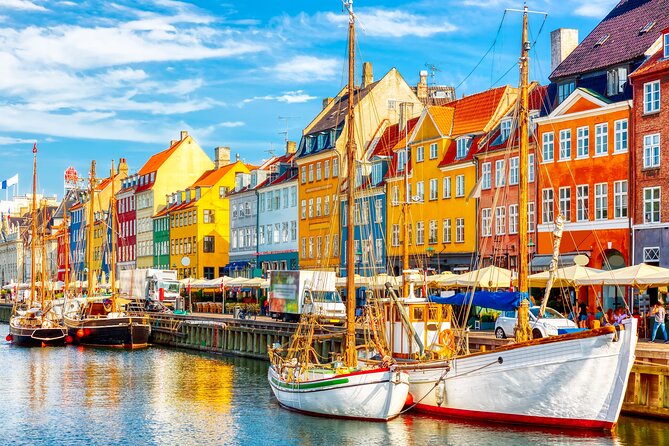
Nyhavn is Copenhagen’s best-known waterfront scene, with rows of colorful houses facing the canal. It is easy to treat the area as a photo stop, but the guide supplies a sharper piece of context: the harbor was dug in the 1600s by Swedish prisoners of war.
That detail changes the mood of the place. The cheerful facades are real, but the canal also reflects the hard labor and military conflict behind Copenhagen’s development. I like that this tour does not leave Nyhavn as a postcard image.
You may have time for photos and a quick look around, but this is not a meal stop. One suggestion from the tour experience was Hart bakery, and La Glacé was also recommended for cakes and hot chocolate. Those are useful ideas for after the walk, but food and drinks are your responsibility.
If the day is hot, bring water. One guide adjusted the pace to allow a short cold-drink break in Nyhavn, which shows how much the experience can benefit from a considerate guide. Do not count on a formal refreshment stop, though.
Amalienborg Palace and the changing of the guard
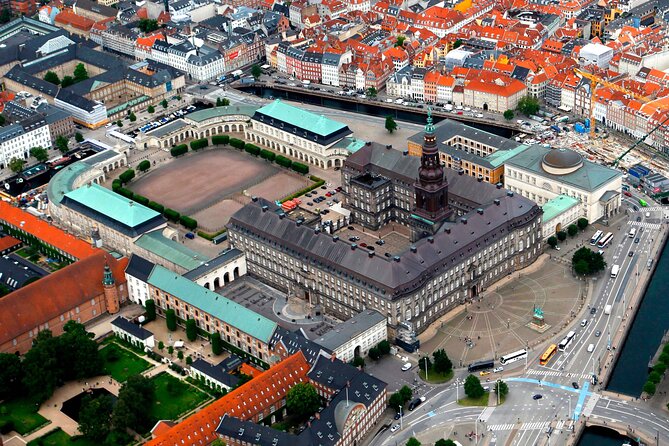
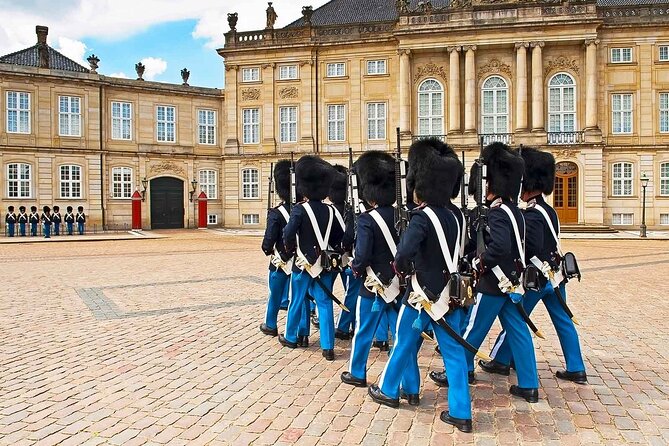
The walk finishes at Amalienborg Palace, the royal residence made up of four large mansions from the mid-1700s. The square gives you a clear view of the palace arrangement and a chance to understand how the four buildings work together as a royal complex.
The guide also discusses dramatic events there during World War II. That brings the palace into modern Danish history rather than leaving it as a ceremonial backdrop.
Timing can add a memorable bonus. Some participants happened to see the changing of the guard, and the walk has sometimes been timed to finish near the ceremony. You should treat that as a possibility, not a promise, since the schedule may not line up with every departure.
Admission to the palace is not included. That is no surprise for a walking introduction, but budget extra time and money if you want to go inside later. The ending is well chosen even if you stop at the exterior, since Amalienborg places you near other major sights and gives you a clear next step.
What the $40.41 price gets you
At $40.41 per person, the value rests on the guide rather than admission tickets. You are paying for a small-group walk, an English-speaking local, a city map, headsets, questions answered along the way, and practical advice for the rest of your stay.
For a first day in Copenhagen, that can be worthwhile. A good guide saves you from spending hours sorting out the city’s basic story on your own. The strongest guides add personal memories, local customs, family connections, and humor that no map can provide.
The price is less compelling if you want entry to famous sites. No castle or museum admission is included, and the walk spends only limited time at each stop. You are buying context and orientation, not a full attraction package.
With a maximum of 10 people, the cost also buys a more personal setting than a large city walk. You can ask about food, museums, neighborhoods, or transport without trying to catch a guide’s attention from the back of a crowd.
Pace, group size, and practical comfort
The advertised duration is about two hours, including travel time during the route. Feedback repeatedly points to covering a lot of ground, so wear comfortable shoes and leave room for pauses at crossings, photos, and questions.
Headsets are provided and optional. I would use one if the streets are noisy or if the group reaches the maximum size. You can skip it if you prefer a quieter walk and can hear the guide easily.
The meeting point is at the Hans Christian Andersen statue on City Hall Square, and the listed endpoint is Amalienborg Palace. The experience is near public transportation, and most people can take part, but it is still a walking tour with no promise of indoor shelter.
Good weather is required. If poor weather cancels the experience, you are offered another date or a full refund. You can cancel for a full refund up to 24 hours before the start time. Tips are not included, so plan to tip the guide separately if the service merits it.
Who will get the most from this walk
I would choose this for a first visit, especially if you arrive with only a rough idea of Copenhagen’s center. It gives you a mental map, a historical timeline, and a list of places to return to at your own pace.
It also suits people who prefer stories to silent sightseeing. The best guides use humor and personal detail, and the feedback names Jens, Rasmus, Nick, George, and Thomas as examples of guides who made the history easy to follow. Your assigned guide may be different, so expect the style to vary.
Families and older adults should consider the walking pace and weather. The tour is not built around long seated stops. On the other hand, the small group and optional headset make it easier to ask for clarification or keep up with the explanation.
I would choose another format if your main goal is to tour interiors, sit down often, or visit Tivoli during the same outing. This walk points you toward those experiences but does not include them.
Should you book the Copenhagen introduction?
Book it if you want to get your bearings fast and understand why Copenhagen’s government, royal family, harbor, churches, and shopping streets sit so close together. The route is well planned, the group is capped at 10, and the guide’s local stories give the walk more life than a self-guided map.
Skip it if you already know the center well or want admission to major interiors included in the price. For everyone else, especially on the first day, $40.41 is a fair charge for two hours of focused history and practical planning help.
FAQ
How long does the Copenhagen walking tour last?
The tour lasts approximately two hours, including travel time during the walk.
Where does the tour begin?
It begins at the Hans Christian Andersen statue on City Hall Square, Rådhuspladsen, in Copenhagen.
Where does the tour end?
The listed endpoint is Amalienborg Palace at Amalienborg Slotsplads.
What language is the tour offered in?
The tour is offered in English with a local English-speaking guide.
How many people can join the walk?
The group has a maximum of 10 participants.
Are admission tickets included?
No. Entry to castles and museums is not included. The tour mainly explains and shows the sights from outside, with entry to Holmens Kirke possible only if the church is open and activities permit.
Are headsets provided?
Yes. Headsets are supplied so you can hear the guide, but using one is optional.
Can I cancel for a full refund?
Yes. You can cancel at least 24 hours before the experience start time for a full refund. If poor weather causes the operator to cancel, you are offered another date or a full refund.
Just added around Copenhagen
- Urban Design and Livability E-bike Tour★ 4.8 · 21 reviews
- Full-Day Tour; Castle, Palace & Cathedral, Winter(JAN-MAR)★ 5.0 · 11 reviews
- a day at North Zealand Castle Tour★ 4.5 · 19 reviews
- The Philosopher’s Last Walk: An audio tour on the life of Søren Kierkegaard★ 4.5 · 5 reviews
- The Six Forgotten Giants Trolls Hunt with Minibus★ 4.5 · 27 reviews
- Copenhagen Walking Tour with Food Testing (smorrebrod dish & snap)★ 4.5 · 10 reviews
- The Forgotten Giants Private Tour★ 5.0 · 3 reviews
- Explore the Instaworthy Spots of Copenhagen with a Local★ 3.5 · 3 reviews
Walking Tours, compared.
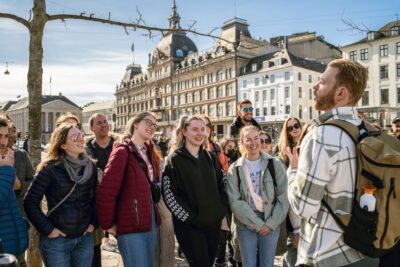
Group Walking Tour – City Highlights – 2 Hours
Read our review →
3h walking tour, small group max 10 people Copenhagen
Read our review →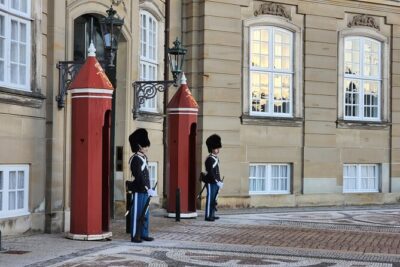
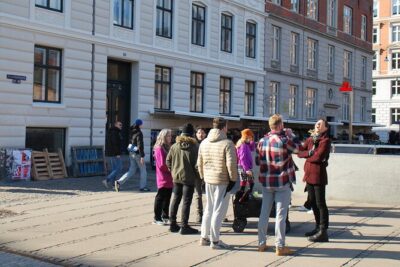
Walk & Canal Tour: Copenhagen Highlights + Changing of the Guards
Read our review →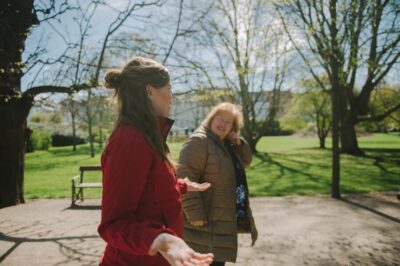
Browse the lists this tour appears in