
Reviewed · SELF-GUIDED TOURS
Danish Design Classic and Modern Style Self-Guided Audio Tour
Copenhagen’s design story comes into focus on this GPS-guided walking tour, which links Arne Jacobsen’s SAS Royal Hotel with Designmuseum Danmark. Along the way, you pass grand churches, museums, palaces, harbor sights, and the city’s most useful lesson in style: Danish design moved from classical stone and ornament to simple, practical modern forms.
I like two things here. First, the precise geolocation helps keep the audio moving with you instead of leaving you to guess when to press play. Second, the tour lets you pause, wander, and return later, a good fit if your group dislikes being tied to a live guide but still wants context.
The main drawback is its short running time and self-guided format. Seventy minutes gives you a brisk introduction, not a full museum visit or a leisurely look at every stop. You also need your own smartphone and headphones, and admission fees are not included.
Key points about the Copenhagen design walk
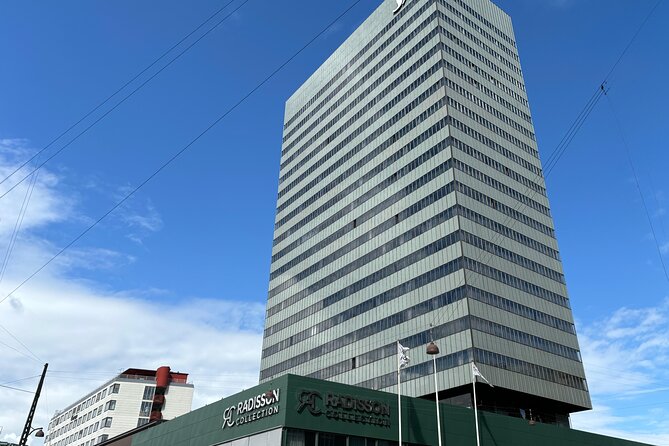
- Start at Arne Jacobsen’s SAS Royal Hotel: Begin with the building that helped define modern Danish design.
- End at Designmuseum Danmark: The route finishes where you can continue with actual furniture, crafts, and design objects.
- See classic and modern Copenhagen together: The stops connect Neo-Classicism, Rococo, National Romantic architecture, Art Nouveau, and modern design.
- Use the tour on your own schedule: GPS audio, maps, and route data work offline after setup.
- Cover major sights in about 70 minutes: The path includes Tivoli, Nyhavn, Christiansborg, Marble Church, and several museums.
- Pay $11.99 for lifetime access: The price is modest if you plan to repeat the walk or use it as a framework for further exploring.
Starting with Arne Jacobsen at the SAS Royal Hotel
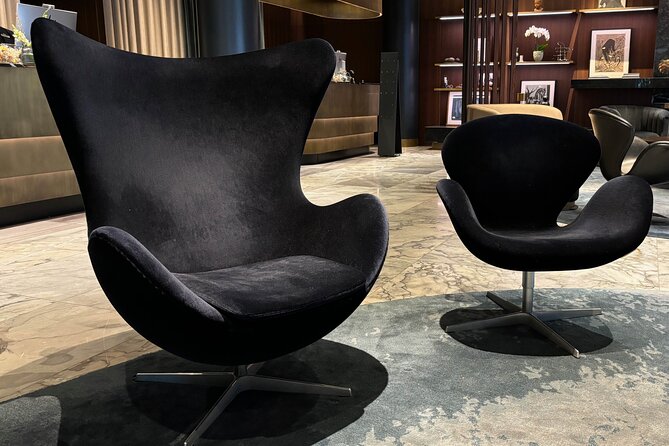
The tour begins at the Radisson Collection Royal Hotel on Hammerichsgade, the building formerly known as the SAS Royal Hotel. Completed in 1958, it was designed by Arne Jacobsen, one of the key figures behind the clean, useful style now associated with Denmark.
That starting point gives the route a clear purpose. You are not simply walking from one famous Copenhagen sight to another. You begin with a modern building and then move backward and sideways through the city’s design story, seeing how taste changed over time.
Jacobsen is especially important because his work joined architecture, furniture, and everyday use. The tour presents him as an originator of Danish design’s smooth, simple, organic, and practical character. For you, that means the first stop gives you a way to look at later buildings and objects with sharper eyes.
You should arrive with the app ready and headphones connected. The experience does not provide a smartphone or headphones, and there is no live guide waiting at the hotel. The directions to the starting point are included, and the tour is designed to begin once you reach the correct location.
A few more Copenhagen trips to weigh up
- Copenhagen Little Mermaid Exploration Game and Self-Guided Tour
★ 4.0 · 36 reviews - Half Day Self-Guided Audio Walking Private Tour in Copenhagen
★ 5.0 · 21 reviews - Monstour: A Self-Guided Audio Tour of Danish Folk Legends
★ 4.5 · 19 reviews
Tivoli, City Hall, and the city’s public face
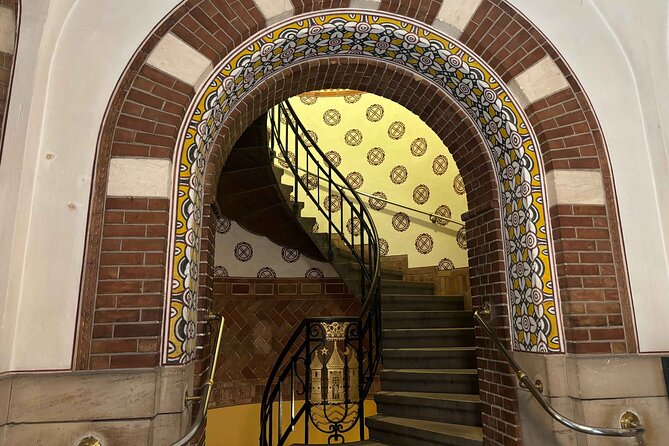
From the hotel, the route takes in Tivoli Gardens and Copenhagen City Hall. Tivoli’s entrance is an elaborate Neoclassical stone archway, a useful early reminder that Copenhagen’s design story is not only about minimal furniture and pale wood.
Tivoli opened in 1843 and has continued operating ever since. The tour uses it as a piece of the city’s long public life, not merely as an amusement park. You can see how a place built for entertainment also presents a carefully shaped architectural identity.
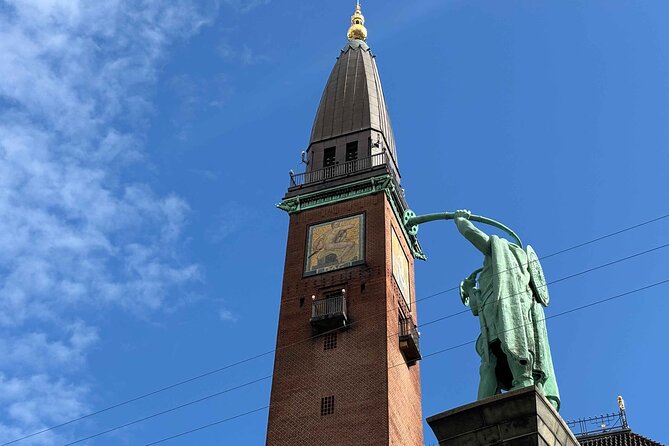
Copenhagen City Hall, completed in 1905, brings you into National Romantic style, the Scandinavian version of Art Nouveau. Its place on this route helps explain why Danish design cannot be reduced to one look. Before the spare modernism associated with Jacobsen, Danish architects were also drawing on local traditions, national symbols, and decorative forms.
The route passes these sights rather than promising entry. That matters if you want to inspect interiors or ride attractions. The $11.99 price does not cover admission fees, food, drinks, or transportation. Think of the audio as a lens for the streets, not a ticket to every building along the way.
Glyptotek and the Danish National Museum
The Ny Carlsberg Glyptotek introduces a different side of Copenhagen’s visual culture. It focuses on art from before the 20th century and is known for its winter garden and café. The collection began with Carl Jacobsen, son of the founder of the Carlsberg brewery.
This stop makes a useful contrast with the modern design focus. Danish taste did not appear suddenly in the 20th century. It grew from long contact with sculpture, classical forms, craftsmanship, and carefully made objects.
The Danish National Museum adds an even older layer. The building itself may not impress you from the outside, but the Viking material inside includes early examples of Danish design, including gold jewelry. Even if you do not enter, the audio connects later Danish design with the older tradition of skilled work and practical beauty.
That connection is one of the better reasons to choose this tour instead of simply walking between modern buildings. It gives you a broad time frame, from Viking objects and classical sculpture to modern hotel interiors.
Thorvaldsen’s Museum and changing taste
Thorvaldsen’s Museum offers one of the route’s clearest lessons in changing fashion. Bertel Thorvaldsen was a Danish sculptor who went to Italy and learned to work in the Classical style.
His museum represents a period when classical forms carried great prestige. Later generations shifted toward other ideas, and the way people judged sculpture, architecture, and decoration changed with them. The audio uses Thorvaldsen as a marker in that story.
You may find this stop most useful if you want to understand design as something shaped by taste, not just function. A building or object does not become old-fashioned because it stops working. It can become old-fashioned because people begin to value different lines, materials, or ideas.
Same city, a completely different kind of day:
- Copenhagen Card-Discover: 80+ Attractions & Public Transport
★ 4.6 · 5,351 reviews - Copenhagen: Hop-On Hop-Off Bus Tour with Boat Tour Option
★ 3.9 · 4,122 reviews - Private Walking Grand Tour of Copenhagen
★ 5.0 · 3,953 reviews - From Copenhagen: Lund and Malmö 2-Country Tour
★ 4.7 · 3,807 reviews
Christiansborg and the royal center
Christiansborg Palace brings politics and ceremony into the walk. It is used for state dinners and is also home to the Danish Parliament, the Folketing.
The palace helps you see how design operates in public life. Large official buildings must communicate authority, tradition, and national identity. They are not made only for comfort or efficiency, the qualities often linked to modern Danish furniture.
The route also reaches Kongens Nytorv, or King’s Square, one of Copenhagen’s main hubs. This is a useful point for understanding the city as a connected place rather than a collection of isolated monuments. Several routes and major sights meet here, including the Royal Danish Theater and nearby historic buildings.
Because the tour is GPS-guided, the square is also the kind of place where clear directions matter. Busy city intersections can be confusing when you are listening rather than looking at a guide. The precise location tracking is meant to tell you when to pay attention and when to move on.
Royal Danish Theater, Charlottenborg, and Nikolaj Square
The Royal Danish Theater is a lovely Neo-Baroque building now used mostly for the Royal Danish Ballet. The theater is described as rarely full, an unusual detail that gives the stop a more human edge. Grand architecture does not always mean a packed house.
Charlottenborg Palace was first built as a private mansion for the brother of a king. It now houses the Royal Danish Academy of Fine Arts. That change from royal residence to art academy says a lot about Copenhagen’s institutions: buildings can shift purpose while retaining their architectural importance.
Near Nikolaj Square, the church is a 1909 restoration of an older building that burned down. The restored structure has not actually been used as a church. It served as a naval museum and a library, and it is now a modern art venue.
This group of stops is especially good for anyone who likes buildings with second and third lives. You see how Copenhagen keeps old structures in use rather than treating them as frozen museum pieces. You also get several styles close together, from Neo-Baroque grandeur to older church forms and later restoration.
Alexander Nevsky Church and the Odd Fellows Palace
The Alexander Nevsky Church is the only Russian Orthodox church in Copenhagen. Its patterned facade and golden towers make it easy to pick out from the surrounding streets.
It adds an international note to a tour that could otherwise feel focused only on Danish national style. Copenhagen’s architecture reflects outside influences too, including religious and cultural communities with their own visual traditions.
The Odd Fellows Palace has a less obvious but equally interesting history. It took its name from a Masonic lodge that occupied the building for many years. Today, it is mainly a wedding and party venue.
This is the kind of stop that rewards looking past official monuments. A palace name may suggest royal use, but the actual story can be about clubs, ceremonies, and changing public functions. The audio gives you reasons to notice such buildings instead of walking past them on the way to a larger attraction.
Nyhavn and the final approach to Designmuseum Danmark
Nyhavn is Copenhagen’s famous 17th-century waterfront, stretching from Kongens Nytorv toward the harbor. Its canal, brightly colored buildings, and entertainment venues make it one of the city’s most recognizable areas.
It is also an important counterpoint to the SAS Royal Hotel. At the start, you see modern lines and postwar practicality. At Nyhavn, you get a historic urban setting shaped by water, trade, color, and older building fronts.
The route finishes at Designmuseum Danmark on Bredgade. This is the natural place to end a tour about Danish design because the museum covers Danish and international design and crafts. Its collection includes work by Arne Jacobsen, Jacob Jensen, and Kaare Klint.
The finish is practical as well as thematic. The audio introduces design ideas outdoors, then leaves you at a museum where you can examine actual objects at close range. Admission is not included, so treat the museum as an optional follow-up rather than part of the $11.99 tour itself.
How the self-guided format works
This is a private activity for your own group. You are not sharing a guide with strangers, and you do not need to match another group’s pace. If someone wants to stop for a photo at Nyhavn or pause near a museum, you can do that.
The VoiceMap application supplies the audio, maps, and geodata. Offline access is included, which is useful if you want to avoid relying on a steady mobile connection while walking. You should still prepare your phone before setting out, since your device and headphones are your responsibility.
The geolocation is the feature that most affects the experience. A good audio tour needs to tell you not only what you are hearing but where to stand and when to continue. The available feedback describes the location tracking as very precise, and that is particularly helpful in central Copenhagen, where major squares and streets can offer several possible directions.
The narration also includes useful tips along with design background. That combination keeps the experience from becoming a string of dates and architectural labels. You get context, then a practical reason to look around.
At about one hour and ten minutes, the tour works best as a focused introduction. Do not expect a slow museum-style lesson or enough time to enter every attraction. You can pause the route, but the listed duration suggests a fairly brisk walk.
Is $11.99 a good value?
At $11.99 per person, the cost is low compared with a private walking tour. You do not pay for a live guide, transport, food, or admissions, so the value depends on how you use it.
I think the strongest value comes from flexibility and lifetime access. You can take the tour again, split it into shorter sections, or use it as a first walk before returning to the sights that interest you most. A family or small group can also avoid the cost and fixed schedule of hiring a private guide.
The price is less compelling if you want detailed personal interaction. There is no guide to answer a question about a specific chair, building detail, or museum object. If you prefer conversation and spontaneous changes, a live tour may suit you better.
For a first day in Copenhagen, the route can help you get your bearings while giving the city a design theme. For repeat visits, lifetime access makes it easier to use the tour when the weather, energy level, or schedule is right.
Who should book this Copenhagen audio tour?
I would choose this for independent visitors who want more than a basic sightseeing walk but do not want to follow a guide with a flag. It also suits families and couples with different interests, since you can stop when you wish.
Design students, architecture fans, and people curious about Scandinavian style will get the most from the route. The link between Viking jewelry, classical sculpture, historic churches, royal buildings, and Jacobsen’s modern work gives the subject useful breadth.
It is less suitable if your main goal is to spend time inside museums. The route visits or passes many institutions, but entrance fees are separate and the tour itself lasts only about 70 minutes. You should also skip it if you do not want to use your phone or walk while listening to audio.
Confirmation arrives at booking. The experience is near public transportation, service animals are allowed, and most people can participate. You can cancel for a full refund up to 24 hours before the start time. Within 24 hours, cancellations and changes are not accepted.
Should you book it?
Book this tour if you want a compact, inexpensive way to connect Copenhagen’s design styles on your own terms. The best reason is not simply the list of sights. It is the route’s central idea: Danish design makes more sense when you see the older classical, royal, religious, and craft traditions that came before modern simplicity.
Skip it if you need a live expert, long museum visits, or a slow architectural study. For everyone else, the precise GPS guidance, offline access, useful narration, and lifetime reuse make $11.99 a sensible purchase, especially when you plan to finish at Designmuseum Danmark and continue the subject indoors.
FAQ
Where does the Danish Design Classic and Modern Style audio tour start?
It starts at the Radisson Collection Royal Hotel, formerly Arne Jacobsen’s SAS Royal Hotel, at Hammerichsgade 1 in Copenhagen.
Where does the tour end?
The tour ends at Designmuseum Danmark at Bredgade 68, Copenhagen.
How long does the tour take?
The expected duration is approximately one hour and ten minutes.
Is this a guided group tour?
No. It is a private, self-guided activity for your own group, using the VoiceMap application and GPS directions.
What does the tour include?
It includes lifetime access to the audio tour, the VoiceMap application, offline audio, maps, geodata, and directions to the starting point.
Do I need my own phone and headphones?
Yes. A smartphone and headphones are not provided.
Are museum admission fees included?
No. Personal expenses and admission fees during the tour are not included.
Can I cancel for a full refund?
Yes. You can cancel at least 24 hours before the experience start time for a full refund. Cancellations or changes made within 24 hours are not accepted and are not refunded.
Just added around Copenhagen
- Urban Design and Livability E-bike Tour★ 4.8 · 21 reviews
- Full-Day Tour; Castle, Palace & Cathedral, Winter(JAN-MAR)★ 5.0 · 11 reviews
- a day at North Zealand Castle Tour★ 4.5 · 19 reviews
- The Six Forgotten Giants Trolls Hunt with Minibus★ 4.5 · 27 reviews
- Copenhagen Walking Tour with Food Testing (smorrebrod dish & snap)★ 4.5 · 10 reviews
- The Philosopher’s Last Walk: An audio tour on the life of Søren Kierkegaard★ 4.5 · 5 reviews
- The Forgotten Giants Private Tour★ 5.0 · 3 reviews
- Explore the Instaworthy Spots of Copenhagen with a Local★ 3.5 · 3 reviews
Self-Guided Tours, compared.
The Ancient Viking Stronghold of Aros: A Self-Guided Audio Tour in Aarhus
Read our review →
Copenhagen Little Mermaid Exploration Game and Self-Guided Tour
Read our review →
Half Day Self-Guided Audio Walking Private Tour in Copenhagen
Read our review →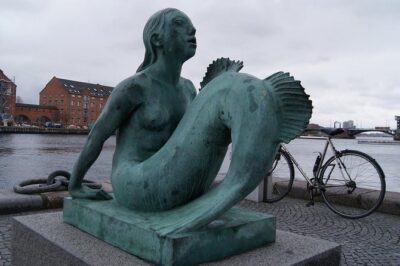
Monstour: A Self-Guided Audio Tour of Danish Folk Legends
Read our review →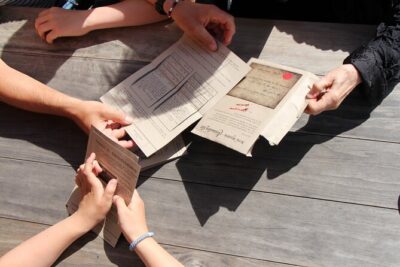
Copenhagen Self-Guided Murder Mystery Tour by the Round Tower
Read our review →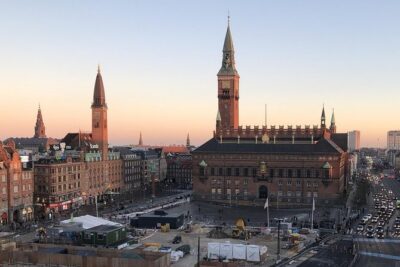
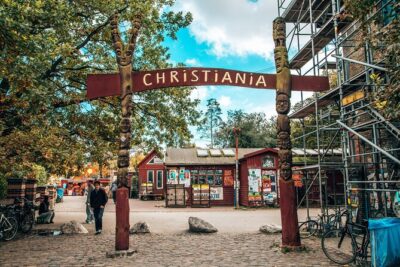
Copenhagen Christiania: Hidden Stories Self-Guided Adventure
Read our review →
Copenhagen Royal Conspiracy Exploration Game and Tour
Read our review →Browse the lists this tour appears in