
Reviewed · CRUISES & BOAT TOURS
Discover Copenhagen Private Boat Tour Experience
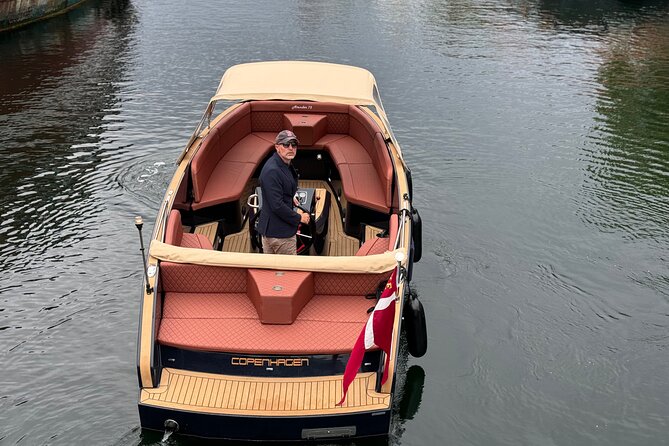
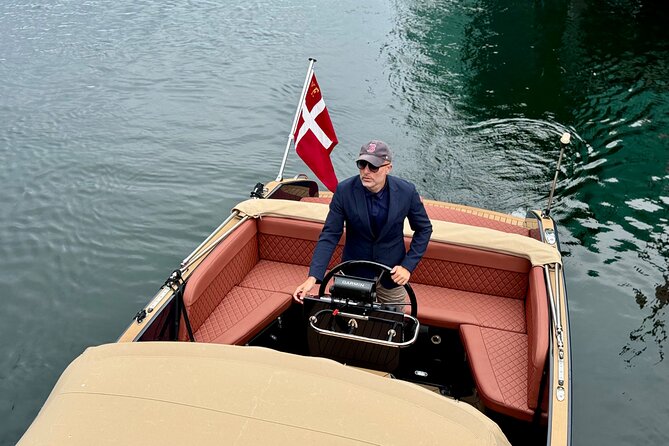
Copenhagen’s best stories are often told from the water. This private cruise carries you from the old customs quay past Nyhavn, naval docks, Christiania, royal palaces, modern architecture, and the Little Mermaid, all without squeezing into a large sightseeing boat. Captain Denis is the main reason the experience feels personal: he explains what you are seeing in a relaxed, conversational way.
I like two things right away. First, the boat can be tailored to your group rather than following a fixed public-tour script. Second, the route joins famous sights with less familiar corners, including Torpedohallen, old mast houses, Reffen, and Trekroner Fort. The main consideration is price: $484.89 per group of up to eight is good value for a full group, but expensive for one or two people.
Key things to know before you book
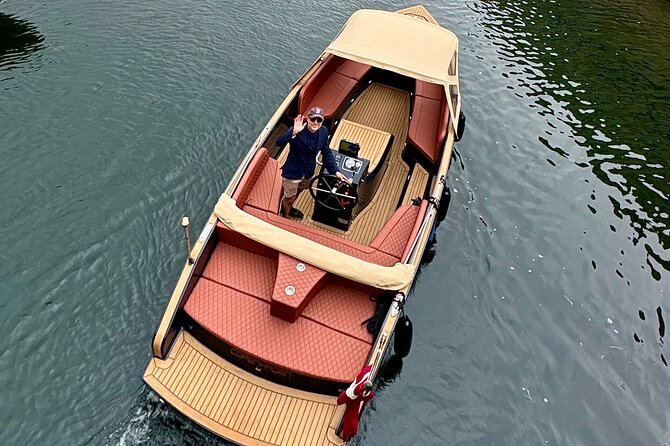
- Private boat for up to eight: Your group has the boat to itself, with no strangers sharing the ride.
- Captain Denis brings local context: Expect an easygoing guide who can discuss landmarks, Danish life, local economics, politics, and history.
- A wide-ranging harbor route: The boat can connect central canals with Holmen, Reffen, Nordhavn, Trekroner Fort, and the Little Mermaid.
- Three hours is a practical choice: That length gives you a strong look at Copenhagen without turning the outing into an all-day commitment.
- Good in uncertain weather: The boat has a dry, cushioned bench and warm wraps were available during one rainy departure, though the tour depends on suitable weather.
- Drinks and bites fit the mood: Wine, snacks, and ordered food can make this feel more like a private harbor outing than a basic sightseeing ride.
Why a private boat is a smart way to see Copenhagen
Copenhagen is easy to explore on foot, but the harbor changes your sense of the city. From street level, you see façades and monuments. From the boat, you see how the city was built around trade, naval power, royal ceremony, industry, and canals.
That difference matters. Nyhavn looks lovely from the quay, but from the water you understand its shape as a working harbor. Christianshavn feels more intimate when its houseboats and narrow canal walls pass close by. Holmen reveals the city’s military past in a way that is hard to grasp from a museum entrance.
A private setting also lets you ask questions. Captain Denis has been praised for explaining Copenhagen in a friendly, natural manner rather than delivering a stiff speech. He can talk about landmarks, Danish daily life, local economics, and politics, which gives the ride more depth than a simple list of construction dates.
The boat suits families especially well. One family with a teenager found the history engaging, even in rainy weather. Another group of five appreciated having wine and snacks on board. If you want a quiet ride with room to talk, take photos, and change the focus of the trip, the private format earns its premium.
A few more Copenhagen trips to weigh up
- Private Walking Grand Tour of Copenhagen
★ 5.0 · 3,953 reviews - Politically Incorrect Private Highlights Walking Tour
★ 5.0 · 1,244 reviews - Bike Tour Copenhagen. Private Guide, Concierge Service, Small Grp
★ 5.0 · 416 reviews
Starting at the Old Customs House and Nyhavn
The meeting point is Havnegade 44, at the Old Customs House. This is a fitting place to begin because Copenhagen’s story is tied to ships, goods, and the sea.
The 1734 Baroque building once marked the point where ships declared cargo, paid duties, and entered the Danish trading system. Rum from the West Indies, timber from Norway, and silk from the East once passed through this maritime gateway. As the boat pulls away, you are not simply leaving a dock. You are following the same water route that helped make Copenhagen an international port.
Nyhavn arrives soon after. Its bright houses and old wooden ships are the city’s familiar picture, but the canal has a less polished past. It was once a rough sailor district with taverns and brothels. Hans Christian Andersen lived in three different houses here, and the canal’s theatrical colors make it easy to see why it became part of Copenhagen’s public identity.
The boat gives you a useful choice. You can take the classic photographs, but you are not trapped in the crowded promenade. The drawback is that the famous façades are best appreciated in good light, and the narrow waterway can feel busy at popular times.
Playhouse, Paper Island, and old naval scars
The Royal Danish Playhouse marks the shift from old harbor to modern Copenhagen. Opened in 2008, it uses oak, glass, and dark steel, with a broad wooden walkway at the water’s edge. From the boat, the structure looks almost like a ship prepared to leave port.
Next comes Papirøen, or Paper Island. The former paper warehouse once held giant rolls for the Danish press and later became a popular food and arts center. Much of the original site has been cleared for new construction, including the Opera Park, but its story remains useful: Copenhagen repeatedly turns industrial land into public and cultural space.
The route then reaches the old mast houses and the Cannonball Courtyard. The long timber buildings recall the period when ship masts were made and stored near the naval docks. Look toward the brickwork and you may see cannonballs lodged in the walls, reminders of the British bombardment of Copenhagen in 1807.
This part of the tour is valuable because it avoids making the city look like one neat postcard. Copenhagen was a port of commerce, but it was also a place of war, shipbuilding, and hard physical labor.
Christiania, Torpedohallen, and the Long Boat Houses
From the water, Christiania appears as a loose collection of handmade homes, gardens, sculptures, and colorful walls beside the old military area. Founded in 1971, the self-governing community is known for its counterculture and Green Light District, where cannabis has long been tolerated.
A boat view gives you a quieter look at Christiania’s canalside edge. You see the improvised architecture and communal spirit without entering the neighborhood itself. That is an advantage if your interest is in urban history and alternative living rather than a close look at every street.
The mood changes near Torpedohallen, a former naval facility with stark industrial lines. Nearby, the Long Boat Houses are far more domestic. These low wooden dwellings, some more than 150 years old, sit close to the canal in red, green, and blue. They show a small-scale side of Copenhagen, where the harbor is not just a backdrop but part of home life.
This stretch may be one of the most rewarding for repeat visitors. It lacks the fame of Nyhavn, yet it gives you a clearer sense of how people live beside the water.
Same city, a completely different kind of day:
- Copenhagen Card-Discover: 80+ Attractions & Public Transport
★ 4.6 · 5,351 reviews - Copenhagen: Hop-On Hop-Off Bus Tour with Boat Tour Option
★ 3.9 · 4,122 reviews - From Copenhagen: Lund and Malmö 2-Country Tour
★ 4.7 · 3,807 reviews - Copenhagen Highlights Walking Tour
★ 5.0 · 2,324 reviews
Copenhill and Holmen’s preserved warships
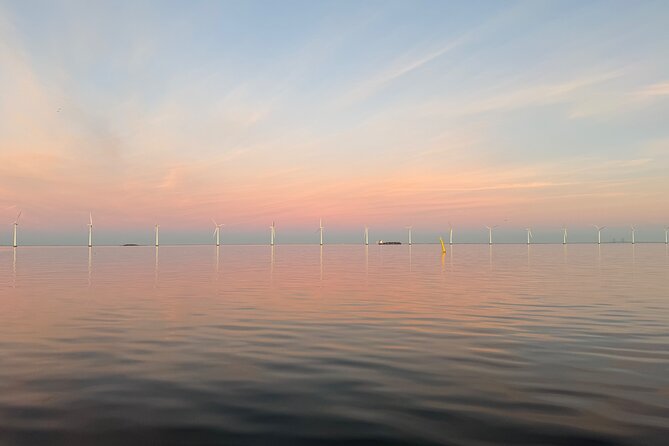
Copenhill is one of Copenhagen’s boldest ideas. The waste-to-energy plant turns non-recyclable waste into electricity and district heating, while its roof serves as a park, climbing wall, hiking route, and ski slope. From the boat, you can see people using the artificial slope and the smokestack designed to puff smoke rings.
You do not need to be an architecture fan to appreciate the point. Copenhagen has chosen to display useful infrastructure rather than hide it. The result is playful, practical, and easy to remember.
Along Holmen, museum ships preserve a more serious side of the harbor. The frigate Peder Skram served during the Cold War. The torpedo boat Sehested was built for speed, and the submarine Sælen lets land-based visitors see how cramped naval life could be. From the water, these vessels appear at full scale, with their hulls and military equipment tied directly to the docks where warships once operated.
The route also passes the Royal Pavilions and the Royal Yacht Dannebrog. The pavilions were used for royal arrivals and departures by sea. Launched in 1931, Dannebrog remains in active service as a floating residence during official visits and holidays.
Cannon salutes, the mast crane, and Powder Run Road
The Old Guardhouse and nearby saluting battery connect the harbor to living tradition. A blank round is fired at sunrise and sunset, marking the start and end of the day. Timing your boat ride around the salute is not guaranteed, but if you hear it from the water, the sound should carry across the harbor with unusual force.
The Mastekranen, or Mast Crane, is another reminder of the working naval district. Built in 1749, the wooden crane once lifted huge masts onto ships using pulleys, counterweights, and manpower. Its survival helps you picture the effort behind Denmark’s old fleet.
Krudtløbsvej means Powder Run Road. Gunpowder was once moved along this route from the Royal Powder Magazine to ships waiting at the docks. Today, old brick buildings share the shore with houseboats and gardens. The contrast is almost comic: a dangerous military supply route has become a pleasant residential waterway.
These stops reward a guide who can connect small details to larger events. Without explanation, a crane or old brick storehouse can look like background scenery. With context, it becomes part of the city’s working memory.
Reffen, Trekroner Fort, and the open harbor
Reffen occupies a former shipyard and uses shipping containers as kitchens, bars, workspaces, and studios. More than 50 food stalls and start-ups serve dishes ranging from bao buns and Brazilian barbecue to organic ice cream and craft beer.
If your chosen tour length allows time to stop, Reffen can add food and people-watching to the cruise. If you simply pass by, you still get a look at Copenhagen’s habit of giving old industrial sites a new purpose. It is worth asking in advance how much time your chosen duration allows, since the standard experience is flexible rather than fixed.
Farther out, Trekroner Fort sits at the harbor entrance. Its defenses began as a floating battery of sunken ships and cannons, with the current stone and brick fortification completed in 1818. Thick walls and narrow gun openings remain, and the fort still looks like a guard post facing the open sea.
This section is most rewarding on a clear day, when the city’s relationship with the water becomes obvious. It is also the point where a short canal outing can turn into a true harbor cruise, so check the duration before expecting to reach every northern and eastern stop.
Nordhavn, the Little Mermaid, and the royal waterfront
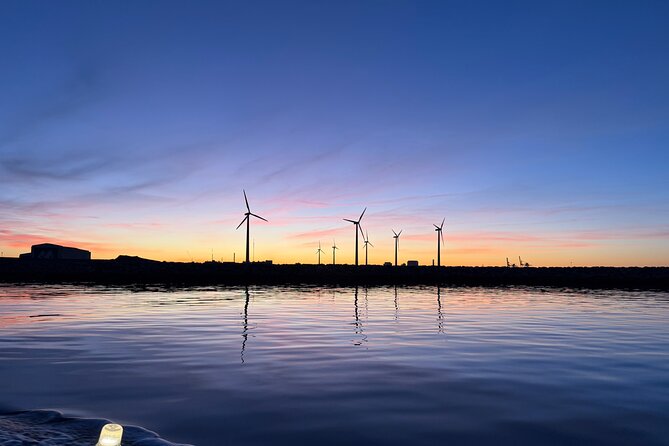
Nordhavn shows Copenhagen’s current experiment in waterfront planning. The former container port is being reshaped with energy-efficient buildings, bicycle routes, harbor baths, rooftop gardens, and homes on reclaimed land. The white UN City and converted grain silos add to the mix.
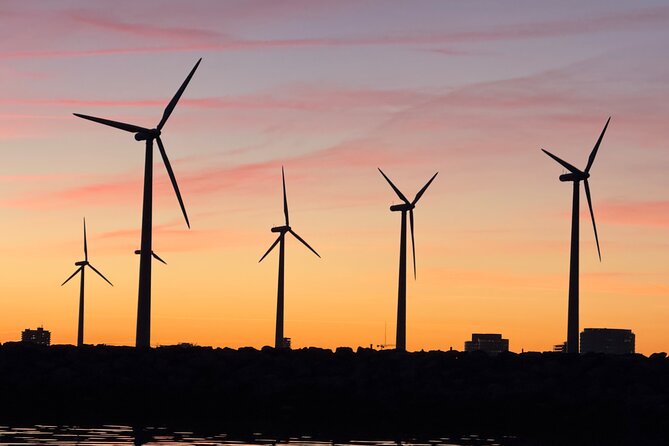
From a boat, you can compare old maritime Copenhagen with the city being built now. The change is not subtle. Steel, glass, wind turbines, and new housing replace the rougher industrial edges.
The Little Mermaid is smaller than many people expect. Unveiled in 1913 and made by Edvard Eriksen, the bronze statue was inspired by Hans Christian Andersen’s tale of sacrifice and transformation. She has been painted, damaged, beheaded, and repaired, yet remains fixed on the rock, facing the sea.
Seeing her from the water is a genuine advantage. You avoid treating her as a statue at the end of a crowded photo queue and instead see the figure in her original setting, surrounded by harbor and open water. Still, the view is brief, and the boat cannot turn the Little Mermaid into a grand monument. Her appeal is quiet and story-based.
The Yellow Palace and Amalienborg bring you back to royal Copenhagen. Four similar Rococo mansions form an octagonal square around a statue of Frederik V. Across the water, the Opera House faces the palace, creating one of the city’s finest architectural pairings.
Christianshavn, the Opera House, and the inner canals
The Copenhagen Opera House was completed in 2005 on a former dockyard site. Its broad cantilevered roof reaches over the harbor, while the interior uses golden maple, Sicilian marble, and large glass walls. From the boat, the building’s scale becomes clearer, especially in relation to Amalienborg across the water.
Christianshavn feels softer and more personal. Founded by Christian IV in the early 1600s and inspired by Amsterdam, it has colorful canal houses, balconies filled with plants, bicycles, and houseboats. The canal narrows here, so you get a close view of daily life beside the water.
The Church of Our Saviour rises above the roofs with its gold spiral staircase. Completed in 1695, it is famous for the outdoor climb of roughly 400 steps. You will not climb it during the boat ride, but the view from the canal shows why it is one of Copenhagen’s defining landmarks.
Cirkelbroen, designed by Olafur Eliasson and opened in 2015, crosses the canal with overlapping circular platforms and tall masts. It is a bridge made to slow pedestrians and cyclists down. From the boat, its maritime design makes particular sense.
The Black Diamond, Christiansborg, and Børsen
The Black Diamond is the modern wing of Denmark’s Royal Library. Its dark glass façade reflects the harbor, while the interior holds old manuscripts, rare books, and national collections. The building’s sharp form looks different from every angle, especially when the water mirrors it.
Frederiksholms Kanal offers a quieter passage. Kongens Bryghus, founded by Christian IV in 1608, once supplied beer for royal banquets and naval voyages. The building now houses the Lapidarium of Kings, where stone royal figures and decorative pieces are displayed.
At Ved Stranden and Gammel Strand, Copenhagen’s medieval shoreline comes close to the boat. The old fishing market has become a line of cafés and historic houses. Nearby sights include the Thorvaldsen Museum and Christiansborg Palace.
Christiansborg houses Denmark’s Parliament, Supreme Court, and Prime Minister’s Office, while also serving royal ceremonies and receptions. It is one of the clearest places to see Denmark’s monarchy and democracy sharing the same civic center.
Børsen, the former stock exchange, is a vital part of the final stretch. Its famous dragon spire collapsed in the devastating April 2024 fire, and much of the building was damaged. From the canal, you can still understand its importance as a symbol of trade and national resilience. Restoration will take time, so the view is now part of a living chapter in Copenhagen’s story.
Duration, price, and practical value
The advertised duration ranges from one to 12 hours, which means you should decide what kind of outing you want before booking. A one-hour ride can introduce you to the central canals. A three-hour trip is a sensible middle ground, covering major sights while keeping the pace relaxed. Longer bookings allow more room for the outer harbor, Reffen, Trekroner Fort, and Nordhavn.
At $484.89 for up to eight people, the arithmetic improves as your group grows. For eight people, the cost is about $61 per person. For two people, it is about $242 each, so the private format becomes a luxury rather than a bargain.
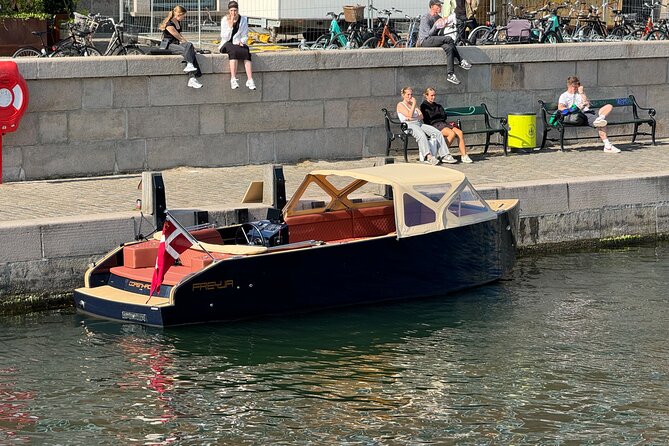
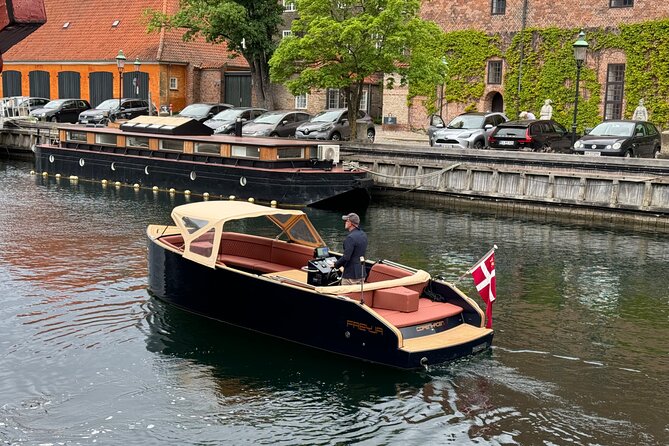
The boat has been described as new, clean, and comfortable, with cushioned seating. Drinks, wine, snacks, and ordered food can be arranged or brought into the experience. You pay for privacy, flexibility, and a guide who can adapt the conversation, not simply for transport.
The tour is offered in English, uses a mobile ticket, and returns to Havnegade 44. Confirmation arrives within 48 hours, subject to availability. Service animals are allowed, most people can participate, and you should contact the operator before booking if you have health or mobility concerns.
The activity requires good weather. If poor conditions force a cancellation, you are offered another date or a full refund. Your own cancellation is different: the booking is non-refundable and cannot be changed, so avoid reserving it until your schedule is firm.
Should you book the FREYJA private canal tour?
Book it if you want Copenhagen explained by a local guide in a small, relaxed setting. It is especially well suited to families, couples marking a special occasion, and groups of friends who would rather share one boat than join a large public cruise.
I would choose around three hours for a first visit. Ask to include the central canals, Holmen, the Little Mermaid, and Christianshavn, then add the outer harbor if time and weather allow. If your group is small, compare the cost with a standard canal cruise before committing.
The strongest reasons to book are Captain Denis’s friendly guiding, the comfortable boat, and the unusually broad view of Copenhagen’s past and present. The main reason to hesitate is the fixed, non-refundable booking and high cost for a small group.
FAQ
Where does the private boat tour start?
The tour starts at Havnegade 44, 1058 København, Denmark.
Where does the tour end?
The activity ends back at the meeting point.
How many people can join the private boat?
The boat accommodates up to eight people, and only your group participates.
How long does the experience last?
The listed duration ranges from approximately one to 12 hours. A three-hour outing is a practical choice for seeing a broad section of Copenhagen.
Is the tour offered in English?
Yes. English is the offered language.
What landmarks can I see from the boat?
The route can include Nyhavn, the Royal Danish Playhouse, Christiania, Copenhill, Holmen, the Little Mermaid, Amalienborg, the Opera House, Christianshavn, Christiansborg, Børsen, Reffen, Trekroner Fort, and Nordhavn.
Is food or drink available during the ride?
Wine, snacks, and ordered food can be arranged for the excursion.
What happens if the weather is poor?
The tour requires good weather. If the operator cancels because of poor conditions, you can choose another date or receive a full refund.
Can I cancel my booking?
The experience is non-refundable and cannot be changed for any reason. If you cancel or request an amendment, the amount paid will not be refunded.
Are service animals allowed?
Yes. Service animals are allowed. Most people can participate, and you can contact the operator before booking with specific health or mobility questions.
Just added around Copenhagen
- Urban Design and Livability E-bike Tour★ 4.8 · 21 reviews
- Full-Day Tour; Castle, Palace & Cathedral, Winter(JAN-MAR)★ 5.0 · 11 reviews
- a day at North Zealand Castle Tour★ 4.5 · 19 reviews
- The Philosopher’s Last Walk: An audio tour on the life of Søren Kierkegaard★ 4.5 · 5 reviews
- The Six Forgotten Giants Trolls Hunt with Minibus★ 4.5 · 27 reviews
- Copenhagen Walking Tour with Food Testing (smorrebrod dish & snap)★ 4.5 · 10 reviews
- The Forgotten Giants Private Tour★ 5.0 · 3 reviews
- Explore the Instaworthy Spots of Copenhagen with a Local★ 3.5 · 3 reviews
Cruises & Boat Tours, compared.
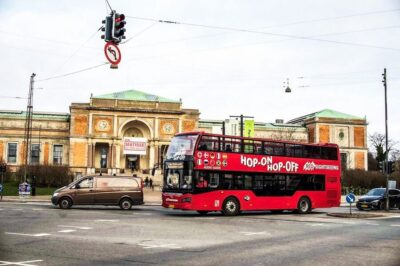
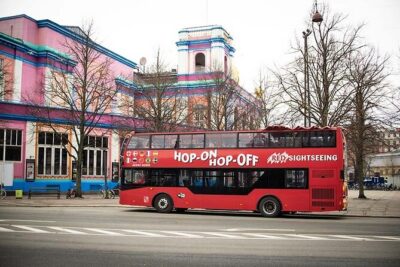
Hop-On Hop-Off Bus Tour with Boat Tour Option
Read our review →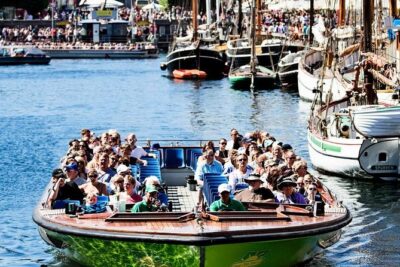
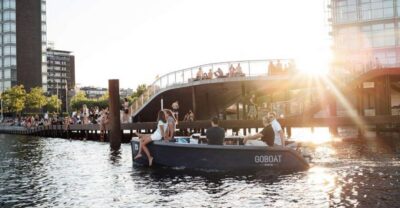
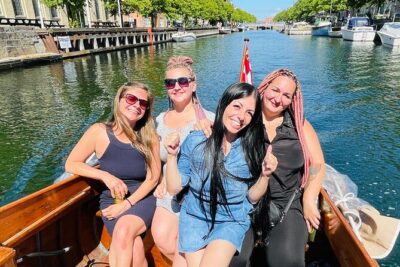
Private Copenhagen Boat cruise in Scandinavian mahogany boat
Read our review →
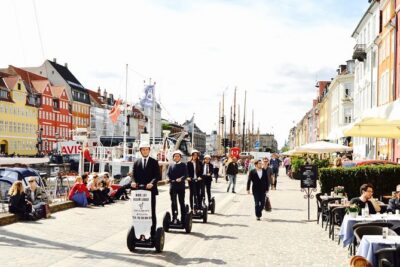
Shore Excursion: 2-Hour Copenhagen Segway Cruise
Read our review →Browse the lists this tour appears in