
Reviewed · COPENHAGEN BIKE TOURS
Copenhagen & Christiania : Guided Bike Tour in French
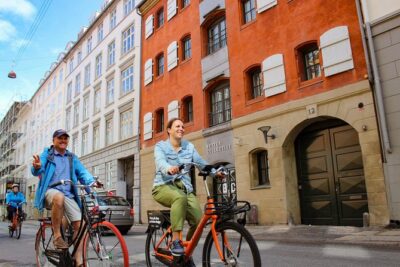
Copenhagen makes the most sense from a bicycle seat, especially when your French-speaking guide, Hamid, connects grand palaces with ordinary streets and explains how Danish society works. The route reaches Christiania, crosses the newer harbor bridges, and ends at the Little Mermaid after four steady hours.
I like the small group of up to 10 people, which makes it easier to ask questions and stay together in city traffic. I also like the social and urban focus: you are not simply ticking off sights, you are learning why Copenhagen looks and functions as it does. The main drawback is clear: you must arrange your own bicycle and helmet before the tour.
Key points to know before you book
- French-speaking guide Hamid: Expect clear explanations, local anecdotes, and plenty of context about Danish life and city planning.
- A city-wide route: The ride links City Hall, Christiansborg, Christiania, Nyhavn, Amalienborg, and the Little Mermaid.
- Modern bicycle bridges: Lille Langebro and Inderhavnsbroen show how Copenhagen keeps reshaping its waterfront for bikes and pedestrians.
- Your own bike is required: Bring your bike or rent one locally. Daily rentals start at about €12.
- Small-group format: The group is limited to 10 participants, with a half-price discount for teenagers.
- A useful first-day activity: The route gives you a practical sense of the city and helps you decide where to return on foot later.
Why a French bike tour is a smart way to see Copenhagen
Copenhagen is compact, but its sights are spread across several districts. A bicycle lets you cover ground without spending the day waiting for buses or walking back and forth between the old center, the harbor, Christiania, and the eastern waterfront.
This tour is also more than a sightseeing ride. The main theme is the way Copenhagen developed as a city shaped by cycling, public space, social policy, and waterfront renewal. You will hear about the Danish social welfare model and how urban choices affect daily life.
That makes the experience especially useful early in your stay. After four hours, you should have a better mental map of central Copenhagen, along with a list of places you may want to revisit at a slower pace.
The French language matters, too. Historical and social topics can lose their meaning when explained in a language you only partly understand. With a French-speaking guide, you can ask about details, follow the jokes and anecdotes, and get more than a string of dates.
The group size helps keep the tour personal. Ten people is still large enough to have a social feel, but small enough for the guide to notice if someone is falling behind or wants to ask a question.
More copenhagen bike tours in Copenhagen:
- Copenhagen: Highlights 3 Hour Bike Tour with a Local Guide
★ 4.8 · 2,312 reviews - Copenhagen Highlights 3 Hour Bike Tour with local Guide
★ 5.0 · 1,125 reviews - 3-hour Copenhagen City Highlights Bike Tour
★ 5.0 · 757 reviews
Starting at Copenhagen City Hall
The meeting point is the Copenhagen Visitor Service in the Axelborg building, directly across from the main entrance to Tivoli Gardens and next to the SAS Radisson Collection Hotel. If the visitor office is open, your guide will meet you inside. If it is closed, look just outside for a guide wearing a distinctive hat or cap.
There is also a bakery at the meeting point, a useful detail if you need a quick snack before the ride. Give yourself enough time to arrive with your bicycle ready. Since bike fitting is not part of the tour, you do not want to spend the opening minutes dealing with a rental shop or adjusting a saddle.
The first major stop is Copenhagen City Hall, an imposing civic building in the heart of town. Here, the guide sets the scene for Copenhagen as a national capital and explains how the city’s public institutions relate to everyday Danish life.
City Hall is a good starting point because it is central, easy to find, and close to Tivoli. You will see it as a sightseeing stop rather than a long interior visit, so do not expect a detailed tour inside the building.
From Christiansborg to the old harbor
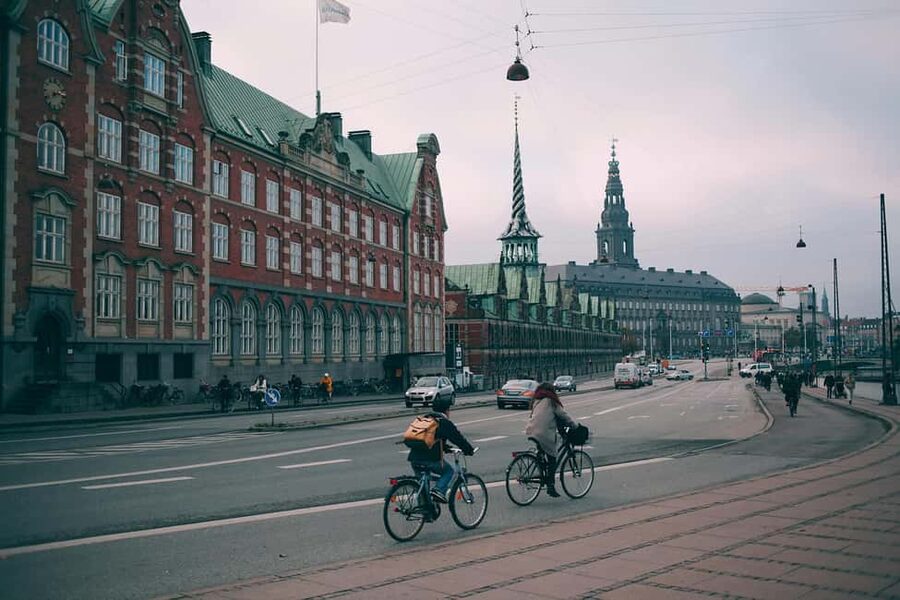
The route continues toward Christiansborg Palace, the seat of the Danish Parliament and an important symbol of the country’s political system. You pass by rather than take a full palace tour, but the stop fits the larger theme of the experience: how Denmark combines monarchy, elected government, and a broad social safety net.
You then reach the Copenhagen Stock Exchange, another of the old city’s memorable landmarks. Its historic form contrasts with the newer buildings along the water. Your guide uses these changes in architecture to explain how the capital has grown and changed over time.
Blox comes next as a pass-by stop. This modern waterfront building represents Copenhagen’s newer approach to urban design, with public areas and architecture intended to connect people to the harbor. It is a quick look rather than a long architectural lecture, but it helps you see the tension between old Copenhagen and its newer construction.
The first major bicycle highlight is Lille Langebro. This newer bridge gives bikes and pedestrians a direct route across the harbor, avoiding some of the heavier vehicle traffic. You will see how a bridge can be more than a way to get from one side to another. It also changes how people move through the city.
For cyclists, this is one of the most useful parts of the ride. You are not simply looking at the bridge from a photo stop. You are using it as part of the route, experiencing Copenhagen’s cycling network in practical terms.
Christiania and Copenhagen’s alternative side
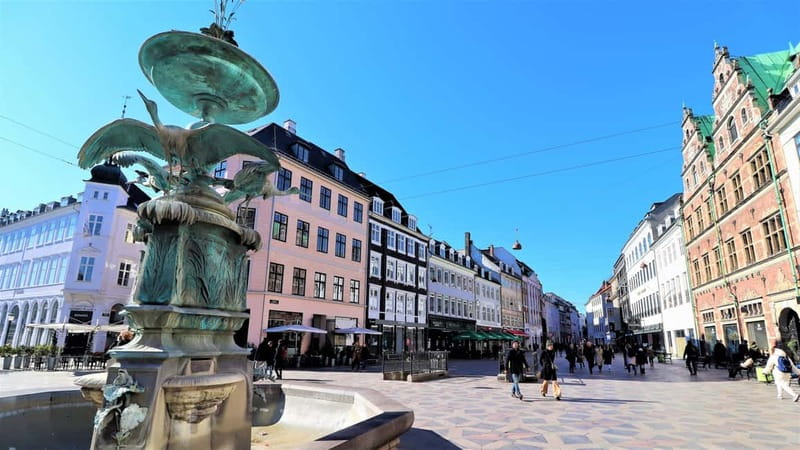
The route passes the Church of Our Saviour before reaching Freetown Christiania. The church is known for its distinctive exterior and tower, but the tour treats it as a pass-by point rather than a visit inside.
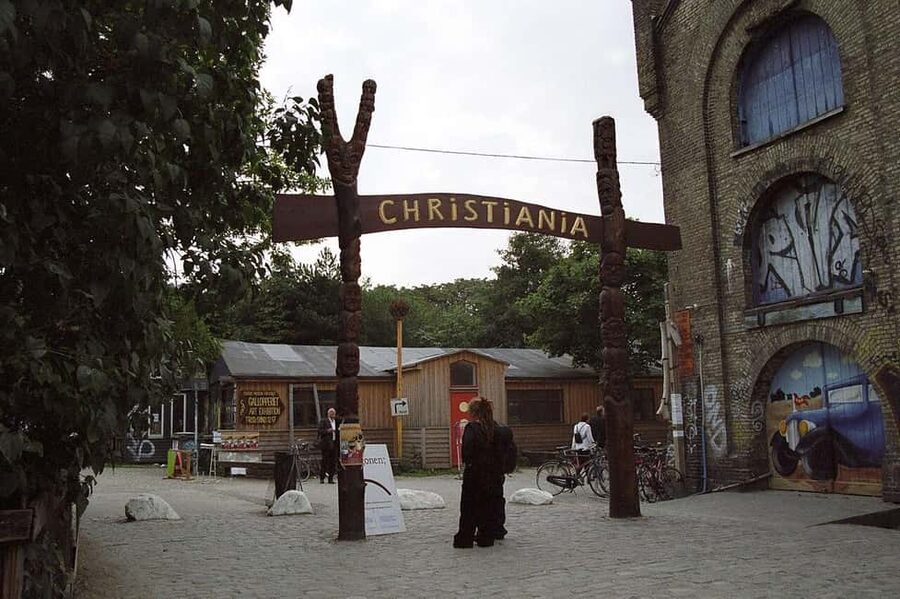
Christiania is the route’s most unusual neighborhood. This autonomous community is known for colorful street art and an alternative way of life. You ride through its streets with your guide, gaining context about its place in Copenhagen rather than treating it as a polished tourist attraction.
That distinction matters. Christiania can feel very different from the palace district, the shopping streets, or the tidy waterfront. The contrast is part of the point. The tour places this independent neighborhood inside the wider story of Copenhagen’s social values, urban rules, and changing identity.
You should keep your expectations realistic. This is a guided bicycle passage, not a long walking tour or an in-depth visit to every corner of Christiania. The group keeps moving, and the exact amount of time here can depend on the pace of the ride and local conditions.
Still, it is a valuable stop because it broadens your picture of the city. Copenhagen is not only royal buildings, design shops, and neat harbor views. Christiania adds a less conventional side to the capital.
A few more Copenhagen trips to weigh up
- Copenhagen: 2-hour City Highlights Bike Tour
★ 4.7 · 632 reviews - Bike Tour Copenhagen. Private Guide, Concierge Service, Small Grp
★ 5.0 · 416 reviews - Copenhagen: 3-Hour Culinary Bike Tour
★ 4.7 · 301 reviews - 2 Hours Copenhagen E-Bike Guided Tours
★ 5.0 · 276 reviews
Crossing the harbor on Inderhavnsbroen
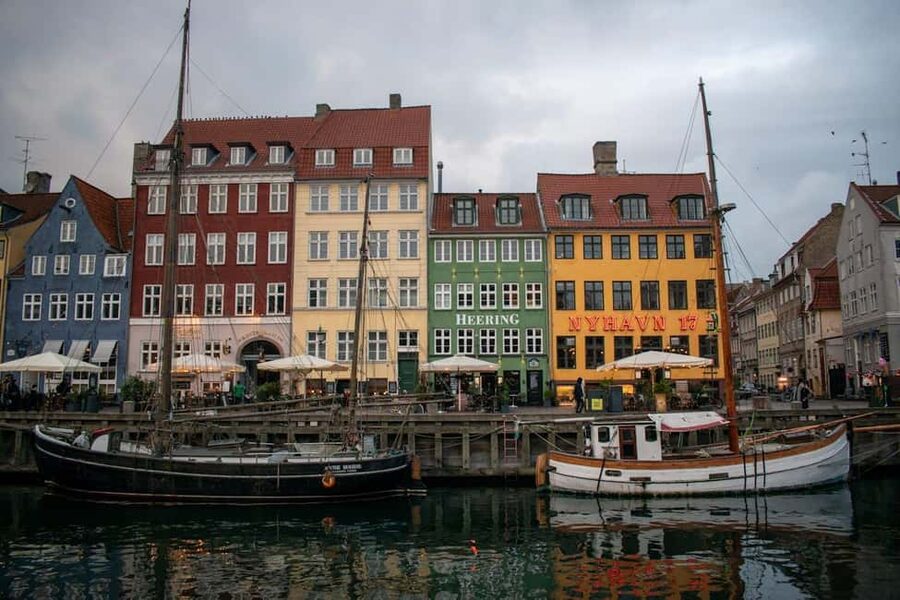
After Christiania, the ride reaches Inderhavnsbroen, where you stop for photographs. This bridge is another example of Copenhagen’s investment in cycling and pedestrian routes across the harbor.
I like the way the two bridges serve different purposes in the tour. Lille Langebro shows you how the route works for daily movement. Inderhavnsbroen gives you a chance to pause, look around, and photograph the waterfront.
The harbor sections also provide a change of pace. Earlier stops focus on government, finance, and alternative communities. Here, the water and open views give you room to take in the city’s shape.
Because the tour lasts four hours, you should expect a steady rhythm of riding, short explanations, and brief stops. This is not a slow photography tour. You will get time for pictures at selected points, but the overall goal is to see many parts of Copenhagen in one outing.
Nyhavn, King’s New Square, and Marble Church
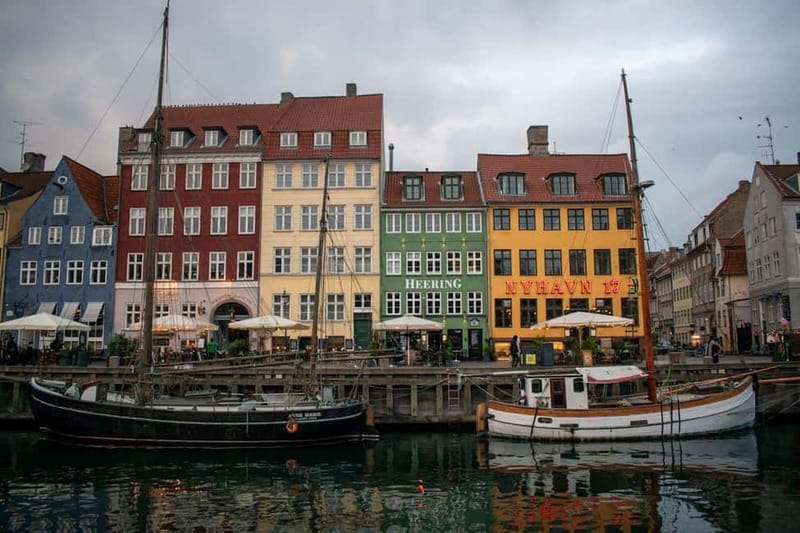
Nyhavn is one of Copenhagen’s most recognizable scenes, with colorful waterfront buildings and a canal lined with restaurants. You stop for photographs and pass through the area, but you do not have a long meal break here.
That is probably the right choice for this route. Nyhavn is easy to revisit later, and spending too much time there would leave less time for Christiania, the bridges, and the eastern waterfront. You get the essential view without losing the tour’s wider focus.
The group then reaches King’s New Square, where there is a break and another photo opportunity. This is a sensible point to pause after several sections of cycling. Use the break to drink water, check your bike, and ask the guide about anything that caught your attention.
From there, you pass the Marble Church, also called Frederik’s Church, and stop for photos. Its large dome makes it one of the city’s most impressive buildings, and it forms part of the grand axis leading toward Amalienborg Palace.
These central landmarks are familiar from guidebooks, but they become more useful when connected by bicycle. You start to understand the distances between them, how the streets fit together, and which areas are close enough to combine on your own later.
Amalienborg and the final ride to the Little Mermaid
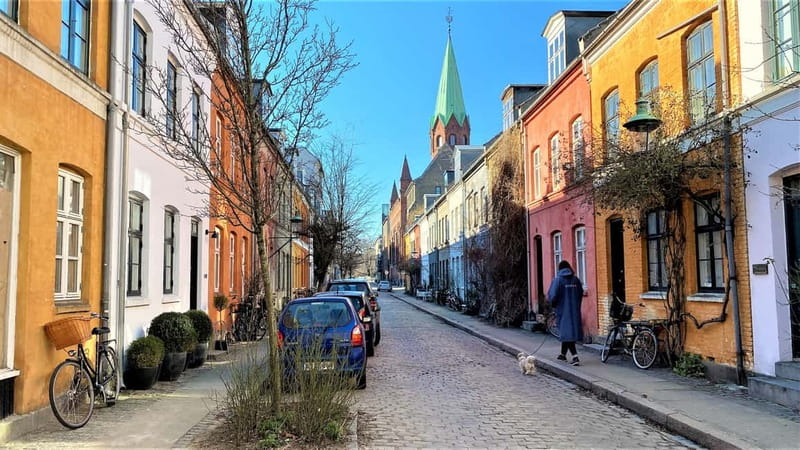
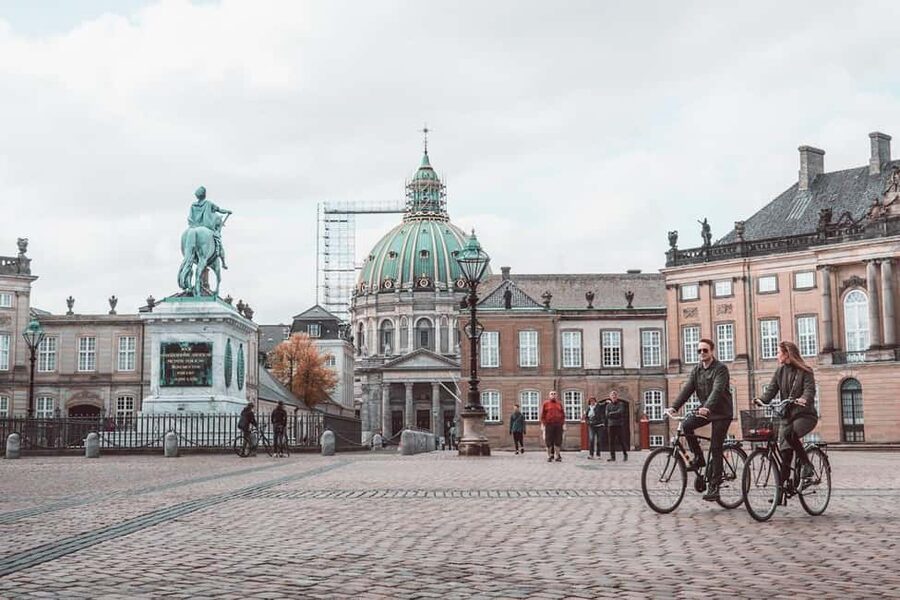
Amalienborg Palace receives more attention than some of the earlier landmarks. Here, you have a photo stop and a guided visit around the palace area.
The square is one of Copenhagen’s most important royal spaces, with four matching palace buildings arranged around an open center. The setting gives you a clear look at the relationship between the Danish monarchy and the city around it.
The route then passes the Gefion Fountain. This striking monument provides another photo stop before the final stretch toward the Little Mermaid.
The tour finishes at the Little Mermaid, Copenhagen’s best-known landmark. Ending here makes practical sense. You finish near the waterfront and can continue exploring on foot, take photographs, or make your way to another part of the city.
Because the supplier does not require you to return a bicycle to a fixed starting point, using your own bike can give you more freedom after the tour. You may be able to continue riding elsewhere, depending on your rental arrangement. Confirm the return rules with the shop before setting out.
The bicycle question: plan this carefully
The biggest practical issue is that the price does not include a bike or helmet. The supplier does not rent bicycles directly, and you need prior cycling experience.
Local shops and some hotels offer bicycle rentals, with daily prices starting at about €12. You can also bring your own standard bicycle, cargo bike, or electric bike if that suits you better.
The supplier discourages app-based rentals because some companies issue fines when bikes are left outside approved parking areas. That warning is worth taking seriously. A rental that seems easy at the start can become expensive if you cannot return it correctly.
You should also choose a bike that fits your body. The supplier’s reasoning is practical: handing out a fleet of bikes would take time for adjustments and reduce the hours available for exploring. In theory, arranging your own bike is extra work. In practice, it lets you choose a bicycle you already understand.
Helmets are recommended but not supplied. I would arrange one if possible, especially if you are not used to riding in an urban setting. You should also arrive ready for four hours of cycling, with comfortable clothing and water.
This experience is not suitable if you cannot ride a bike. It is also a poor fit if you want a leisurely walking tour with long interior visits. The route covers a lot of ground, and your comfort on a bicycle will shape the whole day.
Is $53 a fair price?
At $53 per person, the tour is not the cheapest way to see Copenhagen. You also need to add the cost of your bicycle rental, which starts at about €12 per day, plus any helmet rental if you need one.
The value comes from the route and the guide rather than from included equipment. In four hours, you cover a wide section of the capital and receive explanations about Danish society, history, architecture, and urban planning. A self-guided ride would cost less, but you would need to create the route, manage navigation, and supply your own context.
I consider the price reasonable for someone who wants a French-language introduction and prefers a small group. It is particularly good value if you take it near the start of your stay and use the information to plan the rest of your time.
Teenagers receive a half-price discount, which makes the cost easier for families to manage. Keep in mind that the young participant still needs cycling experience and a suitable bike.
The free cancellation policy allows you to cancel up to 24 hours before the tour for a full refund. You can also reserve and pay later, useful if your Copenhagen plans are still shifting.
Who will enjoy this ride most?
I would choose this tour if you speak French and want more than a list of landmarks. The strongest part is the explanation of how Danish society and Copenhagen’s city planning connect.
It suits couples, families with confident teenage cyclists, and small groups of friends. The half-price teen rate is helpful, and the limited group size should make it easier to keep younger riders involved.
It also works well for anyone who wants to get their bearings fast. The route reaches several districts, and the guide’s stories can help you decide where to return for a museum visit, a longer walk, or a quieter look at the harbor.
You may want another kind of activity if you dislike cycling in cities, need frequent long breaks, or want detailed access to palace interiors and churches. Several stops are brief pass-bys, so the tour favors range and context over extended visits.
The guide makes a difference. Hamid is praised for his humor, precise explanations, anecdotes, and ability to discuss Danish culture and daily life in an accessible way. His approach appears especially useful for first-time visitors who want to understand the city, not just photograph it.
Should you book Copenhagen and Christiania by bike?
Book it if you can arrange a comfortable bike, ride confidently, and want a French-speaking introduction to Copenhagen’s history, society, and urban design. The route gives you a broad look at the capital, from City Hall and the royal quarter to Christiania and the harbor bridges.
I would place it near the beginning of a Copenhagen stay. You will see enough of the city to plan your next days, while the guide’s explanations give familiar sights more meaning.
Skip it if you are not comfortable cycling or if you expect a museum-style tour with long stops inside buildings. For the right rider, though, this is a useful and lively way to understand Copenhagen in motion.
FAQ
Where does the bike tour start?
It starts at Copenhagen Visitor Service in the Axelborg building, directly across from Tivoli Gardens and next to the SAS Radisson Collection Hotel.
How do I find the guide?
If Copenhagen Visitor Service is open, the guide will meet you inside. If it is closed, look just outside for a guide wearing a distinctive hat or cap.
Is the tour conducted in French?
Yes. The live guide language is French.
How long does the tour last?
The tour lasts four hours.
Is the bicycle included?
No. You must bring your own bicycle or arrange a rental from a local shop or hotel. Rentals start at about €12 per day.
Is a helmet included?
No. Helmets are not supplied, but they are recommended.
Can I use an app-based rental bicycle?
App-based rentals are discouraged because some providers issue fines when bicycles are left in unauthorized locations.
Is the tour suitable for someone who cannot ride a bike?
No. Prior cycling experience is required, and the activity is not suitable for people who cannot ride a bicycle.
Can teenagers receive a discount?
Yes. Teenagers receive a half-price discount.
Just added around Copenhagen
- Urban Design and Livability E-bike Tour★ 4.8 · 21 reviews
- Full-Day Tour; Castle, Palace & Cathedral, Winter(JAN-MAR)★ 5.0 · 11 reviews
- a day at North Zealand Castle Tour★ 4.5 · 19 reviews
- Copenhagen Walking Tour with Food Testing (smorrebrod dish & snap)★ 4.5 · 10 reviews
- The Philosopher’s Last Walk: An audio tour on the life of Søren Kierkegaard★ 4.5 · 5 reviews
- The Six Forgotten Giants Trolls Hunt with Minibus★ 4.5 · 27 reviews
- The Forgotten Giants Private Tour★ 5.0 · 3 reviews
- Explore the Instaworthy Spots of Copenhagen with a Local★ 3.5 · 3 reviews
Copenhagen Bike Tours, compared.
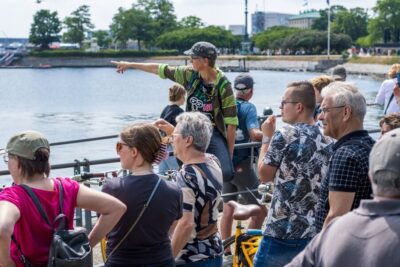
Highlights 3 Hour Bike Tour with a Local Guide
Read our review →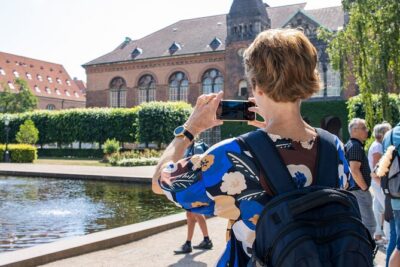
Copenhagen Highlights 3 Hour Bike Tour with local Guide
Read our review →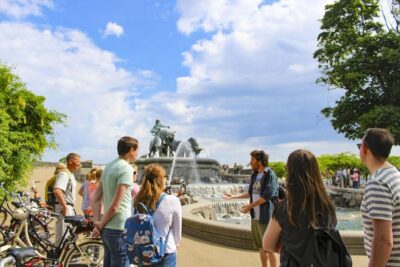
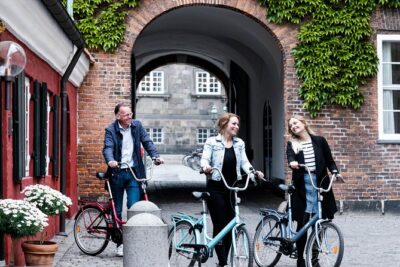
Bike Tour Copenhagen. Private Guide, Concierge Service, Small Grp
Read our review →
Browse the lists this tour appears in