
Reviewed · WALKING TOURS
Copenhagen: A guided walk for first-timers in the city
Copenhagen’s best first look may be on foot, and this 3-kilometer city walk gives you a quick route through the old center without asking you to commit a full day. You’ll move from Andersen’s statue and City Hall to Christiansborg, Nyhavn, and Amalienborg, while the guide connects royal power, medieval Denmark, bicycles, and modern city life.
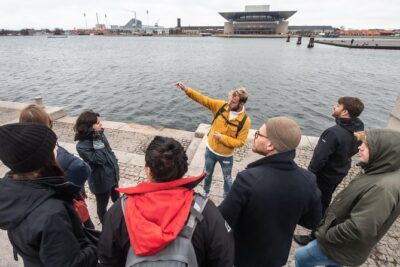
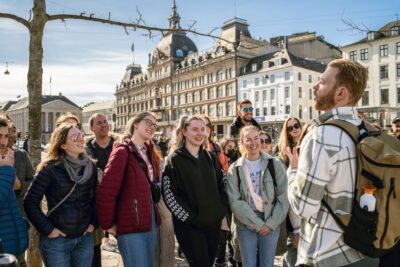
I like two things here. First, the small group and headset make it easier to hear the guide, even while standing outdoors in a busy square. Second, you get a map and practical ideas for what to do next, so the walk helps shape the rest of your Copenhagen visit. The main consideration is that you only view the sights from outside, and the route may feel brisk if you prefer long stops or have limited fitness.
Key points at a glance
- A useful first-day route: Cover Copenhagen’s central sights in about two hours, from City Hall to Amalienborg.
- History with a modern angle: Learn why bicycles matter here and how Copenhagen once dominated Scandinavia.
- Small-group format: The activity is described as limited to 10 people, while another description says no more than 16, so confirm the exact group size when booking.
- Easy listening outdoors: A headset lets you hear the guide throughout the walk.
- A practical finish: Receive a Copenhagen map and suggestions for continuing toward Nyhavn, a canal tour, your hotel, or other sights.
- Outdoor sightseeing only: You do not enter City Hall, Christiansborg, Børsen, churches, museums, or palaces.
A fast introduction to Copenhagen’s historic center
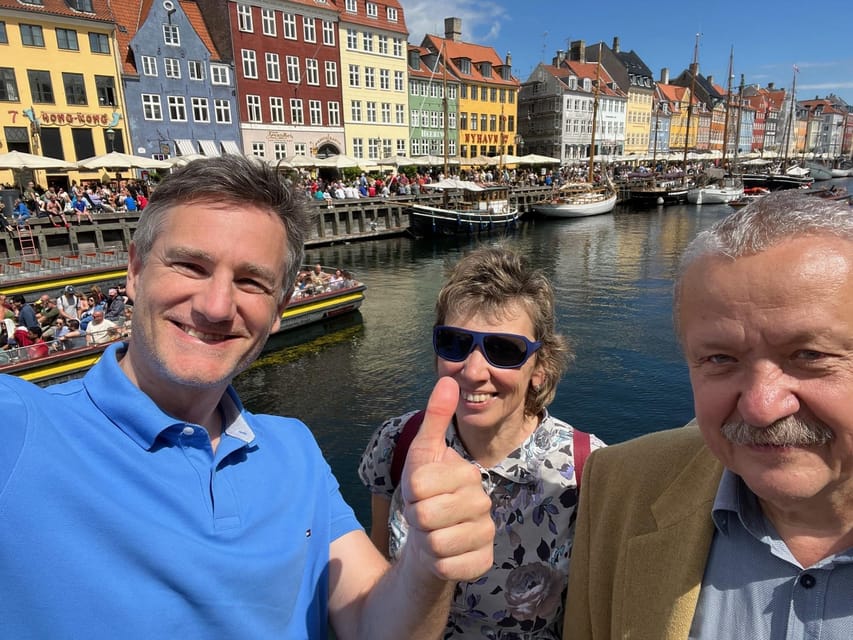
This is the kind of walk I would choose near the beginning of a Copenhagen stay. It gives you a mental map of the center, points out places you may want to revisit, and supplies enough historical context to make the city feel less like a collection of handsome buildings.
The route covers roughly 1.8 miles, or 3 kilometers, over two hours. That is not a huge distance, but sightseeing stops, short walks, and explanations fill the time. You should expect a steady outdoor walk rather than a long lecture in one place.
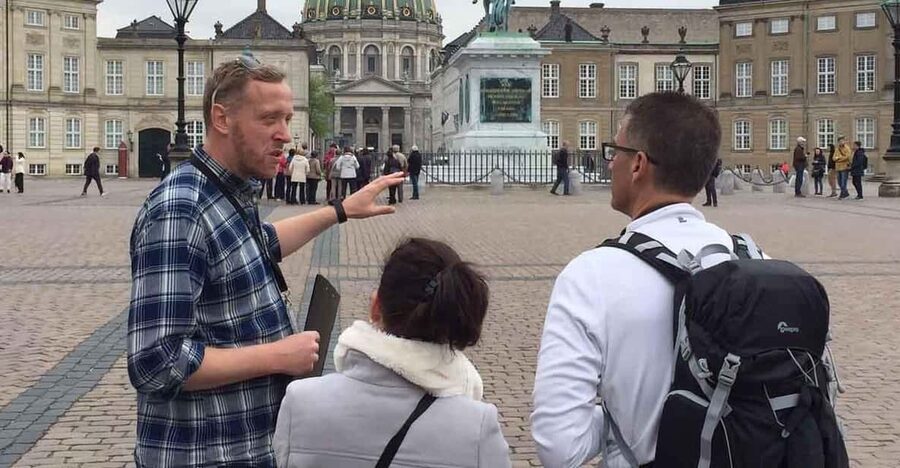
The guide speaks English and can answer questions about both Copenhagen’s past and its present. Past departures have been led by guides named Jens and Thomas, with Thomas receiving particular praise for combining city history with personal stories. Jens has also been singled out for making the old center and its past easy to follow.
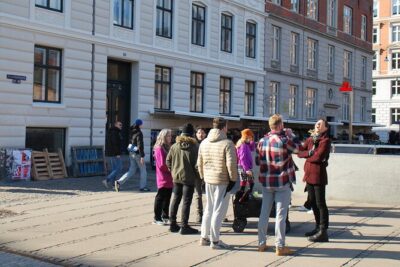
The small group matters. A group of 10 is intimate enough for questions, and even a group of 16 is far easier to manage than a large crowd. The supplied information gives two different group limits, so I would check the confirmed size before paying if this detail matters to you.
A few more Copenhagen trips to weigh up
- Private Walking Grand Tour of Copenhagen
★ 5.0 · 3,953 reviews - Copenhagen Highlights Walking Tour
★ 5.0 · 2,324 reviews - Politically Incorrect Private Highlights Walking Tour
★ 5.0 · 1,244 reviews
Starting beside Andersen’s statue and City Hall
The meeting point is the statue of Hans Christian Andersen. The guide will be there, and the walk begins from this spot. It is a sensible place to start because Andersen is one of the names most closely linked with Copenhagen, and the statue gives you an easy landmark for finding the group.
From there, you move to Copenhagen City Hall for about five minutes of sightseeing. The building anchors one of the city’s main public spaces and helps establish the scale of central Copenhagen. The stop is short, so expect an introduction rather than a detailed architectural tour.
This opening section is useful if you have just arrived and want to understand where the center sits. You are not simply being taken from one photo stop to the next. The guide uses the city around you to explain how Copenhagen developed and how the modern capital grew from its older core.
Christiansborg and the story of Danish power
The walk continues toward Christiansborg Palace, with about five minutes spent getting there and around 10 minutes for sightseeing. Christiansborg is one of the route’s most important stops because it links the political life of Denmark with the royal story you will see later at Amalienborg.
You do not go inside. That is a real limitation if you hoped to see the palace rooms, parliamentary spaces, or interior displays. Still, an exterior explanation can be enough to help you decide if Christiansborg deserves a separate visit during your stay.
The guide also points out the statue of Bishop Absalon, with about two minutes devoted to the stop. Absalon is tied to Copenhagen’s early development, so this is where the city’s medieval beginnings enter the walk more clearly.
One of the promised themes is Copenhagen’s former power across Scandinavia during the Middle Ages. That topic gives the route some weight. You are not only hearing about modern design, cycling, and royal buildings. You are also learning why this city became an important center in the first place.
Børsen, Holmen Church, and Christian IV’s Copenhagen
Next comes Børsen, Copenhagen’s old stock exchange, for roughly five minutes of sightseeing. Its distinctive exterior makes it one of the easiest places to recognize later, and it adds a commercial side to the story of the capital.
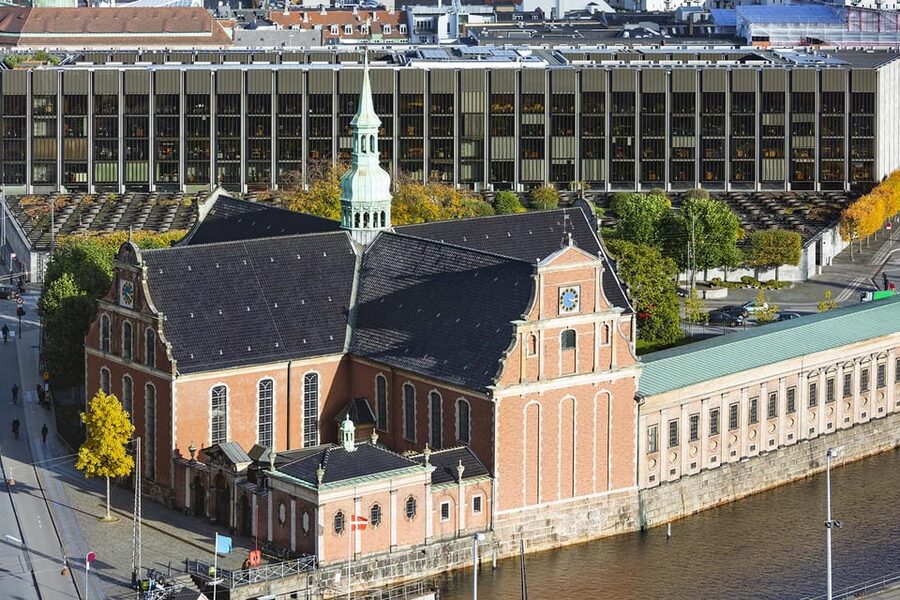
The route then reaches the Church of Holmen, another five-minute stop. Followed by Christian IV’s Brewhouse, this part of the walk brings together religion, royal ambition, and working city life. The exact depth of each explanation can depend on the guide and the pace of the group, but the mix keeps the walk from becoming only a parade of palaces.
Christian IV’s name appears often in Copenhagen. You may find this stop especially useful if you plan to explore more of the city after the walk, since the guide can help connect separate buildings to the same period of expansion and building.
The tour does not promise entry into the church or the brewhouse. Think of these stops as orientation points. You are getting the context and the outside view, then deciding where to spend more time on your own.
Same city, a completely different kind of day:
- Copenhagen Card-Discover: 80+ Attractions & Public Transport
★ 4.6 · 5,351 reviews - Copenhagen: Hop-On Hop-Off Bus Tour with Boat Tour Option
★ 3.9 · 4,122 reviews - From Copenhagen: Lund and Malmö 2-Country Tour
★ 4.7 · 3,807 reviews - Copenhagen: Highlights 3 Hour Bike Tour with a Local Guide
★ 4.8 · 2,312 reviews
The Black Diamond and a look at modern Copenhagen
The Black Diamond receives about five minutes of sightseeing. This striking library building provides a change of mood from the older royal and religious landmarks. It also helps show that Copenhagen is not frozen in its past.
I like this contrast. A first-time walk works best when it explains how a place functions now, not only what happened centuries ago. The guide is expected to discuss modern Copenhagen as well as historical events, including the reasons bicycles are so common in the city.
That bicycle topic is practical, not just local trivia. It helps you read the streets around you and understand why cycling is such a visible part of daily life. If you plan to rent a bicycle or simply cross Copenhagen on foot, knowing how the city is organized around bikes is useful.
The route is not a bicycle tour, and there is no bike rental included. You remain on foot for the full experience.
King’s New Square and the Royal Danish Theatre
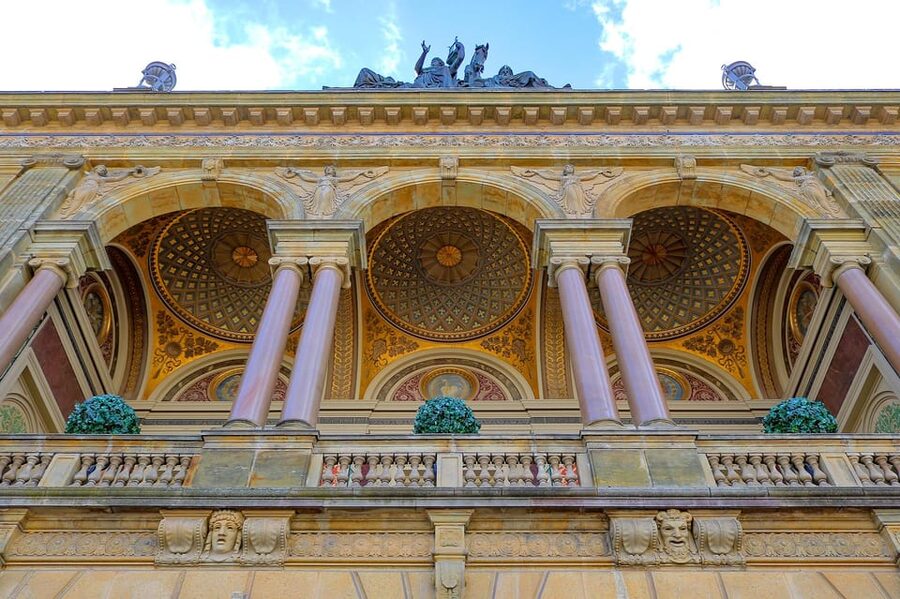
The walk heads toward King’s New Square, then pauses at the Royal Danish Theatre. The move through the square takes about five minutes, while the theatre receives another five-minute sightseeing stop.
This section shows a more polished, ceremonial side of Copenhagen. The square connects important streets and buildings, and the theatre adds a cultural note to the route. It is a good reminder that the central city is not one single historic district. It is a working capital with government, performance, commerce, and everyday movement all mixed together.
You will want comfortable shoes. The distance is manageable, but the route includes repeated stops and changes of direction, and you may spend much of the time standing while listening. The experience is specifically not suitable for wheelchair users or people with a low level of fitness, according to the activity details.
That does not mean the walk is strenuous in the usual hiking sense. It means you should be comfortable walking 3 kilometers and remaining outdoors for two hours.
Nyhavn brings the postcard Copenhagen moment
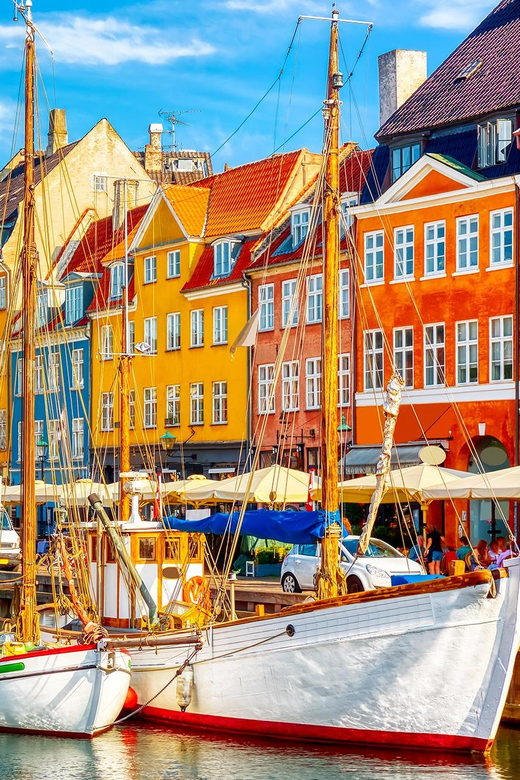
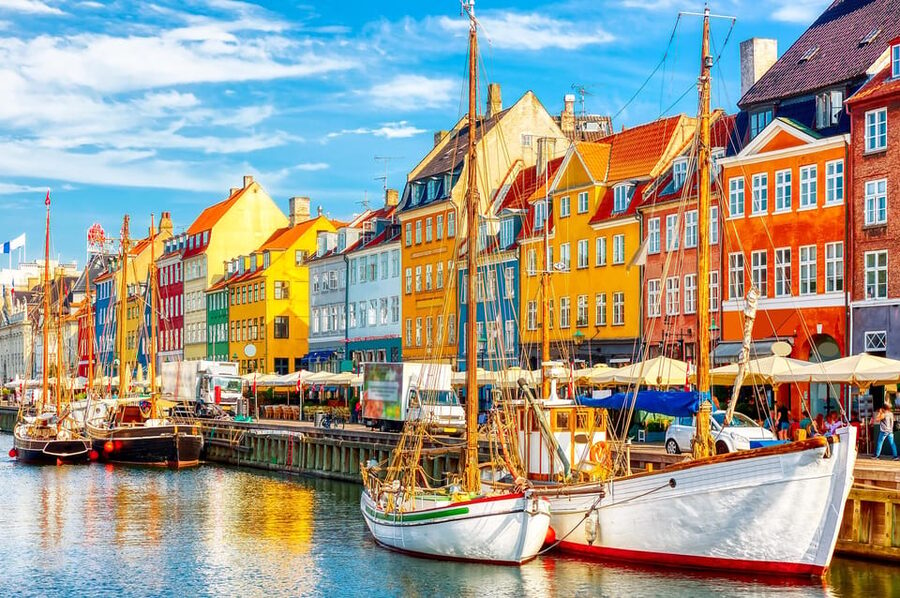
The route reaches Nyhavn after a walk of about 10 minutes. This is likely to be one of the most familiar views on the tour, with its canal-side setting and colorful buildings. The guide’s role here is to give the scene context rather than simply point out a famous photo location.
Nyhavn is also a useful practical stop. After the tour, you can return here for a drink, begin a canal tour, or use the area as a reference point while exploring on your own. The guide specifically offers suggestions for continuing your day, which makes the finish more useful than a simple goodbye at the last monument.
Do not expect a canal cruise to be included. The walk only takes you through the area. You will need to arrange and pay for any boat tour or refreshments separately.
The stop can also be busy, though the information provided does not promise a quiet visit. Your headset should help you follow the guide, but you still need to stay aware of bicycles, pedestrians, and the group while moving through the center.
Amalienborg completes the royal thread
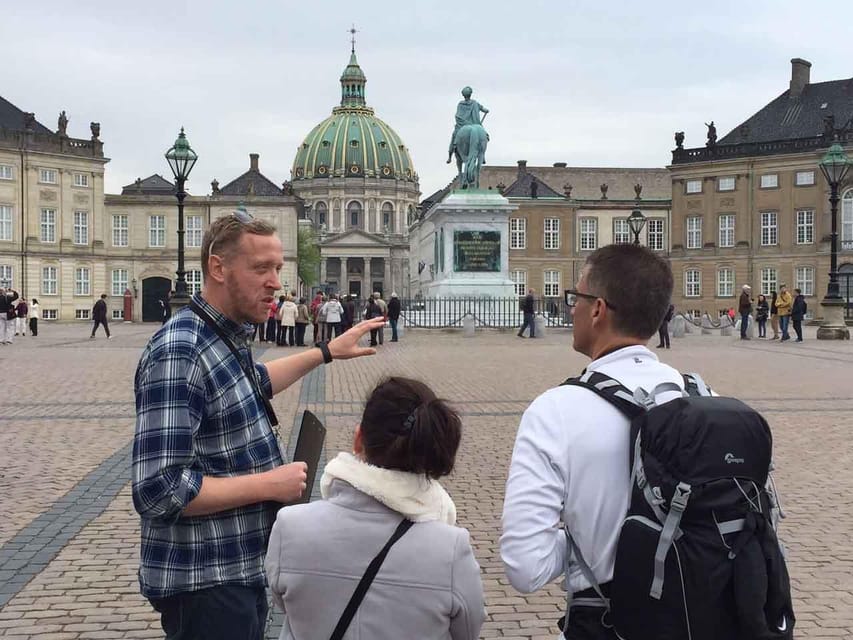
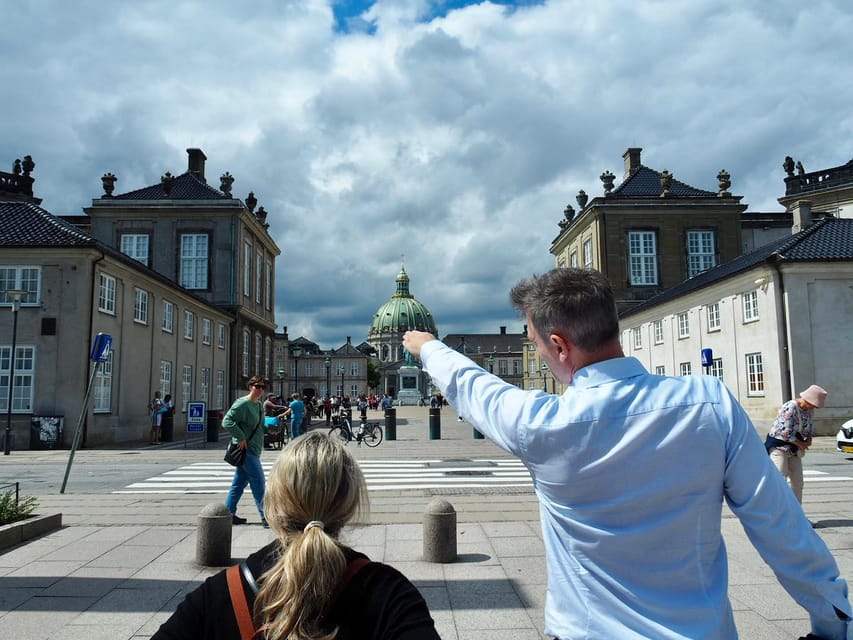
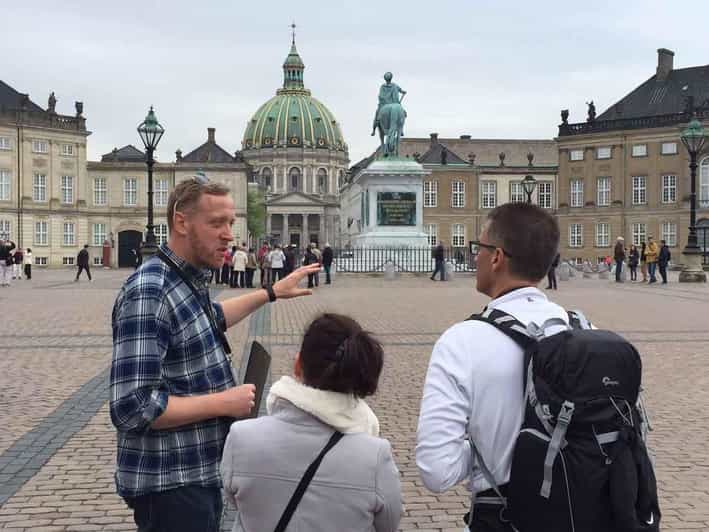
The final section leads to Amalienborg Palace, with about 15 minutes of walking before the tour finishes there. Amalienborg gives the route a clear ending because it returns to the Danish royal story after the earlier stop at Christiansborg.
The activity ends at Amalienborg rather than returning to City Hall. That is worth noting when planning your day. From the finish, you may want to continue sightseeing nearby, follow one of the guide’s suggested routes, or make your own way back toward the hotel.
As with Christiansborg, the tour does not include entry into Amalienborg. You see the palace from outside and receive an introduction. If the royal interiors are high on your list, treat this walk as a preview and plan a separate visit.
Ending here also gives you a useful choice. You can continue toward other central sights, spend more time around the palace area, or head back using the map supplied by the guide.
What the guide adds to the experience
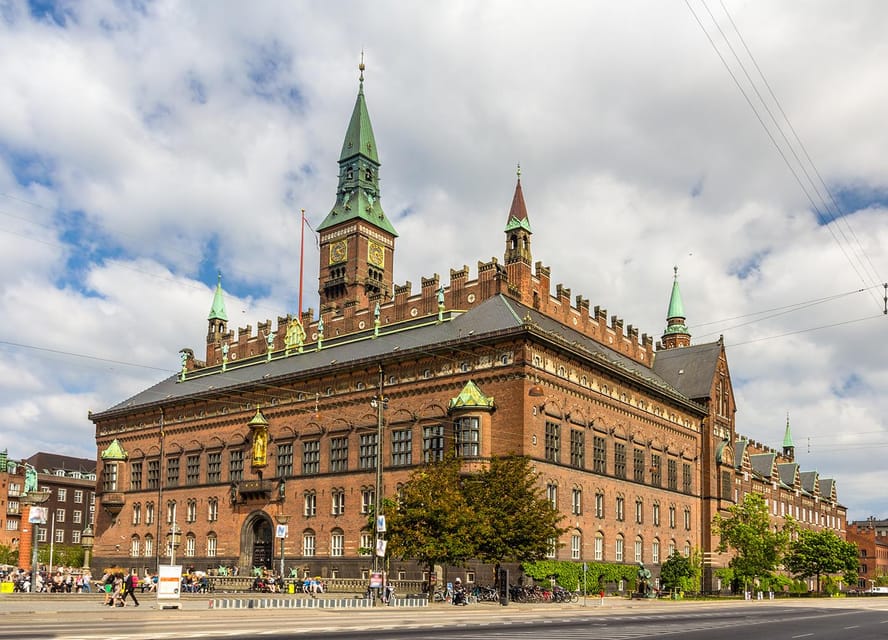
The quality of this walk rests heavily on the person leading it. The strongest departures appear to combine solid historical information with a personal touch. Thomas has been praised for explaining Copenhagen and Denmark clearly while adding personal stories, and Jens has been described as especially effective at bringing the old center to life.
The guide is not just there to recite dates. You can ask about bicycles, the medieval period, royal buildings, or how to spend the rest of your day. That question-and-answer element is one of the best reasons to choose a guided walk instead of downloading a self-guided route.
The headset is another small but valuable feature. In a city center, you may be a few steps behind the guide or standing near traffic. Being able to hear the explanation at all times makes the group easier to follow.
There is one point to keep in mind. One past participant felt the walk did not cover as many historical landmarks as expected and later saw more of the city independently. That suggests you should view the stated stops as the planned backbone, not a promise of a detailed explanation of every landmark you pass.
Is $46 a fair price for two hours?
At $46 per person, this is not the cheapest way to walk around Copenhagen. You can see many exteriors for free, and the route itself is short enough to follow independently.
The value comes from the interpretation and the time saved. In two hours, you move between major sights without having to research a route, work out the city’s layout, or decide which buildings matter. You also get a live English-speaking guide, a headset, and a map for later exploring.
I think the price makes the most sense for a first visit, a short stay, or anyone who wants a clear introduction before choosing which sights to enter. It is less convincing if you already know central Copenhagen, prefer to stop for long periods, or want interior access included.
The map improves the value because the experience does not end with the final palace. A good orientation walk can prevent wasted time later, especially when you want to combine Nyhavn, a canal tour, royal sights, and a return to your hotel.
Who should book this Copenhagen walk?
I would recommend it most to first-time visitors who want the city explained in plain language. It also suits solo visitors and couples who prefer a small group, families with older children who can manage the distance, and anyone arriving with only a rough idea of what to see.
History fans should enjoy the mix of medieval Copenhagen, royal power, commerce, religion, and modern city life. The walk also works for people who want local context before spending money on museum or palace admission.
You may want a different plan if you use a wheelchair, have a low fitness level, or dislike standing outdoors. It is also not the right choice if your main goal is to go inside Christiansborg, Amalienborg, the Church of Holmen, or any other sight on the route.
The activity lasts two hours, but starting times vary, so check availability for your date. English is the listed language. You can cancel up to 24 hours ahead for a full refund, and the reserve-now, pay-later option can help if your schedule is still shifting.
My call: a useful first chapter, not a full Copenhagen tour
Book this walk if you want city bearings, historical context, and a practical plan for the rest of your stay. The route covers a lot without taking over your day, and the small group, headset, guide, and follow-up map add real value.
Do not book it expecting palace interiors or a detailed stop at every landmark. For most first-time visitors, though, it is a sensible way to begin: short, focused, and broad enough to show you where to return for a closer look.
FAQ
Where does the Copenhagen walking tour begin?
The tour begins at the Andersen statue. The guide will be waiting there before the walk starts.
Where does the tour finish?
The walk finishes at Amalienborg Palace.
How long is the activity?
The tour lasts two hours.
How far do you walk?
The route covers about 3 kilometers, or 1.8 US miles.
What language is the tour in?
The live tour guide speaks English.
What sights are included on the route?
The route includes City Hall, Christiansborg Palace, Bishop Absalon’s statue, Børsen, the Church of Holmen, Christian IV’s Brewhouse, the Black Diamond, King’s New Square, the Royal Danish Theatre, Nyhavn, and Amalienborg Palace.
Do you enter the sights?
No. The activity includes outdoor sightseeing only, and you do not enter any of the sights.
Is the tour suitable for wheelchair users?
No. The activity is listed as unsuitable for wheelchair users.
What is included in the price?
The price includes the guide, a headset so you can hear the guide, and a Copenhagen map for further exploration.
Just added around Copenhagen
- Urban Design and Livability E-bike Tour★ 4.8 · 21 reviews
- Full-Day Tour; Castle, Palace & Cathedral, Winter(JAN-MAR)★ 5.0 · 11 reviews
- a day at North Zealand Castle Tour★ 4.5 · 19 reviews
- The Philosopher’s Last Walk: An audio tour on the life of Søren Kierkegaard★ 4.5 · 5 reviews
- The Six Forgotten Giants Trolls Hunt with Minibus★ 4.5 · 27 reviews
- Copenhagen Walking Tour with Food Testing (smorrebrod dish & snap)★ 4.5 · 10 reviews
- The Forgotten Giants Private Tour★ 5.0 · 3 reviews
- Explore the Instaworthy Spots of Copenhagen with a Local★ 3.5 · 3 reviews
Walking Tours, compared.
Group Walking Tour – City Highlights – 2 Hours
Read our review →
3h walking tour, small group max 10 people Copenhagen
Read our review →
Walk & Canal Tour: Copenhagen Highlights + Changing of the Guards
Read our review →
Browse the lists this tour appears in