
Reviewed · COPENHAGEN TOURS
Copenhagen Card – DISCOVER 80+ attractions and public transport
Copenhagen’s best value often comes from seeing several paid sights in one day, and this digital Copenhagen Card is built for exactly that. You can enter palaces, museums, Tivoli Gardens, and other attractions, then ride buses, trains, Metro services, and regional transport without buying separate tickets.
I like the freedom to change plans when rain arrives, and I like that the card reaches far beyond central Copenhagen. You can use it for Louisiana Museum, Kronborg Castle, Roskilde Cathedral, and the Viking Ship Museum, not just the usual city-center sights.
The catch is simple: you must use it often to make the price work. A short visit can be poor value if an attraction is closed, fully booked, or takes too long to reach. Monday closures and limited opening hours deserve careful planning.
Key points to know before buying

- More than 80 attractions: Use the card at royal palaces, art museums, science centers, historic ships, churches, and family attractions.
- Public transport included: Buses, Metro, S-trains, trains, and the harbor bus are covered across the Copenhagen region, but taxis are not.
- Five duration choices: Pick 24, 48, 72, 96, or 120 hours, with the clock starting when you first use the card.
- Great for day trips: Kronborg, Louisiana, Frederiksborg, Roskilde, and Lejre can turn the card into a regional sightseeing pass.
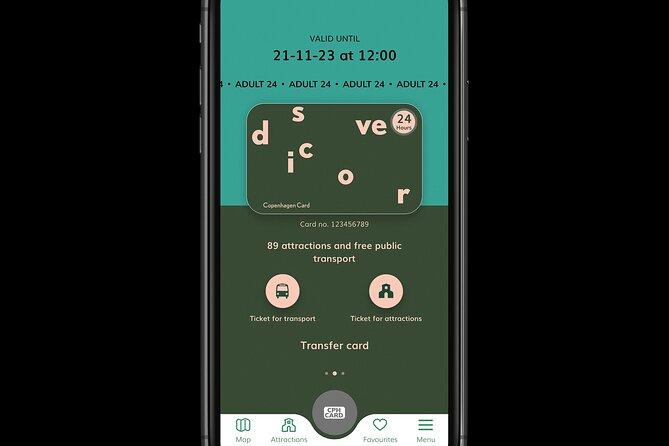
- Phone only: There is no physical card. You activate the pass in the Copenhagen Card app with the barcode code.
- Children can be covered: Each adult can bring two children aged 3 to 11 free, but you must add the free child cards when buying.
How the Copenhagen Card works on the ground

The card is fully digital. After booking, download the Copenhagen Card app and enter the barcode number supplied with your purchase. Your chosen period begins when you first activate and use the card, not when you buy it.
That matters. If you arrive at 1 p.m. and choose a 48-hour card, you can use it through the same time two days later. A late start can work well if you plan an afternoon, a full day, and a final morning around the clock.
The listed price is $95.96 per person, though pricing can change by duration and booking channel. I would not buy it simply because it includes 80 attractions. I would list the places you genuinely want to visit, add the cost of transport, and compare the total with the card price.
The app is useful for checking attraction details and opening times. It can also help you spot Monday closures, which are a real issue in Copenhagen. Many museums and sights open around the middle of the morning and close in the late afternoon, so you cannot assume that a packed sightseeing day will fit together.
One technical point deserves attention. The card is accepted on Metro, buses, trains, S-trains, and the harbor bus, but the transport QR code may not always work by tapping directly on a Metro screen. Keep the app ready and follow the transport instructions rather than expecting it to behave like a contactless bank card.
Other Copenhagen days people book alongside this one:
- Copenhagen Card-Discover: 80+ Attractions & Public Transport
★ 4.6 · 5,351 reviews - Copenhagen: Hop-On Hop-Off Bus Tour with Boat Tour Option
★ 3.9 · 4,122 reviews - Private Walking Grand Tour of Copenhagen
★ 5.0 · 3,953 reviews
The central Copenhagen sights that make the card pay
The strongest use of the card is a day built around compact central sights. Rosenborg Castle, Christiansborg Palace, Amalienborg Palace Museum, the National Museum, and a canal tour can create a full but manageable schedule.
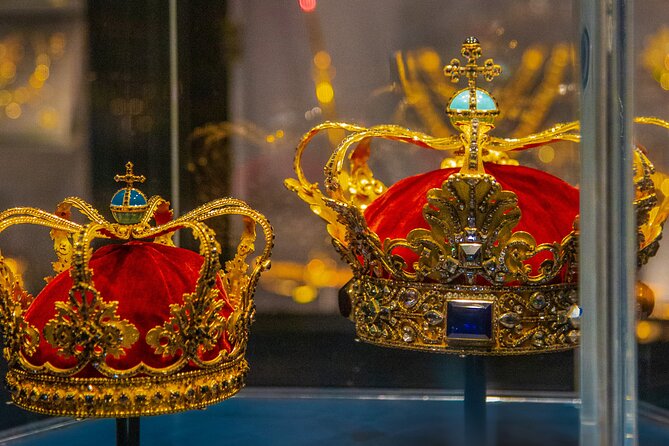
At Rosenborg Castle, you see the former royal residence built by Christian IV in the 1600s, including the Crown Jewels. Its scale makes it a practical one-hour visit, and it is a natural match with nearby central sights.
Christiansborg Slot is tied to Denmark’s royal and political life as the official seat of the Queen. The card includes the attraction listed, but busy periods may require a time slot. Check ahead instead of assuming you can walk straight in.
Amalienborg Palace Museum focuses on royal family life and recreated palace interiors. It gives you a more personal look at the monarchy than a grand castle alone, and it pairs well with a central walking day.
The National Museum of Denmark provides the broad national story, from early Danish culture through later periods. If you want context for the castles, churches, and city streets you are seeing, this is one of the most useful stops.
The Stromma canal tour is another major card benefit. The original boat tour takes you around Copenhagen’s canals, giving you a different view of the harbor, historic buildings, and modern waterfront. It is also a smart choice when your feet need a break.
Tivoli Gardens is included as an attraction, but the supplied information does not specify that every ride or extra cost is covered. Check the current conditions before you go. Opening dates and hours matter, since a beautifully sunny day does not guarantee the park is open.
Churches, towers, and city stories
Our Saviour’s Church is one of Copenhagen’s memorable landmarks, with a serpentine spire completed in 1752 and about 400 steps to the top. The church entrance is free to everyone, while the tower climb requires advance booking.
That distinction is important when calculating value. If you only enter the church, the card does not save you an admission fee. If you secure a tower time slot, the experience becomes more useful as part of a card day.
The Museum of Copenhagen, behind City Hall, explains how the capital developed through fires, plague, building projects, war, and the free city of Christiania. Its interactive city model helps you understand where everything fits before you head back outside.
The Danish Architecture Center in BLOX presents Danish architecture and design through exhibitions, tours, and events. Designmuseum Danmark broadens that theme with furniture, ceramics, textiles, fashion, posters, and work by famous Danish designers such as Arne Jacobsen, Finn Juhl, Poul Kjærholm, Verner Panton, and Hans Wegner.
Thorvaldsen’s Museum is smaller and distinctive. Its colorful rooms and grand design were made to display the sculpture of Bertel Thorvaldsen, and the building looks much as it did when it opened in 1848.
The Royal Library’s Black Diamond is a good stop for literature, photography, cultural exhibitions, and the building itself. The Danish War Museum covers military history from the 1500s to today, while the Museum of Danish Resistance uses reconstructed occupation-era settings and interactive tasks involving sabotage, illegal newspapers, codes, and intercepted calls.
These stops vary in tone. Some are serious, some visual, and some highly hands-on. That variety helps families and mixed-interest groups avoid spending every hour in a traditional art museum.
Art museums for different tastes
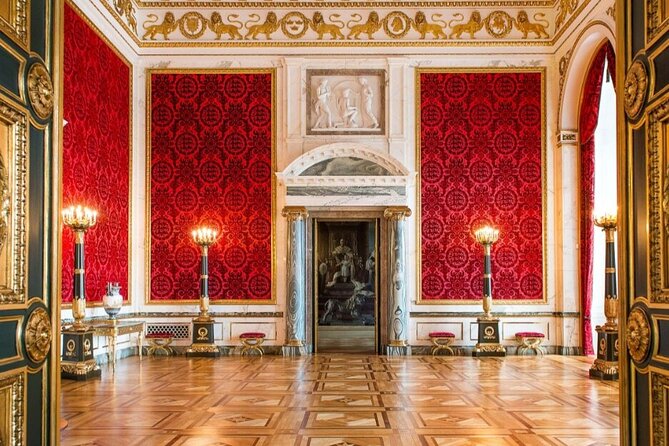
Copenhagen’s art choices are unusually strong, and the card lets you choose based on your mood.
The National Gallery of Denmark, or SMK, presents Danish and international art from seven centuries. You can move from Renaissance masters to modern and contemporary work, with artists including Rubens, Matisse, Munch, Hammershøi, and contemporary names such as Marina Abramović and Danh Vo.
Ny Carlsberg Glyptotek combines ancient Egyptian, Greek, Roman, and Etruscan objects with Danish and French art from the 19th century. It is a fine choice if your group wants sculpture and archaeology as well as paintings.
The Hirschsprung Collection focuses on Danish art from the Golden Age through the Skagen painters and the Modern Breakthrough. Works by Eckersberg, Købke, Krøyer, and Hammershøi offer a close look at Denmark’s own artistic voice.
For French Impressionism, Ordrupgaard has works connected with Monet, Degas, and Gauguin, alongside Danish art and architecture in peaceful surroundings north of the city. Louisiana Museum of Modern Art takes more planning because it is about 40 kilometers north, but its combination of modern art, sculpture, architecture, parkland, and views across the Sound can justify the trip on its own.
Copenhagen Contemporary presents large installation works in a former industrial welding hall. Nikolaj Kunsthal uses a former church for contemporary exhibitions, while Kunsthal Charlottenborg offers changing international and Danish art in a historic setting.
Cisternerne is the most unusual art stop in this group. The old underground water reservoir is dark, cold, humid, and lightly lit, with contemporary installations set inside the former cistern. Allow about 30 minutes, and remember that this is as much an atmospheric space as a gallery.
Same city, a completely different kind of day:
- From Copenhagen: Lund and Malmö 2-Country Tour
★ 4.7 · 3,807 reviews - Copenhagen Highlights Walking Tour
★ 5.0 · 2,324 reviews - Copenhagen: Highlights 3 Hour Bike Tour with a Local Guide
★ 4.8 · 2,312 reviews - Hamlet and Sweden Tour – Two Countries in one day !
★ 5.0 · 2,223 reviews
Castles and regional day trips
The card’s regional coverage is where it can become a serious money saver. You can ride public transport to major sites outside central Copenhagen and enter them without paying separate admission.
Kronborg Castle in Elsinore sits at the entrance to Øresund and is closely linked with Shakespeare’s Hamlet. The Renaissance castle is one of northern Europe’s major historic sites, and the train trip makes it a natural full or half-day outing.
Frederiksborg Castle in Hillerød was built by Christian IV in the early 17th century. The Museum of National History inside covers Danish history through portraits, furniture, paintings, and decorated rooms. The castle itself is the main event, but the museum gives your visit structure.
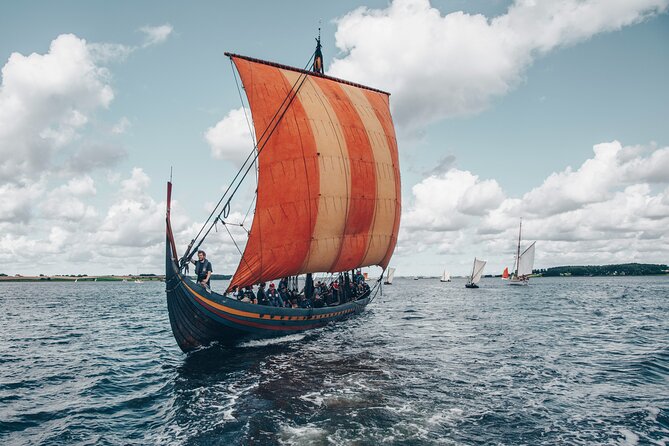
Roskilde offers two very different sights. Roskilde Cathedral, a UNESCO World Heritage site, contains the tombs of 40 Danish kings and queens beneath decorated vaults and crypts. The Viking Ship Museum presents five original 1,000-year-old ship finds, reconstructed boats, maritime crafts, and activities tied to traditional boatbuilding.
Lejre Land of Legends is an open-air museum with reconstructed Stone Age, Iron Age, and Viking settlements. Its large Viking royal hall and active workshops make it especially suitable for families, though you should allow about two hours plus transport time.
These longer outings are not quick add-ons. You need to account for train journeys, opening hours, and the fact that each site may take at least an hour. Still, they are exactly the type of trip that is costly and awkward without regional transport included.
Family stops and unusual museums
Copenhagen Zoo has more than 4,000 animals in modern facilities and can easily fill more than the suggested hour if you are visiting with children.
Experimentarium in Hellerup is a hands-on science center where you learn by trying things yourself. It is about 6 kilometers north of central Copenhagen and is a strong rainy-day choice for families.
Planetarium offers exhibitions and one film in its large dome. The dome uses 8K visualization and a high-end sound system, making it a good evening or weather-proof stop.
The Museum of Natural History includes mineral halls, a large meteorite, and changing exhibitions. Home of Carlsberg tells the story of the brewery from 1847 inside the original Carlsberg area, but you need to pre-book your visit. Your card must already be active because the card number is needed for the booking.
Ragnarock in Roskilde follows pop, rock, and youth culture from 1950s rock and roll through 1980s pop and current music. Classic Car House focuses on 20th-century automobiles, craftsmanship, design, and industrial innovation.
The Karen Blixen Museum at Rungstedlund is a short walk from Rungsted Kyst Station. It preserves the author’s home beside the Sound and a bird sanctuary, offering a quieter literary stop outside the center.
Medical Museion is not for delicate souls. Its exhibitions examine the human body, illness, and medical treatment in a former Royal Academy for Surgeons building dating from 1787.
The submarine Sælen and the ships at Holmen add naval history. You can see a small diesel-electric submarine, the frigate Peder Skram, and the Cold War fast attack craft Sehested.
Casino Copenhagen is also included, with roulette, blackjack, poker, punto banco, ultimate Texas poker, and slot machines. The card covers admission, but it does not cover gambling. Set your own spending limit.
Where the value is strongest
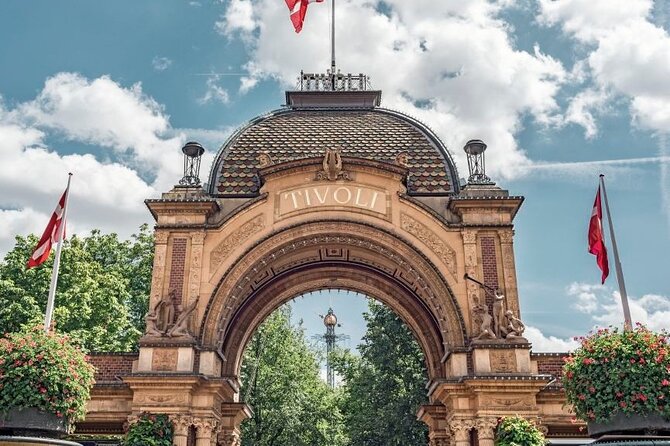
The card is easiest to justify if you visit at least three substantial paid attractions and use public transport several times. A 24-hour card can work for a canal cruise, Rosenborg, Tivoli, another museum, and transport to or from the airport, but only if opening hours line up.
The 48-hour and 72-hour options give you more breathing room. You can combine central Copenhagen with one regional trip rather than racing between five sites in one day. A 96-hour or 120-hour card suits an itinerary that includes several castles, museums, and transport-heavy outings.
The card also reduces small decisions. You do not need to stop and compare every train ticket or admission price. That convenience has real value, especially for families and anyone using the Metro, S-train, harbor bus, and regional trains repeatedly.
Children aged 3 to 11 can be added free, up to two children per adult. Since younger children are often already free or discounted at attractions, compare the child transport cost before assuming the child card is automatically the best deal. The free card must be added when you purchase the adult card.
Important limits before you activate
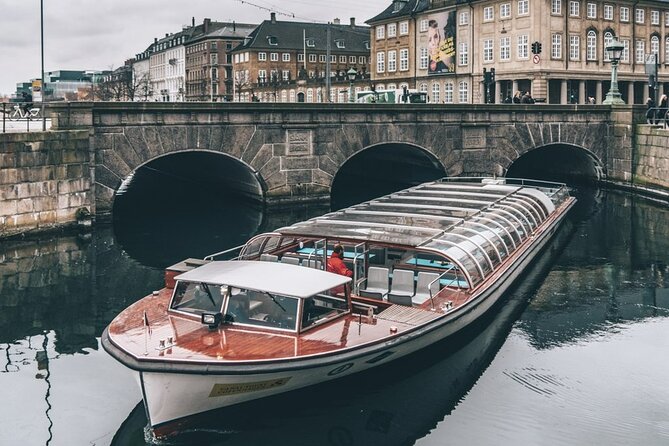
The card is personal and non-refundable after activation. There are no refunds or replacements if you lose the phone or break it, so make sure your device is charged and the app is ready before you begin.
The pass is valid for one year after purchase until activated. That gives you useful flexibility, but the clock runs continuously once the first use begins.
Some attractions need advance booking, especially the tower at Our Saviour’s Church and Home of Carlsberg. Christiansborg can also require a time slot during busy periods. Check the app and attraction websites before building a tight schedule.
The card is offered in English, and the experience is self-guided rather than a tour with a named guide. You choose the order, pace, and mix of sights yourself.
Should you book the Copenhagen Card?
I would book it for a two- to five-day visit if you want several museums, royal sites, a canal ride, and at least one trip outside the city. It is particularly useful when you plan to visit Louisiana, Kronborg, Frederiksborg, Roskilde, or the Viking Ship Museum, since transport and admission can add up quickly.
I would be cautious with the 24-hour option. Buy it only after checking that Tivoli, your chosen museums, and any timed attraction are open on the same day. If you prefer slow walks, cafés, and one major sight, individual tickets may cost less and create less pressure.
For an active sightseeing plan, the Copenhagen Card is practical, broad, and easy to use once activated. Do the arithmetic first, then use it boldly on the places you actually care about.
FAQ
How long can I use the Copenhagen Card?
You can choose a 24, 48, 72, 96, or 120-hour card. It is valid for the selected number of hours from the first time you use it.
What attractions are included?
The card includes free entry to more than 80 attractions, including Tivoli Gardens, Rosenborg Castle, Christiansborg Slot, Amalienborg Palace Museum, the National Museum, the Stromma canal tour, Louisiana Museum, Kronborg Castle, and the Viking Ship Museum.
Is public transport included?
Yes. Public transport throughout the Copenhagen region is included, including buses, trains, Metro services, S-trains, and the harbor bus. Taxis are not included.
Is the card physical or digital?
The Copenhagen Card is 100 percent digital. You must download the Copenhagen Card app and enter the barcode number to redeem it.
Can children use the card for free?
Each adult can bring two children aged 3 to 11 for free, provided you add the free child cards to the cart when buying the adult card.
Does the card include the tower at Our Saviour’s Church?
The church entrance is free for everyone. The tower climb requires advance booking, so check the current conditions and reserve a visit if you want to climb the 400 steps.
Do I need to pre-book any attractions?
Yes. Home of Carlsberg requires pre-booking, and your card must be active because you need the card number. Our Saviour’s Church tower requires advance booking, and Christiansborg may require a time slot during busy periods.
Are attractions open every day?
No. Many attractions are closed on Mondays, and opening hours vary. Check the Copenhagen Card app or the attraction’s information before planning your day.
Can I cancel the card for a refund?
You can cancel for a full refund up to 24 hours before the experience start time. Cancellations or changes made within 24 hours are not refundable.
Just added around Copenhagen
- Urban Design and Livability E-bike Tour★ 4.8 · 21 reviews
- Full-Day Tour; Castle, Palace & Cathedral, Winter(JAN-MAR)★ 5.0 · 11 reviews
- a day at North Zealand Castle Tour★ 4.5 · 19 reviews
- The Six Forgotten Giants Trolls Hunt with Minibus★ 4.5 · 27 reviews
- Copenhagen Walking Tour with Food Testing (smorrebrod dish & snap)★ 4.5 · 10 reviews
- The Philosopher’s Last Walk: An audio tour on the life of Søren Kierkegaard★ 4.5 · 5 reviews
- The Forgotten Giants Private Tour★ 5.0 · 3 reviews
- Explore the Instaworthy Spots of Copenhagen with a Local★ 3.5 · 3 reviews
Copenhagen Tours, compared.
Copenhagen Card-Discover: 80+ Attractions & Public Transport
Read our review →
Hop-On Hop-Off Bus Tour with Boat Tour Option
Read our review →

Highlights 3 Hour Bike Tour with a Local Guide
Read our review →
Hamlet and Sweden Tour – Two Countries in one day !
Read our review →
Browse the lists this tour appears in