

Reviewed · COPENHAGEN HIDDEN GEMS TOURS
Copenhagen: Highlights and Hidden Gems Walking Tour
Copenhagen’s best-known sights fit neatly into this three-hour city walk, from the colorful canalfront at Nyhavn to the royal squares around Amalienborg and Christiansborg. You get a useful first look at the city without spending the day indoors or herded onto a bus.
I like the route for two reasons: it links major sights with everyday Copenhagen streets, and the guide can shape the talk around your questions. Guides including Simona, Mood, and Frédéric have been praised for warmth, clear history, local customs, and restaurant advice. The main consideration is simple: three hours on foot can feel full, especially if you want long visits inside buildings rather than exterior views.
I especially like the way the walk connects shopping streets, royal landmarks, churches, theaters, and waterfront views. You also finish with practical suggestions for the rest of your stay, though the tour’s value depends on having a guide who makes good use of the flexible format.
Key points to know before booking
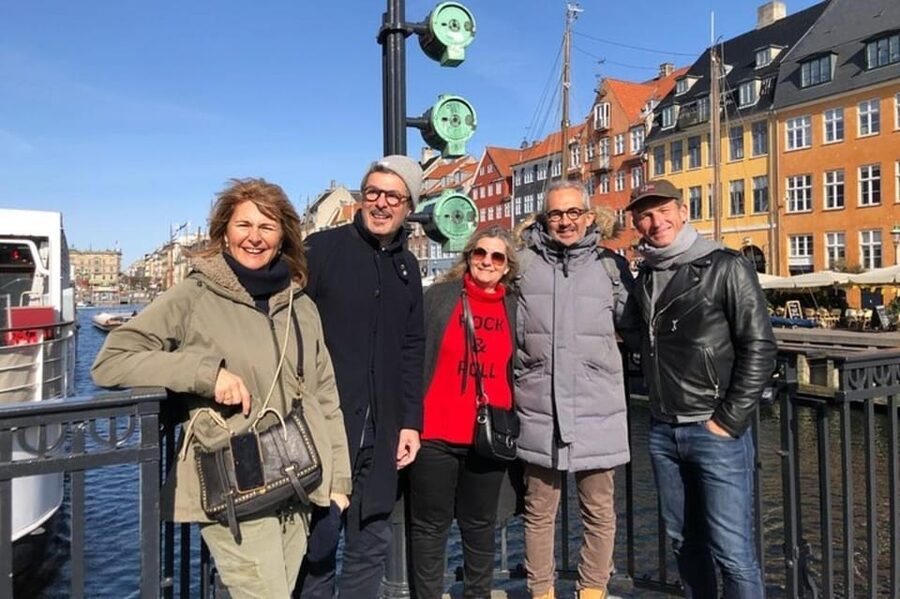
- A strong first-day route: The walk links Strøget, Christiansborg Palace, Magasin du Nord, the Royal Danish Theatre, Amalienborg Palace, and Nyhavn.
- Mostly an exterior sightseeing tour: You stop for photos and explanations, but the schedule does not promise admission inside the palaces, church, department store, or theater.
- Private or shared options: You can choose a private group or a shared walking tour, depending on the option available when you book.
- Useful guide flexibility: Simona has adjusted the information to suit personal interests, while Mood and Frédéric have led tours in French.
- Languages for different groups: Live guiding is available in English, French, Italian, and Spanish.
- Easy booking terms: The tour lasts three hours, is wheelchair accessible, and allows cancellation up to 24 hours before departure for a full refund.
Why this route works for a first look at Copenhagen
The tour begins at Studiestræde 52, then moves through the center toward Copenhagen’s grandest public places. That order gives you a useful sense of how the city fits together. You start among central streets, pass through the main shopping district, reach the seat of government, then continue toward the royal quarter and Nyhavn.
I like this kind of route because it gives you landmarks and context at the same time. Instead of seeing Nyhavn as a pretty row of buildings for a quick photo, you can ask how it relates to the city’s port life. Instead of treating a palace as just another grand facade, you can ask about its place in Denmark’s monarchy.
The walk is also practical for a short stay. You see enough to decide where to return later, perhaps for a longer visit, a meal, more shopping, or an indoor tour. The guide’s recommendations matter here. Simona was singled out for matching information to personal interests and for a restaurant suggestion that worked particularly well.
More copenhagen hidden gems tours in Copenhagen:
- Copenhagen: Old Canals and Hidden Gems Social Boat Tour
★ 4.7 · 371 reviews - Politically Incorrect Private Hidden Gems Walking Tour
★ 5.0 · 270 reviews - Copenhagen Private Tour: Highlights & Hidden Gems by Bike or Foot
★ 4.5 · 145 reviews
Strøget gives you Copenhagen’s busy center
Strøget is the first major stop, with about 30 minutes set aside for a guided visit, sightseeing, and photos. This is Copenhagen’s famous shopping street, so expect a more commercial side of the city here than at the palaces or waterfront.
That contrast is useful. You see department stores, shops, pedestrian traffic, and the city’s everyday rhythm before the route turns toward royal landmarks. The guide can help you place Strøget within the larger center rather than leaving you with a simple shopping stop.
Allow yourself to enjoy the street without expecting a quiet old lane. A 30-minute stop is enough for an introduction and some browsing, but not for a serious shopping session. If you want to buy Danish design, clothing, or souvenirs, make a note of places to revisit after the walk.
The route also helps with orientation. Once you know where Strøget sits in relation to Christiansborg and Magasin du Nord, the center becomes easier to navigate on your own. That is one of the quiet benefits of a walking tour: you begin to build a mental map, not just a photo collection.
Christiansborg Palace connects royal and civic Copenhagen
The walk continues to Christiansborg Palace, again with around 30 minutes for a photo stop, guided sightseeing, and walking. The palace is an important stop because it represents more than royal ceremony. It is closely tied to Denmark’s political life, making it a useful counterpoint to Amalienborg.
Your guide explains the significance of the building and its place in Danish public life. Since the experience is described as a walking and sightseeing tour, you should plan on seeing Christiansborg from the outside unless your chosen arrangement states otherwise. The time is intended for orientation and discussion, not a long interior visit.
I like this stop because it gives the tour more substance than a string of attractive streets. You can ask about the monarchy, government, and the relationship between the two. The information is also likely to help you decide if you want to return for a separate indoor visit.
The palace works well in the middle of the route. By this point, you have seen the commercial center, and you are moving toward the grander royal district. The change in mood is part of the experience.
Magasin du Nord adds a look at local shopping life
Magasin du Nord receives its own 30-minute stop. The famous department store is a practical addition to the route because it shows another side of central Copenhagen. This is not only a place to photograph a grand building. It can also serve as a reference point for Danish brands, design goods, food items, and everyday shopping.
The tour does not promise a dedicated shopping session, so keep your expectations sensible. The guide’s role is to explain the place and its importance, while you get a chance to look around and take photos. If you are interested in shopping, ask your guide for suggestions that fit your budget and interests.
This stop also breaks up the palace and monument sightseeing. A city is not made only of royal residences and historic churches. A department store shows how people use the center now, and that everyday layer makes the walk feel more connected to present-day Copenhagen.
A few more Copenhagen trips to weigh up
- Private Walking Grand Tour of Copenhagen
★ 5.0 · 3,953 reviews - Copenhagen Highlights Walking Tour
★ 5.0 · 2,324 reviews - Politically Incorrect Private Highlights Walking Tour
★ 5.0 · 1,244 reviews - Copenhagen: Group Walking Tour – City Highlights – 2 Hours
★ 4.7 · 1,088 reviews
The Royal Danish Theatre brings culture into the route
The Royal Danish Theatre Play House is another 30-minute stop. Its inclusion gives the walk a cultural angle, not just a royal and architectural one. Your guide points out the building and explains its significance while you walk and take photos.
As with the other stops, the format does not include a promised performance or interior tour. Think of this as a good introduction to Copenhagen’s theater life. If the building catches your attention, you can ask whether a later visit would suit your schedule.
The theater also helps explain the character of this part of town. The route is moving through a district where royal institutions, shops, formal squares, and cultural buildings sit close together. You get a sense of how compact central Copenhagen is.
A private tour may be especially useful here if you have a particular interest in architecture or the performing arts. On a shared tour, you will still get the main story, but the time for specialist questions may be more limited.
Amalienborg shows Copenhagen’s royal quarter

Amalienborg Palace is one of the main sights on the walk, with another 30-minute stop. The palace area is known for its formal design and royal presence, and it gives you a different view of Danish monarchy than Christiansborg.
This is a place where a guide adds real value. A palace square can look impressive without being easy to interpret. Your guide can explain what you are looking at, how the buildings relate to one another, and why the site matters.
The route emphasizes the exterior experience. You stop for photos, hear the story, and continue on foot. If your main goal is to tour royal rooms, check the separate admission details for the palace before booking this walk. The tour itself is not presented as an indoor palace visit.
I would pay attention to the guide’s explanation of the area rather than rushing through the photo stop. The royal quarter is one of the points where the city’s architecture and government history come together. It is also a good place to ask for ideas about other royal sites to see later.
Nyhavn is the colorful finish
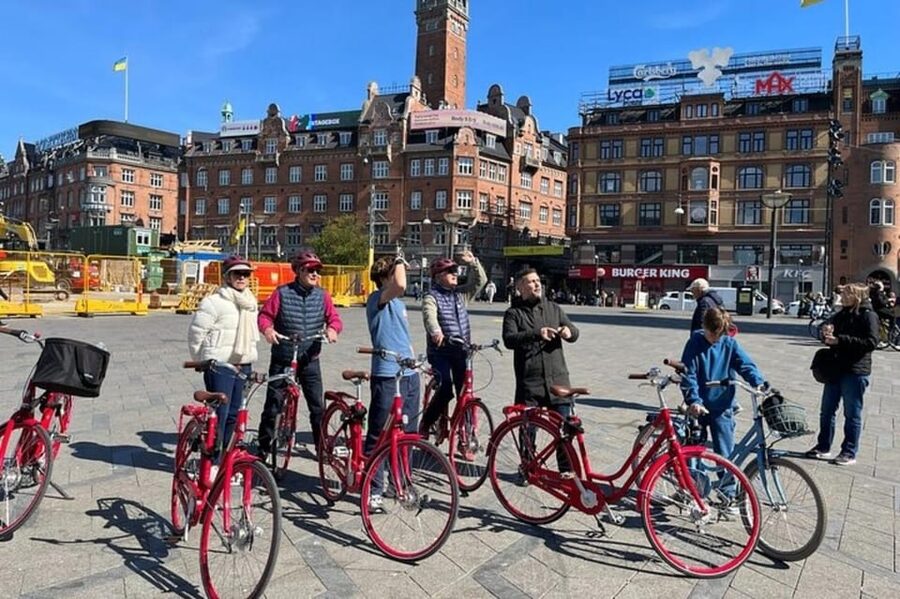
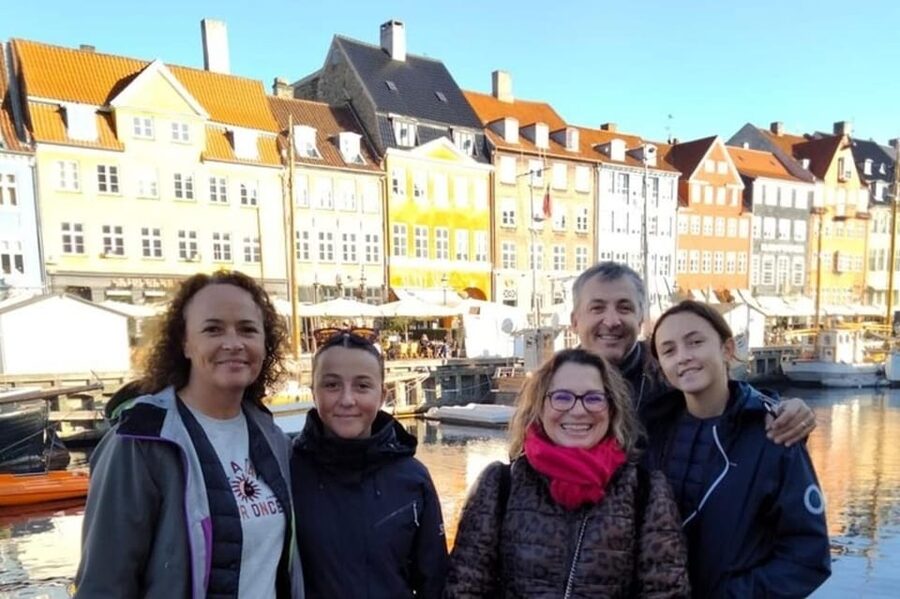
Nyhavn is the final listed stop, and it is the visual payoff of the route. The canal is lined with colorful 17th and 18th-century townhouses, cafes, and waterside views. It is one of the places you will want to photograph, but the guide helps give the postcard scene some context.
The canalfront can be lively, so it may feel less peaceful than its pictures suggest. That is not a flaw, but it is worth knowing. You are visiting one of Copenhagen’s most popular public spaces, with restaurants and people moving along the water.
Ending here makes sense. After seeing the city’s central streets and royal buildings, you arrive at a place where Copenhagen feels open, social, and maritime. You can ask your guide for advice on cafes, restaurants, or nearby places to visit next.
Do not assume the tour includes a meal. The information describes sightseeing, walking, and photo stops, not food or drink. Treat Nyhavn as the place to continue your own afternoon or evening after the guide says goodbye.
The Lur Blowers monument adds a smaller local detail

The Lur Blowers monument near City Hall is one of the less obvious details included in the experience. It is connected with Danish heritage and gives the guide a chance to explain a symbol you might otherwise pass without noticing.
This is exactly the sort of stop that can improve a city walk. Large palaces are easy to find in a guidebook. A monument with a local story is easier to miss, and its meaning may not be clear from the sculpture alone.
The provided route lists the monument as part of the experience, while the timed itinerary focuses on the larger stops. That suggests the guide may work it into the wider walk rather than treating it as a long standalone visit. Ask about it if you want more detail on Danish customs and national symbols.
The stop also fits the tour’s stated aim of showing more than the famous postcard locations. It gives you a talking point for the city’s heritage without requiring a long detour.
What the guides add to the three-hour format
A walking tour lives or dies by its guide, and the strongest praise here concerns the people leading the route. Simona is described as warm, attentive, prepared, and enthusiastic. She answered questions across many subjects and adjusted the tour to match personal interests.
Mood has also been praised as an excellent guide, including for French-language walks. Frédéric is noted for explaining Copenhagen, Danish customs, and local ways of life in a friendly manner. These details matter because the route itself is compact and easy to follow on a map. The guide’s interpretation is what turns it into an experience.
You can choose English, French, Italian, or Spanish. If language is important to your group, confirm the available start time and language before paying. A private group gives you the best chance to ask detailed questions and change the emphasis, while a shared group may suit you if you mainly want the main sights at a lower cost.
The guide also provides recommendations for other things to do in Copenhagen. Use the final part of the tour to ask direct questions: what to see next, where to eat, which sights need more time, and how to shape the rest of your stay. The restaurant advice given by Simona was described as particularly well matched, so this is more than a formality.
Is $58 a fair price?
At $58 per person, this is not the cheapest way to look at Copenhagen. You can walk past several of these places on your own for nothing. The price makes more sense if you value a live guide, explanations in your language, and a ready-made route that covers a lot of central Copenhagen in three hours.
For a private group, the value depends on how many people share the cost and how much you care about personal attention. A private option can be worthwhile for families, couples, or friends with specific interests. You can ask more questions and may get a route shaped around your priorities.
For a shared tour, compare the price with your need for structure. If you are visiting for a short weekend, the time saved in planning may justify the cost. If you prefer to wander alone and read about buildings later, the same $58 may be better spent on food, museum entry, or another activity.
The tour includes the guide and the walking experience. It does not list meals, entrance tickets, or transport as included. Keep that in mind when you compare the total cost with other Copenhagen activities.
Practical details that affect your day
The meeting point is Studiestræde 52. Plan to arrive ready to walk, since every listed stop involves sightseeing on foot. The total duration is three hours, and starting times depend on availability.
The experience is wheelchair accessible, which is useful for many visitors, but you should still discuss any specific mobility needs when booking. The route includes city streets, public spaces, and waterfront areas, so a private option may offer more flexibility if your group needs a slower pace.
Cancellation is free up to 24 hours before the start time for a full refund. You can also reserve now and pay later, which helps if your Copenhagen schedule is still shifting. These policies reduce the risk of booking a walking tour too early in a changeable trip plan.
Who should choose this Copenhagen walk?
I would recommend it for a first visit, a short weekend, or a cruise stop when you want the city’s main sights explained in one sitting. It also suits you if you like asking questions about customs, royal life, architecture, and food.
The tour is a particularly good fit for groups that want language choice or guide attention. Italian-speaking visitors may appreciate the strong connection with Simona, while French-speaking groups have the option of guides such as Mood or Frédéric. English, Spanish, and Italian are also listed as available languages.
You may want something else if your priority is long indoor visits. This experience gives you exterior sightseeing, photo stops, and stories. It does not promise extended time inside Christiansborg, Amalienborg, Frederiks Kirke, or the Royal Danish Theatre.
Should you book it?
Book this tour if you want a well-planned introduction to central Copenhagen with a local guide who can explain both grand landmarks and smaller cultural details. The route covers a lot without requiring transport, and the guide’s recommendations can help shape the rest of your trip.
I would choose the private option if you have strong interests, mobility concerns, or limited time. Choose the shared option if you mainly want orientation and the major sights. At $58, the tour earns its price through interpretation and convenience, not through admissions or included extras.
FAQ
How long is the Copenhagen Highlights and Hidden Gems Walking Tour?
The tour lasts three hours.
Where does the tour meet?
Meet your guide at Studiestræde 52 in Copenhagen.
Which sights are included on the walking route?
The route includes Strøget, Christiansborg Palace, Magasin du Nord, the Royal Danish Theatre, Amalienborg Palace, Nyhavn, and the Lur Blowers monument near City Hall.
Which languages are available?
Live guides are available in English, French, Italian, and Spanish.
Is a private tour option available?
Yes. You can select a private group option, depending on the choice made when booking.
Can I cancel the tour for a refund?
Yes. You can cancel up to 24 hours in advance for a full refund. You can also reserve now and pay later.
Just added around Copenhagen
- Urban Design and Livability E-bike Tour★ 4.8 · 21 reviews
- Full-Day Tour; Castle, Palace & Cathedral, Winter(JAN-MAR)★ 5.0 · 11 reviews
- a day at North Zealand Castle Tour★ 4.5 · 19 reviews
- The Philosopher’s Last Walk: An audio tour on the life of Søren Kierkegaard★ 4.5 · 5 reviews
- The Six Forgotten Giants Trolls Hunt with Minibus★ 4.5 · 27 reviews
- Copenhagen Walking Tour with Food Testing (smorrebrod dish & snap)★ 4.5 · 10 reviews
- The Forgotten Giants Private Tour★ 5.0 · 3 reviews
- Explore the Instaworthy Spots of Copenhagen with a Local★ 3.5 · 3 reviews
Copenhagen Hidden Gems Tours, compared.
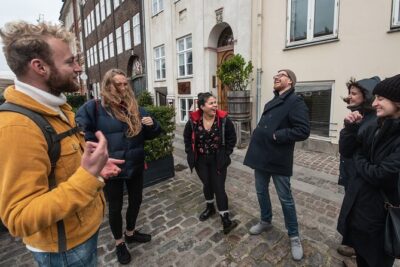

Copenhagen Private Tour: Highlights & Hidden Gems by Bike or Foot
Read our review →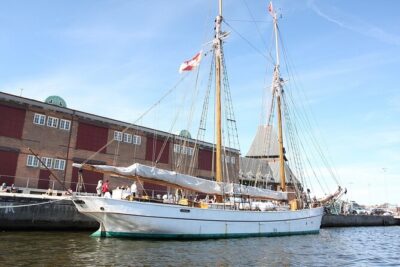
Aarhus Walking Tour: Explore Top Sights & Hidden Gems
Read our review →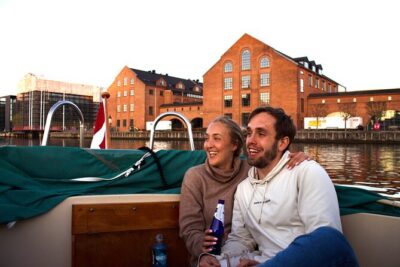
Private Copenhagen Boat Tour: Landmarks and Hidden Gems
Read our review →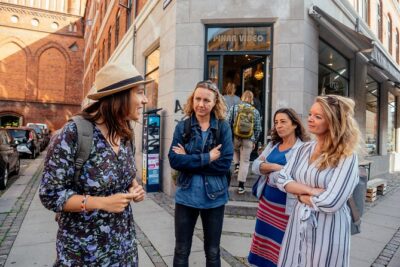
Off the Beaten Track in Copenhagen: Vesterbro Private Tour
Read our review →
Highlights & Hidden Gems of Copenhagen Private Tour
Read our review →
Copenhagen Hidden Gems PhotoWalk tour – Christianshavn & Houseboats
Read our review →Browse the lists this tour appears in