
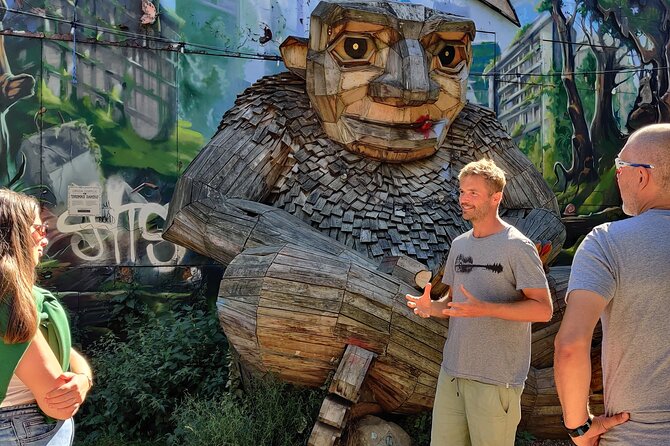
Reviewed · WALKING TOURS
Cph Contast walk with Coffee, Cake & Culture
Copenhagen’s best moments often come between the headline sights. This three-hour walk links Nyhavn, Christianshavn, Christiania, and the Opera district, with coffee, smørrebrød, and cake along the way. Guides Michael and Otto add the local stories that turn pretty streets and canals into a clear picture of Danish life.
I like the route’s mix of major landmarks and quieter corners, especially the view from the Kissing Bridge and the peaceful paths beside Christiania. I also like the useful local advice. One person used Michael’s restaurant suggestion to find an evening meal among locals. The main consideration is pace: this is a walking tour with a moderate fitness requirement, and some stops are brief.
Key points at a glance
- Coffee and smørrebrød at Wilders Plads: Pause at Café Båden for Danish food and a taste of canal-side hygge.
- A calmer route through Christiania: See the alternative neighborhood from quieter paths rather than only its busiest lanes.
- Copenhagen’s maritime past: Walk past gunboat sheds, canals, houseboats, and old trading areas.
- A grand finish at Operaparken: End with cake at Restaurant Væksthuset and views toward the Opera House, Amalienborg, and the Marble Church.
- Personal guiding from Michael or Otto: Expect history, neighborhood context, and practical suggestions for the rest of your stay.
- A flexible booking choice: The experience can be arranged as a private trip or a more budget-friendly group outing, with group discounts available.
Why this Copenhagen walk feels different
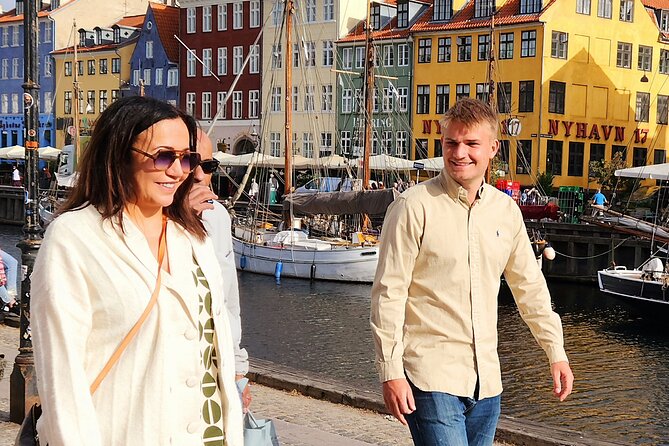
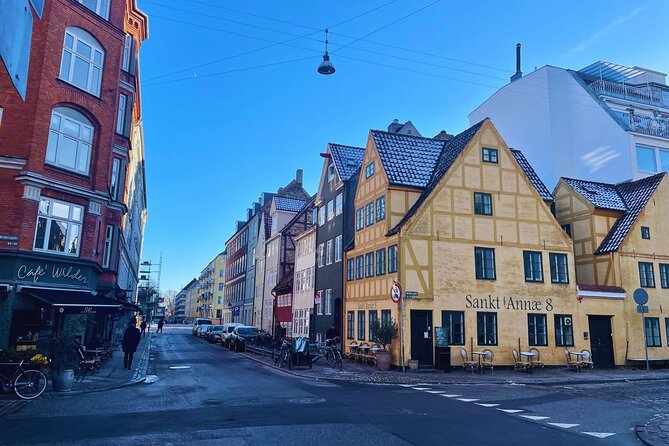
The usual first look at Copenhagen is Nyhavn, Tivoli Gardens, and the royal center. Those places deserve your time, but they can leave you with a postcard view of the city. This walk adds the in-between places: old defenses, houseboats, artist spaces, food stalls, churches, and new parks.
That mix is the tour’s strongest feature. You begin in one of Copenhagen’s most photographed districts, then move into Christianshavn, where water and daily life shape the streets. By the end, you have crossed from old harbor trade to modern design and urban gardening.
The route also gives you small pieces of Danish food culture. Coffee or tea and a piece of cake are included, along with the stop at Café Båden, where you can enjoy traditional smørrebrød. The supplied details do not make clear whether the smørrebrød is included in the tour price, so I would treat it as a possible personal purchase unless your booking confirmation says otherwise.
The cost is $80.83 per person. That is not a bargain for a three-hour walk, but the value depends on what you want. You are paying for a guide, food and drink, a carefully connected route, and recommendations that can shape the rest of your Copenhagen visit. If you prefer to explore alone with a guidebook, the price may feel high. If you want a compact introduction with personal attention, it is easier to justify.
Other Copenhagen days people book alongside this one:
- Copenhagen Card-Discover: 80+ Attractions & Public Transport
★ 4.6 · 5,351 reviews - Copenhagen: Hop-On Hop-Off Bus Tour with Boat Tour Option
★ 3.9 · 4,122 reviews - Private Walking Grand Tour of Copenhagen
★ 5.0 · 3,953 reviews
Starting at Nyhavn and crossing the Kissing Bridge
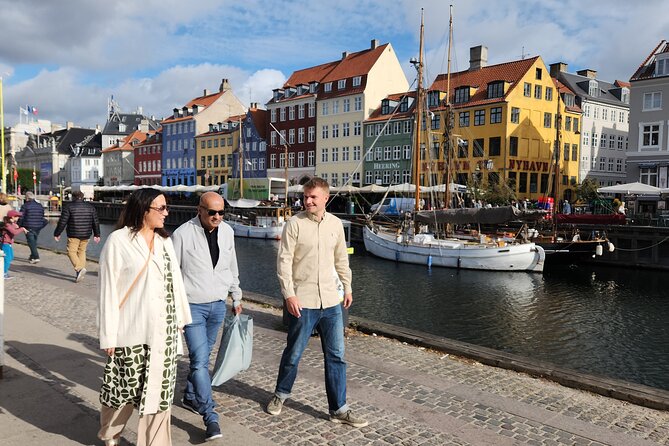
Meet at the Memorial Anchor near Nyhavn 1F. Nyhavn is an easy place to recognize, with painted townhouses, canal-side restaurants, and old wooden ships. It is also a useful starting point because the guide can quickly explain how a former sailor and merchant district became one of Copenhagen’s main public spaces.
The Hans Christian Andersen connection adds a nice literary note. He lived in several Nyhavn houses while writing some of his best-known fairy tales. You will not spend long here, about 10 minutes, so this is more of an orientation than a full tour of the waterfront.
Next comes the modern Kissing Bridge, officially opened in 2016. Its sliding design allows boats through and creates the impression that the bridge is leaning in for a kiss. From the walkway, you get broad views toward Nyhavn, the Opera House, and Paper Island.
I like this early transition because it gives you a quick lesson in Copenhagen’s approach to city design. Historic waterfront buildings sit beside modern engineering, and the bridge serves both boats and pedestrians. It also begins the shift away from the most crowded part of Nyhavn.
Coffee, canals, and smørrebrød at Wilders Plads
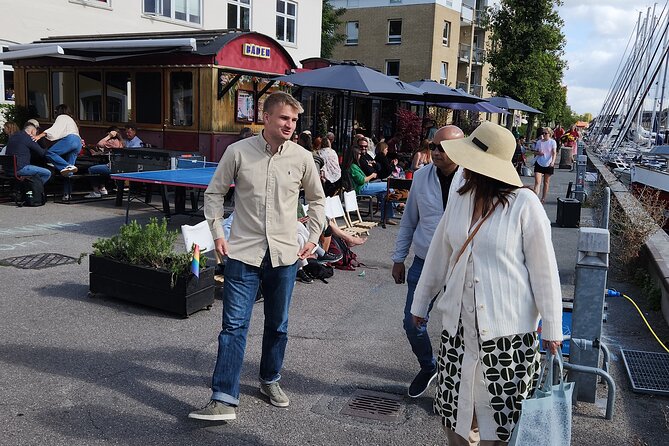
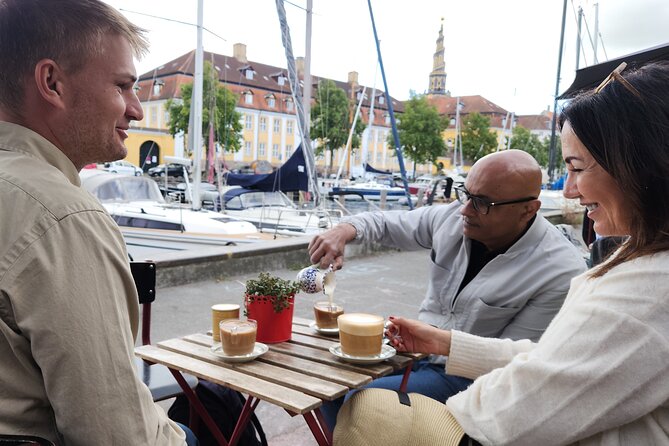
The stop at Wilders Plads is one of the most useful parts of the walk. At Café Båden, you pause for coffee and a piece of traditional smørrebrød while the guide explains Christianshavn’s changing role.
Christianshavn began as part of Christian IV’s plan for a major trading center. Today, its canals, warehouses, and houseboats create a quieter residential feel. That change is worth hearing about while sitting beside the water. You are not just looking at old buildings; you are seeing how a working harbor district found a new life.
This is also the point where the tour’s Danish food theme becomes more than a sweet finish. Smørrebrød is an open-faced sandwich, usually built on dense rye bread with carefully arranged toppings. The supplied information does not specify the topping, so do not book this expecting a particular dish.
The 20-minute stop is short enough to keep the walk moving but long enough for a proper break. If you are sensitive to caffeine, ask about tea, which is included as an option. If you want a full meal, plan to eat later, since this is a tasting pause rather than a lengthy restaurant visit.
Broens Street Food and the quieter Christianshavn canals
Broens Gadekøkken gives you a quick look at Copenhagen’s modern food scene. The open-air market combines international dishes with Nordic ideas, and its connection to culinary figure Claus Meyer reflects the city’s interest in quality, local identity, and sustainability.
The scheduled stop is only about two minutes, so expect an introduction rather than a meal. You may see choices ranging from tacos to Nordic specialties, but the information provided does not promise a specific tasting here. Think of it as a food-market snapshot and a useful place to note for later.
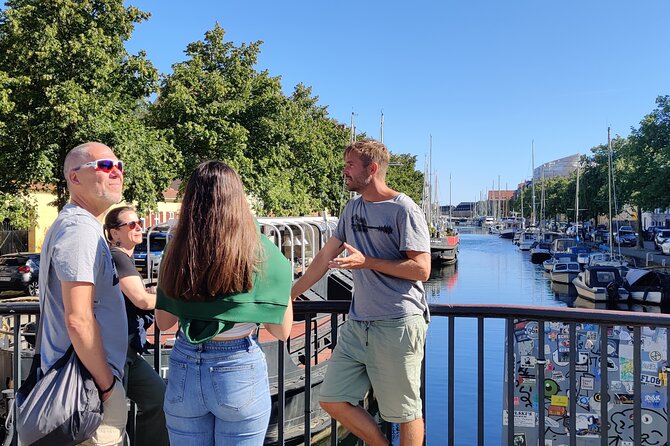
The route then turns toward Snorrebro, a smaller bridge with a more personal feel. From here, you can look toward the spiral tower of Our Saviour’s Church and the houseboats along the canal. This is a good reminder that Copenhagen is not only grand squares and royal buildings. Some of its appeal comes from ordinary views, where residents live beside the water in a setting that feels calm and close-knit.
Same city, a completely different kind of day:
- From Copenhagen: Lund and Malmö 2-Country Tour
★ 4.7 · 3,807 reviews - Copenhagen Highlights Walking Tour
★ 5.0 · 2,324 reviews - Copenhagen: Highlights 3 Hour Bike Tour with a Local Guide
★ 4.8 · 2,312 reviews - Hamlet and Sweden Tour – Two Countries in one day !
★ 5.0 · 2,223 reviews
Our Saviour’s Church and the story in its spiral tower
Our Saviour’s Church is one of the tour’s major landmarks. Its Baroque design and gold spiral tower make it easy to spot from across Christianshavn. The tower has about 400 winding steps, leading to wide city views for people willing and able to climb.
The tour pauses outside for around five minutes. Admission to the church is not included, and the itinerary does not say that the tower climb forms part of the walk. You may have time to return on your own, but do not count on entering during the tour.
Even from outside, the building gives the guide plenty to explain. The tower was completed in 1752, and the church has served Christianshavn for more than 300 years. If you enjoy architecture and church interiors, ask how much time you will have before the walk begins, since the schedule keeps this stop brief.
Lille Mølle and Copenhagen’s old defenses
Lille Mølle adds a surprising turn. The former windmill dates to 1783 and sits on Løvens Bastion, part of Copenhagen’s old fortifications. It later became a private home filled with art and antiques and is now a museum.
This stop connects several parts of the city’s story: defense, wind power, domestic life, and preservation. The surrounding canals and greenery also provide a change from the hard surfaces of the harbor. The tour does not list admission to Lille Mølle, so expect an exterior look unless your guide says otherwise.
I value stops like this because they help you notice how Copenhagen reused old structures. The city’s past is not confined to a palace or formal museum. It appears in small buildings, former military sites, and places that have changed purpose over time.
A gentle introduction to Christiania
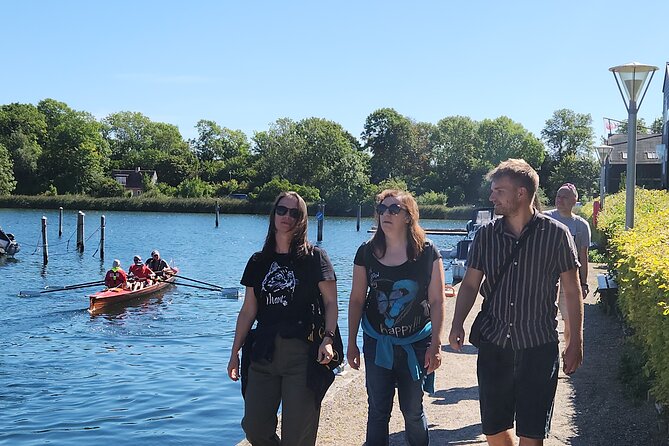
Christiania is often presented as a counterculture spectacle. This walk takes a more measured approach. You first follow the green ramparts of Christianshavns Vold, then continue through a quieter part of the neighborhood.
Founded in 1971, Christiania is known for its independent spirit, creative work, alternative lifestyle, and strong local identity. The route lets you see colorful back lanes, unusual buildings, art, and plants without making the visit feel like a rushed march through the busiest section.
The scheduled time is about 15 minutes. That is enough for an introduction, not a full exploration. If Christiania is a top priority for you, return separately and allow much more time. This guided visit works best if you want context and a respectful first look rather than an exhaustive tour.
The quieter route is a practical advantage. It gives the group a chance to understand the area without treating it as a novelty. Your guide can also help explain why Christiania has such a distinct place in Copenhagen’s identity.
Gunboat sheds and the city’s maritime memory
The old gunboat sheds are easy to miss if you follow only the main sightseeing path. They date to the period after the British attack on Copenhagen in 1807, during the Napoleonic Wars, when small gunboats helped defend Danish waters.
Today, the modest buildings serve as artist studios. That change from military storage to creative workspace fits the broader route: Copenhagen repeatedly gives old waterfront places new uses.
The stop lasts around five minutes. It is not a major attraction with a long visit, but it adds meaning to the canals and former naval areas around Holmen. You see how the water shaped Copenhagen’s security, trade, work, and later cultural life.
The Opera House, Amalienborg, and a modern royal axis
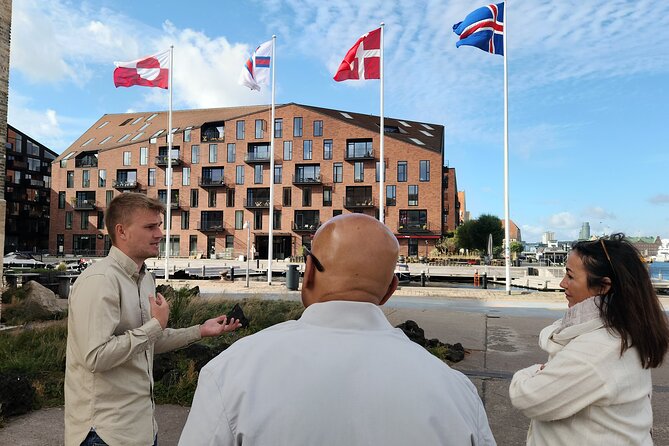
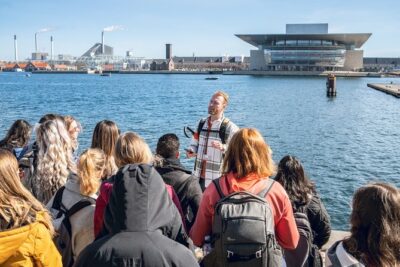
The Copenhagen Opera House provides one of the clearest views of the city’s modern side. Gifted to Copenhagen by Mærsk Mc-Kinney Møller, it has bold architecture and a prominent position on Holmen, an area tied to the city’s naval past.
The tour pauses for about five minutes. Admission is not included, and there is no indication that you enter for a performance or interior visit. The value here is the setting and the guide’s explanation, not an opera-house tour.
From the terrace, you can look toward Amalienborg Palace and the Marble Church. Together, these buildings create a strong visual line between royal Copenhagen and its newer cultural institutions. This is one of the best places on the route to see how old and new Copenhagen face each other across the water.
Cake and canal views at Operaparken
The tour finishes at Operaparken, a modern green space designed around plants, waterways, and public use. At its center, Væksthuset contains tropical and subtropical plants inside a glass greenhouse.
The final 20 minutes take place at Restaurant Væksthuset, where a slice of cake is included. The setting is a fitting end to a walk that has combined food, architecture, history, and neighborhood life. You can relax while looking toward the canal, Opera House, Amalienborg, and the Marble Church.
The end point is about a 10 to 15-minute walk from Nyhavn, but you will have already covered the route with the group. Keep this in mind when planning your next activity. Operaparken is not the starting point, and you should not expect to return to Nyhavn automatically.
The cake is not just a dessert add-on. It gives the group a shared pause after several hours on foot. It also lets you experience a people-focused public space rather than ending beside a busy road or at a transit stop.
How the guides shape the experience
Michael and Otto are the named guides associated with the experience. Their role appears to be more than pointing out buildings. The strongest parts of the tour depend on stories about Copenhagen’s past, explanations of Danish culture, and practical suggestions for the rest of your stay.
Otto is especially associated with history-focused storytelling. If you enjoy understanding why a neighborhood developed as it did, ask questions as you walk. Michael is also known for giving restaurant advice, so have a notebook or phone ready when a useful recommendation comes up.
The experience is offered in English. The tour can be arranged as a private activity, and the description also presents a wallet-friendly group option with discounts. Because the booking information also identifies the activity as private, confirm the exact group format before paying if group size matters to you. A small group of up to six people is particularly appealing for questions and a relaxed pace.
Practical details and who should book
The walk lasts about three hours and requires moderate physical fitness. You will be outside for most of that time, moving between neighborhoods and stopping briefly at several sights. Comfortable shoes matter more here than dressy clothes.
Coffee or tea, a guide, and cake are included. The church and Opera House do not include admission, and the food-market stop is too brief to count as a full meal. Plan to eat before the tour or afterward if you need more than a coffee break and a small serving of smørrebrød.
The experience is a good match for you if:
- You want local context rather than a checklist of famous sights.
- You enjoy walking through neighborhoods with canals, boats, old military buildings, and modern public spaces.
- You like food as part of a cultural introduction.
- You want restaurant suggestions for the rest of your Copenhagen stay.
- You prefer a private walk or a small group with time for questions.
It is less suitable if you want long visits inside museums, churches, or the Opera House. It is also not the best choice for anyone who finds three hours of walking difficult.
Free cancellation is available up to 24 hours before the start time. Changes or cancellations inside that window are not accepted for a refund, and the cut-off uses Copenhagen local time.
Should you book Coffee, Cake & Culture?
Book it if you want Copenhagen explained through neighborhoods, food, and everyday city life. The route moves from Nyhavn’s colorful canal to Christianshavn’s quieter waters, Christiania’s alternative streets, old defensive buildings, and the modern Opera district. That is a lot of ground in three hours, but the stops create a clear story.
The best reasons to choose it are the local guiding from Michael or Otto, the unusual mix of places, the coffee and cake breaks, and the practical advice you can use after the tour. The main limits are the short stop times and the extra cost of a few admissions or food purchases.
For a first or second day in Copenhagen, this is a smart orientation walk. It gives you a feel for how the city works and points you toward places worth revisiting. With a 4.9 rating and 97 percent recommendation rate, it has a strong record, but the real question is simple: do you want a personal, food-centered walk through several sides of Copenhagen, or do you need a detailed indoor sightseeing tour? If it is the first, this experience is worth considering.
FAQ
How long does the Copenhagen walking tour last?
The tour lasts approximately three hours.
Where does the tour begin?
It begins at the Memorial Anchor, Nyhavn 1F, 1051 København, Denmark.
Where does the tour end?
It ends at Restaurant Væksthuset in Operaparken, at Ekvipagemestervej 18, 1438 København K. The end point is about a 10 to 15-minute walk from the starting area.
Are coffee, tea, and cake included?
Yes. Coffee and/or tea, a guide, and a slice of cake are included in the price.
Is admission to Our Saviour’s Church included?
No. Admission to Our Saviour’s Church is not included.
What is the cancellation policy?
You can cancel up to 24 hours before the experience start time for a full refund. Cancellations or changes made less than 24 hours before the start time are not accepted for a refund.
More Walking Tours in Copenhagen
- Politically Incorrect Private Highlights Walking Tour
★ 5.0 · 1,244 reviews - Copenhagen: Group Walking Tour – City Highlights – 2 Hours
★ 4.7 · 1,088 reviews - 3h walking tour, small group max 10 people Copenhagen
★ 5.0 · 686 reviews - Walk & Canal Tour: Copenhagen Highlights + Changing of the Guards
★ 5.0 · 580 reviews
Just added around Copenhagen
- Urban Design and Livability E-bike Tour★ 4.8 · 21 reviews
- Full-Day Tour; Castle, Palace & Cathedral, Winter(JAN-MAR)★ 5.0 · 11 reviews
- a day at North Zealand Castle Tour★ 4.5 · 19 reviews
- Copenhagen Walking Tour with Food Testing (smorrebrod dish & snap)★ 4.5 · 10 reviews
- The Philosopher’s Last Walk: An audio tour on the life of Søren Kierkegaard★ 4.5 · 5 reviews
- The Six Forgotten Giants Trolls Hunt with Minibus★ 4.5 · 27 reviews
- The Forgotten Giants Private Tour★ 5.0 · 3 reviews
- Explore the Instaworthy Spots of Copenhagen with a Local★ 3.5 · 3 reviews
Walking Tours, compared.
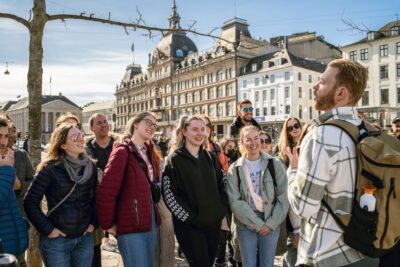
Group Walking Tour – City Highlights – 2 Hours
Read our review →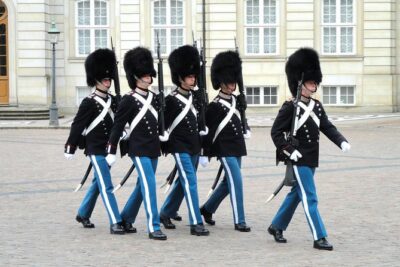
3h walking tour, small group max 10 people Copenhagen
Read our review →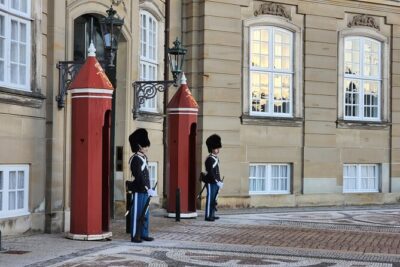
Walk & Canal Tour: Copenhagen Highlights + Changing of the Guards
Read our review →
Browse the lists this tour appears in