
Reviewed · WALKING TOURS
Odense: City walk – The new green Odense – City development
Odense’s most interesting sight may be the city it is still becoming. This two-hour walk follows the change from industrial center to greener, more people-focused city, with stops at the harbor, a former industrial zone, and a new district rising where a six-lane road once cut through the center. I especially like the small-group format and the way the guide explains why these changes matter in daily life, not just what the new buildings look like. I also like the honest local angle, including talk of housing, schools, infrastructure, and the economy.
The possible drawback is simple: this is a 4-kilometer walking tour, or about 5,500 steps, with urban planning as its main subject. If you want fairy tales, royal interiors, or a quick sweep of Odense’s classic sights, this is not the right tour. If you want to understand how the city works, it is a smart choice.
Key points at a glance
- A city changing in real time: See former industrial ground and recently redesigned streets rather than only historic facades.
- The missing road is part of the story: Walk through an area that replaced a six-lane main road running through central Odense.
- Harbor to green city: The route uses the Port of Odense to explain the city’s modern shift.
- A local conversation, not a script: Guides such as Jørn Asmussen bring in Danish education, housing, work, and everyday life.
- Small groups help: You have room to ask questions and follow a subject that catches your interest.
- Good value for curious walkers: At $31 per person, the tour gives you two hours of context that is hard to gather alone.
Why this Odense walk is different
Most first walks through Odense focus on the old center, H.C. Andersen, and attractive streets. Those sights matter, but they do not tell you why the city feels different in some areas today. This tour uses the old center as a starting point, then follows the physical evidence of a city trying to rethink itself.
You will look at how roads, harbor land, housing, public spaces, and former industrial sites can change the way people use a city. The guide also connects those visible projects to less visible questions: How does Denmark approach education? Why does affordable housing for young people matter in the center? How do infrastructure and the local economy shape a city’s future?
That wider frame is the tour’s real value. You are not simply collecting facts about buildings. You are learning to read Odense as a working city, with decisions, compromises, and unfinished plans.
The walk is led in English or German. Jørn Asmussen is named as one of the guides, and one account identifies the guide as Johan, so the person leading your walk may vary. The important point is that the experience is built around conversation. You can ask questions as you go, and the small group makes that much easier than on a large coach tour.
A few more Denmark trips to weigh up
- Private Walking Grand Tour of Copenhagen
★ 5.0 · 3,953 reviews - Copenhagen Highlights Walking Tour
★ 5.0 · 2,324 reviews - Politically Incorrect Private Highlights Walking Tour
★ 5.0 · 1,244 reviews
Starting at Overgade and Albani Torv
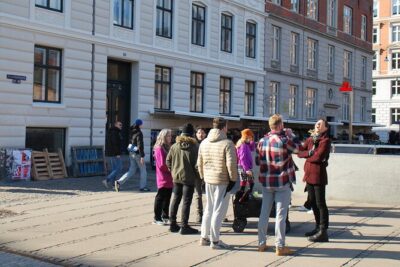
Meet at Overgade 3, in the pedestrian street area, beside a small ruin. Look for the guide carrying a KnowledgeWalks sign. The meeting spot is small, so finding the group should be straightforward.
Beginning here is useful because you first get the old Odense setting before moving into the newer parts of town. The contrast gives the walk its shape. You start with the city people expect to see, then follow the route toward the areas where Odense has changed most sharply.
At Albani Torv, expect about 30 minutes of guided discussion. This is not just a pause for photographs. The guide begins to set out the story of Odense’s development and the choices behind the city’s current direction.
Give yourself a moment to get oriented before the tour starts. Since the meeting point is on a pedestrian street, arriving early lets you find the ruin without rushing and begin the walk in a relaxed frame of mind.
From old center to new urban thinking
The route then moves away from the historic core and toward the harbor. Along the way, the guide explains how Odense has shifted from an industrial city toward a city with a declared green and creative aim.
The word green here is best understood as an urban policy goal, not just a promise of parks. The tour looks at how a city handles traffic, public areas, housing, and new construction. You get a chance to consider the practical side of urban change: What replaces an old road? Who gets to live in a central district? How can a city attract young people without pushing everyday residents out?
The guide also uses photographs of earlier conditions. That detail matters because urban change can be hard to see when you look only at the finished result. A new street or district may seem ordinary until you learn what occupied the space before it.
This portion should appeal to anyone who likes architecture, planning, public policy, or the daily mechanics of city life. It also suits repeat visitors who have already seen the usual center and want a fresh way to understand Odense.
Donkey Republic and the practical side of moving around
The Donkey Republic stop receives about 30 minutes of guided attention. From the information provided, this stop forms part of the discussion about modern infrastructure and how people get around the city.
That makes it more useful than a simple transport stop. Cities often reveal their priorities through the ways they handle movement. Roads, bicycles, walking routes, and shared transport affect noise, access, safety, and the amount of space left for people.
You will hear the guide place Odense’s choices in a Danish context. The discussion can move beyond transport into how infrastructure supports the city’s broader plans. This is one of the places where a local guide adds something a map cannot: the connection between a public project and ordinary routines.
Do not expect a technical lecture packed with figures. The appeal is the chance to ask how these ideas work in practice and what they mean for people living in Odense. The small group is especially helpful here, since transport and city planning can quickly turn into a conversation rather than a one-way speech.
Same city, a completely different kind of day:
- Copenhagen Card-Discover: 80+ Attractions & Public Transport
★ 4.6 · 5,351 reviews - Copenhagen: Hop-On Hop-Off Bus Tour with Boat Tour Option
★ 3.9 · 4,122 reviews - From Copenhagen: Lund and Malmö 2-Country Tour
★ 4.7 · 3,807 reviews - Copenhagen: Highlights 3 Hour Bike Tour with a Local Guide
★ 4.8 · 2,312 reviews
The Port of Odense and the industrial past
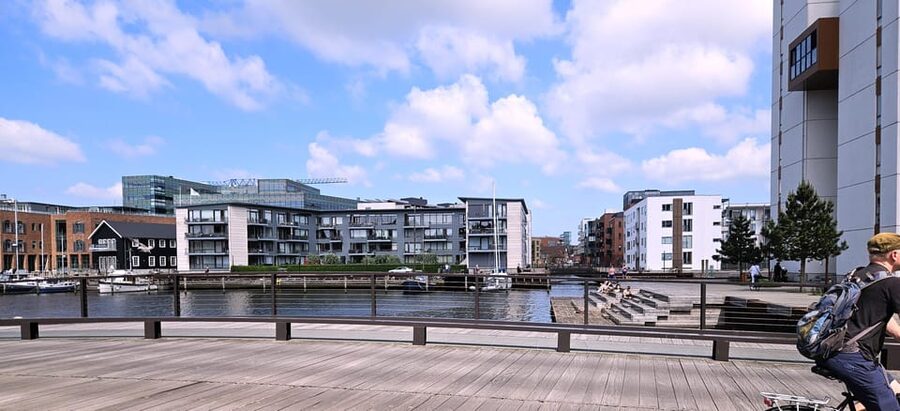
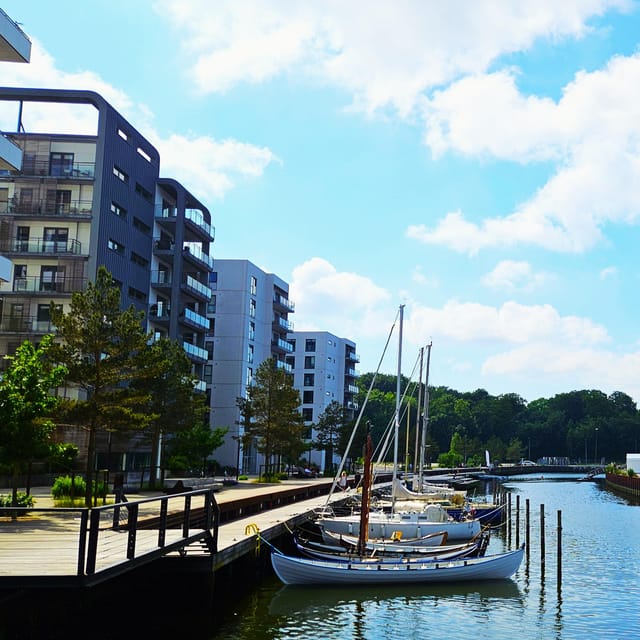
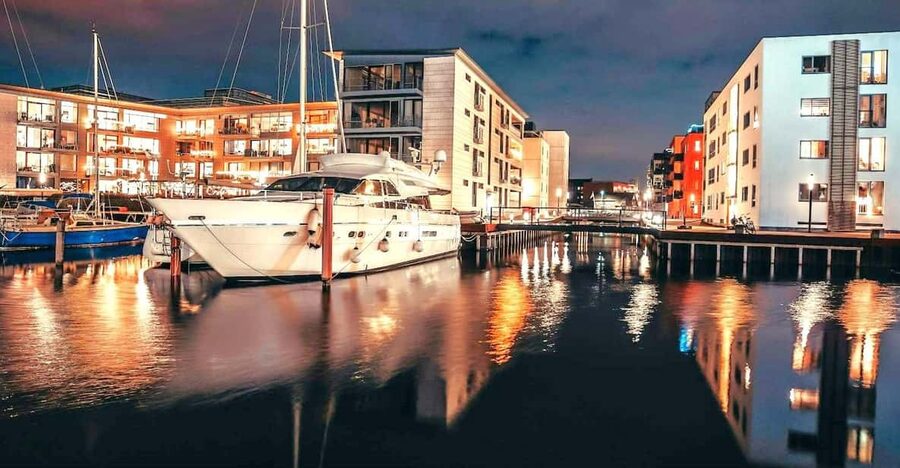
The Port of Odense receives another 30-minute segment and serves as one of the clearest symbols of the city’s transformation. The harbor helps you understand Odense as more than a postcard town. It points to industry, work, redevelopment, and the challenge of giving older urban land a new purpose.
The route also passes through a former industrial area where a new district is developing. This is a valuable stop because you see change while it is still in progress. Completed projects can make urban planning look neat and inevitable. A developing district reminds you that cities are built in stages and that plans must respond to changing needs.
The guide’s explanation adds the human part of the story. New construction is not only about design. It raises questions about who will live there, how affordable homes can remain in the city center, and how a growing city can keep its public goals in view.
This may be the strongest section for anyone who wants to understand modern Odense. You can look at the buildings yourself, but the guide helps you connect them to the older industrial role of the area and the city’s aim of becoming greener and more creative.
Storms Pakhus and a developing district
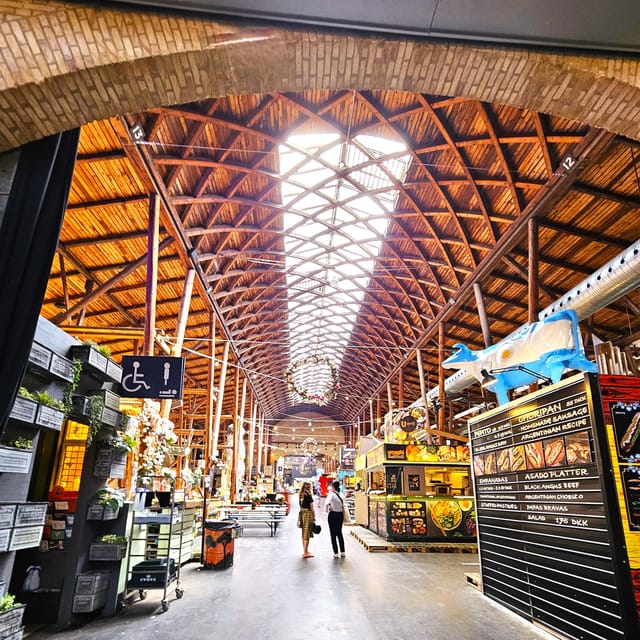
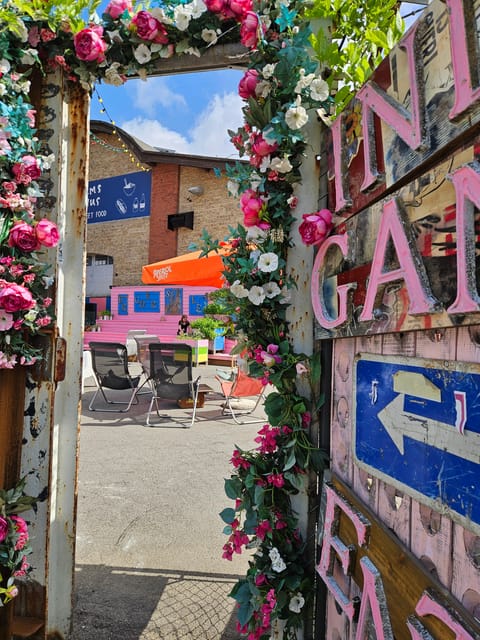
The stop at Storms Pakhus, also known as Odense Street Food, lasts about 15 minutes. It provides a more social and everyday counterpoint to the planning discussion.
A street-food venue is a useful place to talk about how former or underused urban spaces can be brought back into daily use. It gives the walk a change of pace and lets you see a place designed for people to meet, eat, and spend time.
The stop is relatively brief, so do not treat it as a full food tour or a meal included in the price. The activity is a guided city walk, not a tasting experience. If you want to eat here, you should regard that as separate time before or after the tour, unless your schedule and the group’s timing allow otherwise.
Still, this stop helps make the larger subject less abstract. A green city is not only about traffic plans and new apartments. It also needs places where people can gather. Storms Pakhus gives you a concrete example of the social side of urban renewal.
The six-lane road that disappeared
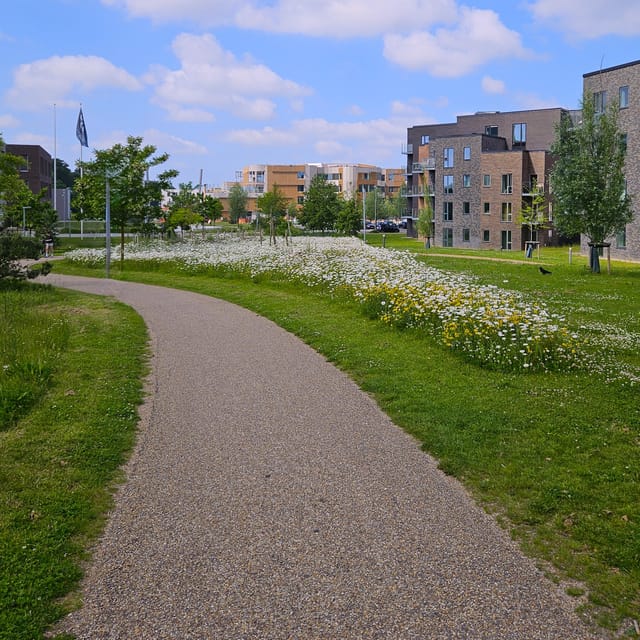
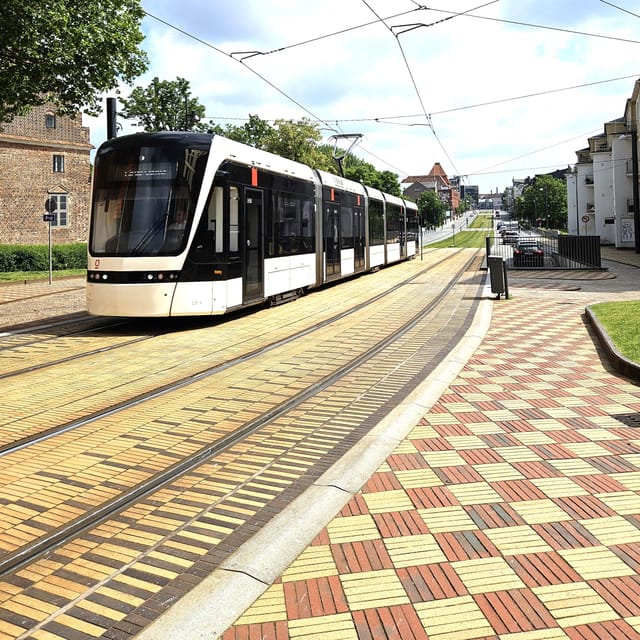
Near the end, the route passes through a completed urban area where a six-lane main road once ran through the city center. This may be the most striking piece of visual evidence on the walk.
Without the guide, you might simply see a modern public area and continue on. With the before-and-after explanation, you can picture the scale of the old road and consider what the city gained by changing that space.
The lesson is not that every road should disappear. The point is that city design reflects priorities. A major traffic route may move vehicles efficiently, while a redesigned area may give more room to walking, public life, housing, or greenery. The tour helps you think about that trade-off rather than presenting redevelopment as a perfect answer.
For me, this is where the tour earns its place alongside a standard Odense sightseeing walk. You leave with a better sense of how the city’s center was altered and why that change is part of Odense’s identity today.
H.C. Andersen Haven brings the route back
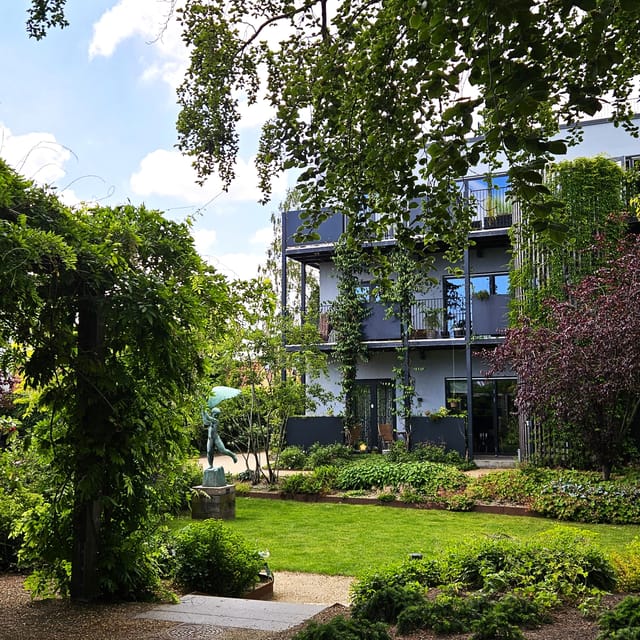
The final guided stop is H.C. Andersen Haven, with about 15 minutes of attention. The garden returns you to one of Odense’s best-known cultural names and connects the modern route with the city’s traditional visitor appeal.
Do not expect the tour to become a full H.C. Andersen-focused visit at this point. The main subject remains urban development. Instead, the garden works as a pleasant closing point before the walk returns to Overgade 3.
Ending near the familiar old center gives the route a satisfying shape. You begin with the historic city, move outward to industry and the harbor, then pass through newer urban spaces before coming back to where you started. That round-trip design means you do not need to arrange transport between stops.
What the guide adds
The strongest part of this activity is the local explanation. A brochure can tell you that a district is new or that a road was redesigned. A good guide can explain how residents experience those changes and place them within Danish society.
The discussion may cover:
- Danish education and how it affects everyday life
- Housing costs and the goal of keeping central homes affordable for young people
- Infrastructure and transport
- Local economic concerns
- The shift from industrial activity to new urban uses
- Green planning and creative development
- Daily life in Odense
The conversation can also wander into related subjects. One particularly unusual discussion included a short aside about the way people in Greenland live. That is a reminder that this is not a tightly sealed script. If you enjoy asking questions and following ideas, you may get more from the walk than someone who prefers a fixed list of monuments.
Jørn Asmussen is described as friendly, highly engaged, and able to speak excellent German. An English-language account also describes a warm, conversational guide who made the two hours pass quickly. Those details suggest that the human connection is central to the experience, though your exact guide and group will determine the tone.
Price, pace, and who gets good value
The price is $31 per person for two hours. That is fair if you want interpretation rather than simple orientation. You are paying for a local perspective on a subject that would take time to piece together from public signs, maps, and independent reading.
The value is strongest for you if you have already seen some of central Odense or plan to stay long enough to notice its different districts. The tour can also work early in a visit, since it may help you understand what you are seeing during the rest of your stay.
At roughly 4 kilometers, the distance is manageable for most people who are comfortable with a normal city walk. The activity describes the route as about 5,500 steps. Wear comfortable shoes, and remember that the tour takes place outdoors, with no indication that it is designed as a seated or vehicle-based experience.
Small groups are available. That matters more here than it would on a basic landmark tour because the subject invites questions. A large group could make a discussion about housing, education, or infrastructure feel crowded. A small group gives you more opportunity to speak with the guide and adjust the conversation to your interests.
The tour offers free cancellation up to 24 hours before the start and a reserve-now, pay-later option. Those terms are useful if your Odense plans are still shifting.
Who should book this walk
I would choose this for you if you like knowing why a place looks the way it does. It is particularly suitable for people interested in:
- Architecture and urban planning
- Environmental policy
- Danish society and education
- Housing and public infrastructure
- Contemporary city design
- Local life beyond famous sights
It is also a strong choice after several days of independent sightseeing. One participant who had explored Odense alone for three days found that the tour completed their understanding of the city and Denmark. That makes sense: once you have seen the old streets, the new information gives the familiar places more meaning.
I would be more cautious if your time in Odense is very short and you have not yet visited the city’s main historic attractions. This walk does pass H.C. Andersen Haven and begins in the old center, but it is not designed to cover every major sight.
Families with older children may enjoy it if the children are interested in how cities work. Very young children may find two hours of planning talk and a 4-kilometer walk less engaging. The guide can answer questions, but the tour’s subject requires attention.
Should you book the New Green Odense walk?
Book it if you want to see Odense as a living city rather than a collection of old streets. The combination of the harbor, former industrial land, new districts, the transformed six-lane road, and local discussion gives you a clear look at how the city is trying to change.
Skip it if you want a classic history tour centered on H.C. Andersen or a short list of photogenic sights. At $31, the price is good for a small-group, two-hour conversation, but only if urban development and Danish daily life sound interesting to you.
For curious visitors, I would place this walk after, or alongside, a more traditional tour of Odense. It shows you what a standard sightseeing route usually leaves out: the decisions behind the streets, the questions behind the new buildings, and the people who have to live with the results.
FAQ
Where does the Odense city walk begin?
The meeting point is Overgade 3, 5000 Odense, in the pedestrian street area beside a small ruin. The guide carries a KnowledgeWalks sign.
How long is the tour?
The walk lasts two hours and covers about 4 kilometers, or approximately 5,500 steps.
What languages are available?
The tour is offered in English and German.
What places does the route include?
The route begins at Overgade 3 and includes Albani Torv, Donkey Republic, the Port of Odense, Storms Pakhus, and H.C. Andersen Haven before returning to Overgade 3.
Is this a small-group activity?
Yes. Small groups are available, with opportunities to interact with the guide and ask questions.
Can I cancel the booking?
You can cancel up to 24 hours in advance for a full refund. A reserve-now, pay-later option is also available.
Just added around Denmark
- Understanding Klaksvík: A Self-guided city tour in KlaksvÍk★ 5.0 · 3 reviews
- Waterfall Tour in Faroe Islands★ 5.0 · 16 reviews
- Urban Design and Livability E-bike Tour★ 4.8 · 21 reviews
- Súðuroy Island Day Tour, Faroe Islands★ 4.5 · 3 reviews
- Wonders of Vágar Island | Private Experience★ 5.0 · 4 reviews
- Half Day Exploration of Helsingør and Kronborg★ 3.5 · 3 reviews
- Faroe Islands: Highlights Tour★ 5.0 · 6 reviews
- Helsingør Castle and Historic City Self-Guided Walking Tour★ 4.0 · 4 reviews
Walking Tours, compared.
Group Walking Tour – City Highlights – 2 Hours
Read our review →
3h walking tour, small group max 10 people Copenhagen
Read our review →
Walk & Canal Tour: Copenhagen Highlights + Changing of the Guards
Read our review →
Browse the lists this tour appears in