
Reviewed · COPENHAGEN BIKE TOURS
Urban Design and Livability E-bike Tour
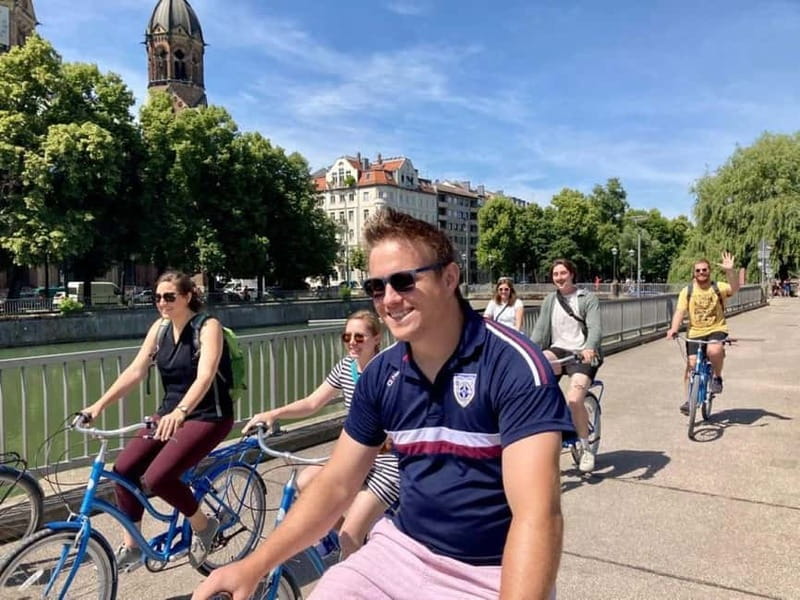
Copenhagen’s best urban lesson comes on two wheels. This three-hour e-bike ride connects the Opera House, CopenHill, Christiania, Islands Brygge, the Meatpacking District, Nyhavn, and other city landmarks, showing how design affects daily life. I like the small group of up to 10 and the way the route links polished monuments with ordinary neighborhoods. I also like the electric bikes, which make a long city circuit far easier than a standard bicycle.
The main tradeoff is pace. You visit 10 places in roughly three hours, with about 10 minutes at each stop, so this is a broad introduction rather than a series of long visits. If you want time inside museums, markets, or Christiania, you will need to return on your own.
- Ten stops in three hours: Cover far more ground than you could comfortably walk.
- Urban design with daily life: See how former industrial zones became swimming areas, food quarters, parks, and cultural spaces.
- Electric bikes included: Useful for the longer route and Copenhagen’s bike-centered streets.
- English-speaking guides: Guides such as Basha, Pasha, Mood, Luke, Alex, and Rafael have led lively, informative rides.
- Free entry at every listed stop: Your money pays for the bike, guide, and city experience, not admission tickets.
- A useful first-day tour: The route gives you a map in your head and ideas for the rest of your stay.
Why this e-bike route explains Copenhagen so well
Many city bike tours simply string together famous sights. This one tries to explain how Copenhagen works. You pass grand cultural buildings, former industrial land, alternative communities, public swimming areas, food markets, and streets built for cycling.
That mix matters. You see Copenhagen not only as a postcard city of colorful houses and canals, but also as a place shaped by reuse, public access, design, and changing neighborhoods. The route makes a good first-day choice because it gives you a broad sense of the city before you decide where to spend more time.
The ride begins at Holbergsgade 12 at 11 a.m. and returns there at the end. The start point is near public transportation, which makes it practical for a morning arrival from another part of the city. Bring a watch, since the schedule is fairly full and the guide needs to keep the group moving.
Electric bikes make the long circuit manageable
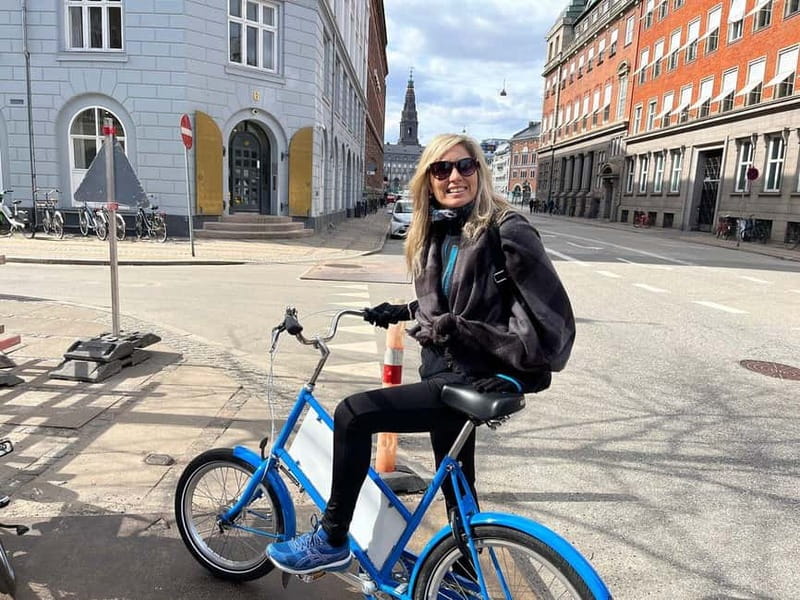
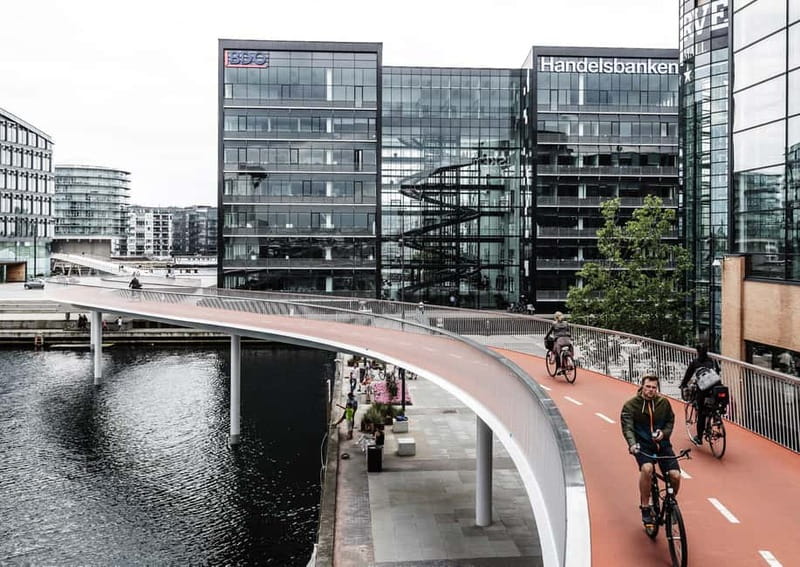
The included e-bike is the key practical feature. Copenhagen is well suited to cycling, but this route covers many districts in a short period. Electric assistance helps you keep up without turning the ride into a test of fitness.
A helmet is available, though wearing one is optional. Most people can participate, but you should still feel comfortable riding a bicycle in a city setting. The ride is not a hop-on, hop-off outing. You stay with the group, follow the guide, and make short stops rather than spending long periods at each attraction.
I would choose this tour if you want a city overview with real movement between districts. I would not choose it as your only activity if you dislike bicycles or prefer slow sightseeing. The electric motor reduces effort, but it does not remove the need to ride for much of the three-hour period.
The maximum group size is 10. That is small enough for a more personal feel, easier questions, and less chance of losing the guide in busy streets. One account describes a larger band of riders, so group sizes may vary in practice, but the stated maximum is 10. The current advertised arrangement is best understood as a small-group tour.
More copenhagen bike tours in Copenhagen:
- Copenhagen: Highlights 3 Hour Bike Tour with a Local Guide
★ 4.8 · 2,312 reviews - Copenhagen Highlights 3 Hour Bike Tour with local Guide
★ 5.0 · 1,125 reviews - 3-hour Copenhagen City Highlights Bike Tour
★ 5.0 · 757 reviews
The Opera House opens with Copenhagen’s cultural waterfront
The Copenhagen Opera House is a strong first stop because it introduces the city’s modern side. Set on the waterfront, it is a major cultural building and part of Copenhagen’s effort to make the harbor a place for public life, performance, and architecture.
You get about 10 minutes here, enough to look at the building and hear how it fits into the city. Do not expect a performance or an indoor tour. Admission is free because the stop is an exterior visit.
This is a useful opening contrast. Copenhagen is famous for its old canal streets, yet the harbor also contains bold contemporary buildings. The guide can help you read the Opera House as part of the city rather than as an isolated landmark.
CopenHill turns a utility plant into a public attraction
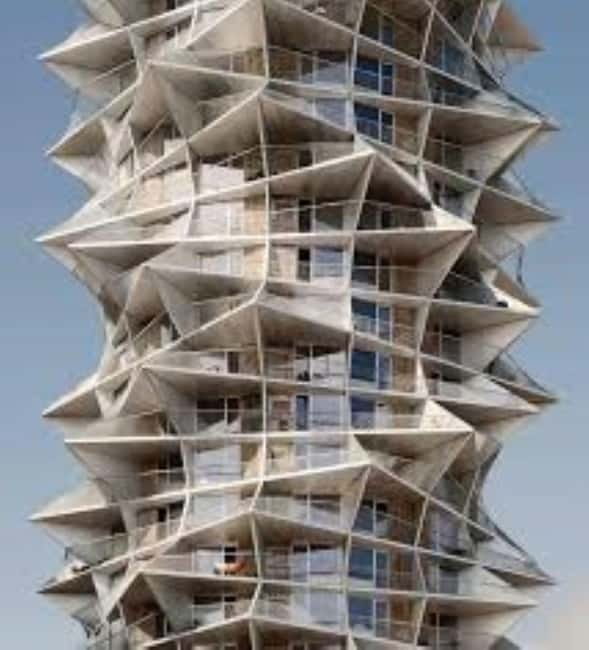
CopenHill may be the most unusual stop. It is a recycling plant designed with a ski slope, running track, climbing wall, and cafe. The building asks a simple urban question: can necessary infrastructure also give something back to the public?
You have around 10 minutes, so your visit will be brief. Still, CopenHill explains why Copenhagen is often associated with practical design and environmental ambition. It is not just a plant hidden behind a fence. Its public features make the building part of the city’s leisure life.
The drawback is obvious: a short exterior stop cannot show you all the facilities or give you time to use them. Think of this as a design case study and a photo stop. If CopenHill catches your interest, plan another visit later with more time.
Christiania adds a complicated human story
Christiania brings a very different idea of city life. It is an independent community built around individual freedoms, freedom of choice, freedom of expression, and artistic freedoms. The stop gives the route a human and political edge that grand buildings alone cannot provide.
You spend about 10 minutes here. That is enough to get a sense of the community, but not enough for a full exploration. You should listen carefully to the guide’s framing, since Christiania is not simply another attraction to tick off. Its identity and rules make it distinct from the rest of Copenhagen.
I like this part of the route because it keeps the tour from becoming a parade of architecture. The consideration is that your understanding will remain introductory. Return later only if you want more time, and follow local guidance about where to go and what to photograph.
A few more Copenhagen trips to weigh up
- Copenhagen: 2-hour City Highlights Bike Tour
★ 4.7 · 632 reviews - Bike Tour Copenhagen. Private Guide, Concierge Service, Small Grp
★ 5.0 · 416 reviews - Copenhagen: 3-Hour Culinary Bike Tour
★ 4.7 · 301 reviews - 2 Hours Copenhagen E-Bike Guided Tours
★ 5.0 · 276 reviews
Islands Brygge shows how a rough harbor can serve residents
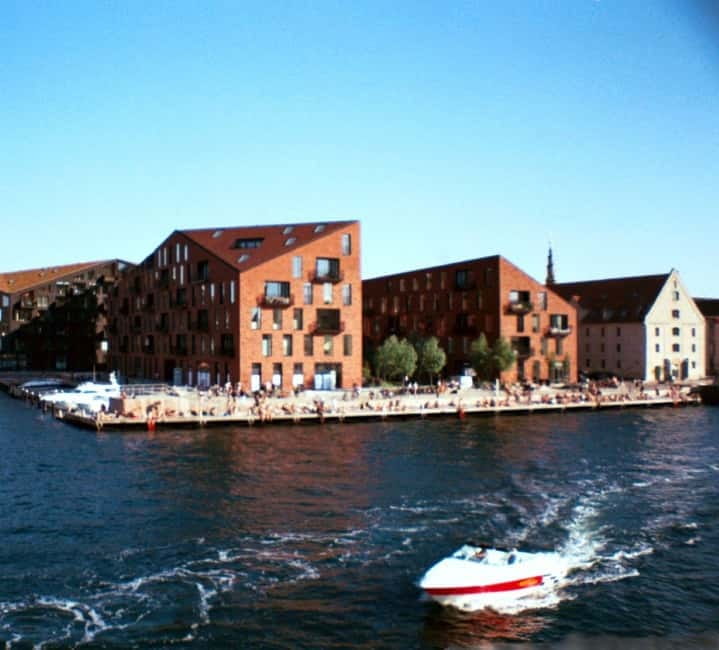
Islands Brygge once had an industrial character. Today, it is known for green spaces, swimming areas, and modern architecture. The change illustrates one of the tour’s main ideas: urban improvement is not only about new buildings. It is also about giving people places to meet, relax, and use the waterfront.
The 10-minute stop will not allow for a swim or a long sit by the water. Instead, you get a quick look at how public space can reshape a former work zone. This is especially useful if you are curious about why Copenhagen feels designed for everyday use, not only for visitors.
The stop also breaks up the architecture with a more relaxed setting. You may want to mark Islands Brygge for a later return if you have time to enjoy its swimming areas or green spaces at your own pace.
The Meatpacking District links old work to new culture
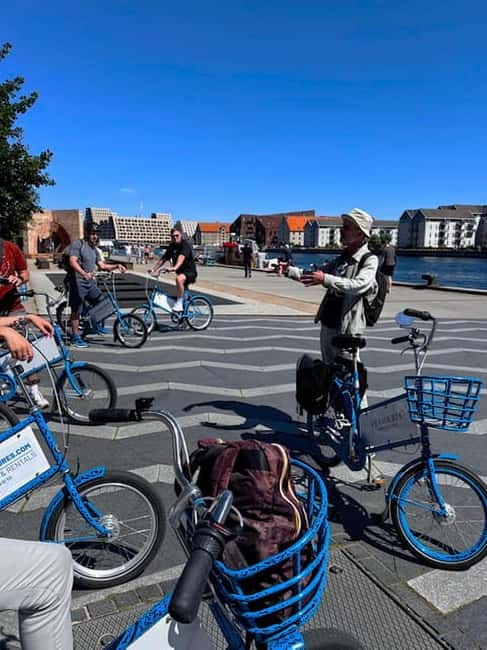
The Meatpacking District was once Copenhagen’s butcher quarter. It now mixes artistic activity with restaurants and food-focused businesses. That change gives you another example of the city reusing older urban areas instead of treating them as disposable.
The guide’s job here is less about one famous building and more about the district’s character. You see how an area built for practical trade can become a place for food, creativity, and nightlife.
Again, 10 minutes is a sampler. You will not have time to choose a meal, browse every business, or settle in for the evening. I would note the district during the ride and return later if dining is a priority. The tour does not include food or drinks, though you can buy them before or during the ride.
City Hall Square brings the route back to the civic center
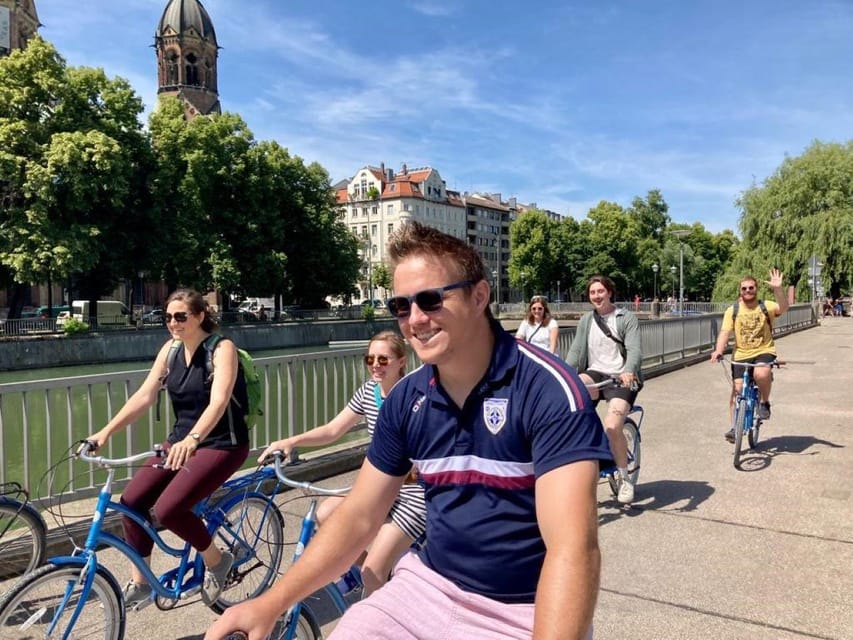
City Hall Square is one of Copenhagen’s main public squares. It sits beside the impressive City Hall and near Tivoli Gardens, making it a useful point for understanding the city’s civic and entertainment center.
At this stage, the stop helps connect the newer districts with the familiar heart of Copenhagen. You are not only seeing isolated sights. You are learning how the city moves from harbor redevelopment to public institutions, tourism, and daily transport.
The visit lasts around 10 minutes. Tivoli admission is not part of the tour, and the stop is not a visit inside City Hall. If you want either attraction, plan a separate outing.
Torvehallerne brings design down to the level of lunch
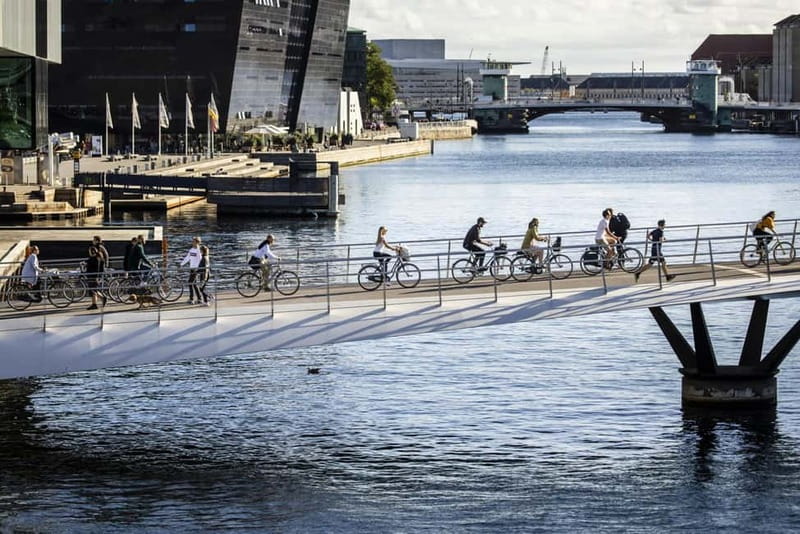
TorvehallerneKBH is one of Copenhagen’s best-known food destinations, with Danish and international delicacies under one roof. This stop adds something important to the tour: food is part of urban life and local identity, not just a reward at the end of sightseeing.
You get a quick look at the food halls and can decide if you want to return for a meal or snack. Since no food or beverage is included, budget separately if you buy something during the tour. The stated price covers the bicycle, optional helmet, and certified in-person guide.
A short market visit can feel rushed, especially around lunchtime. Still, Torvehallerne is a practical stop because it gives you a clear answer to the question of where to eat later. I would ask the guide for suggestions, since guides such as Pasha are described as offering ideas for the rest of your stay.
Nyhavn supplies the classic Copenhagen view
Nyhavn is the colorful, 400-year-old canal that appears on many Copenhagen postcards. Its maritime past and bright waterfront buildings make it an essential stop, even on a tour focused on modern design.
The guide can place the canal within the larger story of Copenhagen’s harbor. That is useful because Nyhavn is easy to admire but harder to understand at a glance. The area is not only a pretty row of buildings. It reflects the city’s connection to shipping, water, commerce, and public gathering.
With only 10 minutes, you will have time for photos and a short explanation, not a leisurely canal-side meal. It is one of the places I would revisit when you are not managing a bike, watching the clock, or keeping formation with a group.
Ofelia Plads and the Playhouse show public space in action
Ofelia Plads is described as a man-made beach in the center of the city. It is used for swimming, sunbathing, socializing, and cultural activities. The stop continues the route’s interest in spaces that invite people to stay rather than simply pass through.
Nearby, the Royal Playhouse offers another example of Danish design. It reflects the idea of a city open to all and uses sustainable design as part of its identity.
Taken together, these two stops make a useful pair. One is an outdoor public space, the other a major theater. Both show how the waterfront can support culture and everyday recreation.
The schedule gives each about 10 minutes, so you will not have time to swim, attend a performance, or explore every detail. I see them as strong prompts for later visits. They are also a pleasant finish before the ride returns to Holbergsgade.
The guides shape the value of the ride
The route is fixed, but the guide can make it feel either like a list of stops or a connected story. Named guides associated with this experience include Basha, Pasha, Mood, Luke, Alex, and Rafael. The available guide will depend on the departure.
The strongest guide reports emphasize clear explanations of architecture, Danish life, urban development, and local food. Basha is noted for explaining design concepts and Danish culture. Mood is described as entertaining and good at showing why different neighborhoods feel distinct. Luke focuses on the reasons Copenhagen is considered such a pleasant city in which to live.
Alex is especially praised for answering questions and keeping the ride fun. Rafael is described as bringing knowledge of the city and its culinary side, along with an energetic personality. These details suggest that the experience works best when you ask questions rather than simply follow along silently.
One honest limitation is that the schedule leaves little room for long explanations at each stop. If you want technical architectural detail, ask direct questions while you have the chance. One assessment found the content satisfying but wanted more detail, a fair point for a tour covering 10 places in three hours.
Is $78.10 a fair price?
At $78.10 per person, this is not the cheapest way to see Copenhagen. You can walk through several central areas for free, and public transport costs less. But the comparison is not quite fair, because this tour includes an e-bike, optional helmet, a certified guide, and a route that links distant parts of the city.
The value is strongest if you want orientation, local explanation, and efficient coverage. You are paying to connect CopenHill, Christiania, Islands Brygge, the Meatpacking District, and the central sights without arranging the route yourself.
The value is weaker if you already know Copenhagen well, own a bicycle, or prefer to spend an hour at each stop. You also need to buy your own lunch and drinks. I would see the price as reasonable for a first or second day, especially if the tour helps you choose where to return later.
The experience is booked an average of 23 days ahead, so advance planning makes sense. That timing is not a guarantee of availability, but it is a useful sign that you should not leave the booking until the last morning of your trip.
Who should book this Copenhagen e-bike tour?
This ride suits you if you want:
- A first look at several Copenhagen neighborhoods
- A practical introduction to Danish urban design
- A small group and an English-speaking guide
- Electric assistance on a longer bicycle route
- Ideas for food, public spaces, and later independent visits
- A mix of famous sights and less familiar districts
It may not suit you if you want a museum-heavy tour, long stops, or a relaxed walking pace. Families and most adults can participate, but everyone should be ready to cycle for roughly three hours. The tour requires good weather, and poor conditions can lead to a new date or a full refund.
You can cancel for a full refund up to 24 hours before the 11 a.m. start time. Changes or cancellations inside that window are not accepted for a refund. The experience also requires a minimum number of participants, so a cancellation for that reason brings an offer of another date or experience, or a full refund.
Should you book it?
I would book this as an early Copenhagen activity, especially if you want to understand how the city joins old harbor traditions, new architecture, public recreation, alternative communities, and food culture. The e-bike and small group give you useful range without making the ride feel like a strenuous expedition.
Go in with the right expectation: this is a city sampler, not 10 separate tours. You will see each place briefly, gather plenty of ideas, and return with a better sense of where to spend the rest of your time. If that sounds useful, $78.10 is a fair price for the orientation. If you want depth at one or two sights, explore those places separately instead.
FAQ
How long is the Urban Design and Livability E-bike Tour?
The tour lasts approximately three hours.
Where does the tour start and finish?
It starts at Holbergsgade 12, 1057 København, Denmark, at 11 a.m., and ends back at the same meeting point.
What is included in the price?
The price includes use of an electric bicycle, an optional helmet, and a licensed or certified in-person guide.
Is food included?
No. Lunch, food, and beverages are not included, but you can buy food or drinks before or during the tour.
Is the tour offered in English?
Yes. The tour is offered in English.
How large is the group?
The advertised maximum is 10 participants.
What happens if the weather is poor?
The experience requires good weather. If poor weather causes cancellation, you will be offered another date or a full refund.
More E-Bikes in Copenhagen
- Copenhagen: Guided E-Bike Tour
★ 4.8 · 141 reviews - E-biking Central Forgotten Giants’ s Adventure
★ 4.5 · 75 reviews - Copenhagen E-Bike Rental
★ 4.7 · 35 reviews - Urban Design and Livability E-bike Tour
★ 4.8 · 21 reviews
Just added around Copenhagen
- Urban Design and Livability E-bike Tour★ 4.8 · 21 reviews
- Full-Day Tour; Castle, Palace & Cathedral, Winter(JAN-MAR)★ 5.0 · 11 reviews
- a day at North Zealand Castle Tour★ 4.5 · 19 reviews
- The Philosopher’s Last Walk: An audio tour on the life of Søren Kierkegaard★ 4.5 · 5 reviews
- The Six Forgotten Giants Trolls Hunt with Minibus★ 4.5 · 27 reviews
- Copenhagen Walking Tour with Food Testing (smorrebrod dish & snap)★ 4.5 · 10 reviews
- The Forgotten Giants Private Tour★ 5.0 · 3 reviews
- Explore the Instaworthy Spots of Copenhagen with a Local★ 3.5 · 3 reviews
Copenhagen Bike Tours, compared.
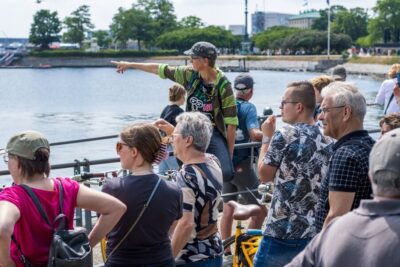
Highlights 3 Hour Bike Tour with a Local Guide
Read our review →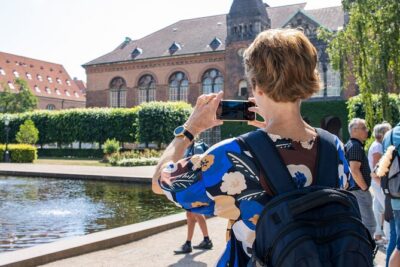
Copenhagen Highlights 3 Hour Bike Tour with local Guide
Read our review →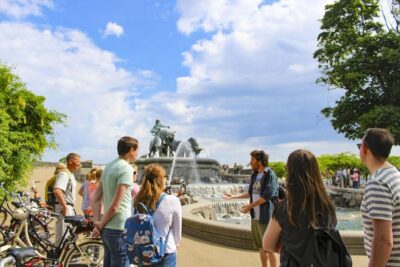
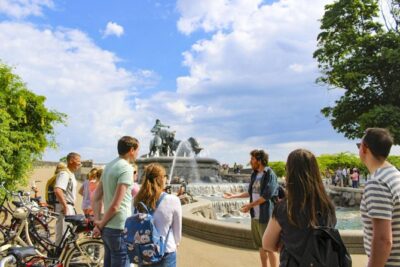
Bike Tour Copenhagen. Private Guide, Concierge Service, Small Grp
Read our review →
Browse the lists this tour appears in